Our Blog

Papillón - El perro de compañía perfecto

Our Blog

Papillon - The perfect companion dog

by Lobo Azul in Jan 20 2022
If it is a combination of elegance and company, in the world of the canine species there is an animal that meets these characteristics perfectly. Loving, friendly, dynamic and an excellent companion for the home, this is the breed of dog known as Papillon. Size: Small. Weight: Between 3 and 5kg. hair type: Long, smooth and fine. Character: Intelligent, Cheerful, Friendly, Energetic, Alert Health: You may suffer from hereditary eye disorders Life expectancy: Between 12 and 15 years. The characteristics of this beautiful little canine friend, as well as its history, care and training, are topics that without a doubt should be known before making it our best friend. That is why, on this occasion, we will dedicate the article to this majestic breed, whose quality and origin is covered with the finest interest and relevance. Be sure to read in detail each of the aspects that we have developed for you in this text, as they will surely be very useful to you in the maintenance of this dog breed. History In general, the origin of the Papillon dog, as it is known today, dates back to 1935, when the breed was recognized as such. However, before this period this dog had already gained popularity and prestige. A breed of tiny stature but great popularity in history. Generally associated with high birth. It began to gain recognition around the 16th century, when a renowned artist painted it for the first time. It is important to note that the name of the breed “Papillón” is originally from Belgium and France, country where this word is translated as butterfly. The term was associated with the breed due to the peculiar shape of its ears, which resemble a butterfly in flight, so it was decided to adopt it to identify these dogs. In fact, today, it is recognized as Butterfly Dog or dwarf spaniel. After this, his appearance in different portraits became more frequent, which made him a very famous dog. Until He came to associate himself with figures of European royalty, since royal families increasingly took over paintings where this dog appeared. It is even said that Marie Antoinette had a Papillon as a pet. This entire process of fame led to the breed being crossed with other canines in the 19th century, from which the pointy-eared Papillon known today emerged. Since then, its elegance and beauty continue to be a marked beauty of this breed. Characteristics of the Papillon Due to his tiny size and corresponding weight, the physical appearance of this little friend is a very short topic. We will precisely detail each of the physical characteristics of this breed. Size and weight Depending on your sex, these measurements may vary, but minimally. In both females and males, the height can reach up to 25 centimeters at the withers. While the weight can average between 1.5 and up to 5 kilos. Contexture It is about a dog of minimum height and weight, with a fine and elegant build, which allows it to move with great pride and dynamism. head The skull of this breed has a round shape. His face stands out for his snout, finely moderate and protruding, shorter than the size of his head. Their dark eyes, usually black, are round and slightly large. The nose of this dog is black and has a flattened shape at the top. The distinctive feature of these animals is their ears.. Well, they appear in a pointed shape on top of their head, which gives the figure of a butterfly in full flight, hence the name of the breed. Queue Thin, covered with hair, and most of the time upright. Fur Abundant in areas such as ears and tail more than throughout the body. This is white, with spots, which can be black, chestnut, reddish or brown. Category Although they are included in the same breed, these dogs can present a differentiation in their ears, which causes them to be divided into two categories: common papillon Which has erect ears as it is commonly known. Continental Phalene Spaniel It has drooping ears, but with obvious mobility. Papillon Behavior As if her beauty were not enough, The intelligence and sociability of this breed is another of its qualities. We are then faced with a generally well-behaved breed. However, it is good to remember that this aspect will depend a lot on the socialization given to the animal, just as in any other case or with any other breed. It is a happy, dynamic and very alert dog. It is about an excellent companion dog, since its adaptation with people and other animals is not a problem. He is also a vigilant par excellence, he perceives strange situations and people with whom he can become very distrustful. In the presence of strangers, he is not so outgoing. However, once he adjusts to the new faces, he will have no problem socializing with them. They love to play, so they are an excellent companion for a home where there are children. However, it must be properly educated so that it does not bite and thus avoid danger. The energy of his body is another characteristic of this little friend, so he will need to exercise, either with long walks during the day or play routines. The truth is that you need to do constant training to channel all your energy. In addition, it is a pet that requires great affection and attention, because they love to give love to their owners, so try to have time to dedicate to it because it loves to be pampered and given your affection for an important part of the day. The puppies Although This is a playful breed., puppies are usually not the exception to the norm. As they grow, these dogs increase their level of energy, attention and dynamism. That is why starting training at least the third week after birth will be ideal for our Papillon to adopt an obedient and stable behavior. As puppies they are usually very noisy, barking excessively. Therefore, educating him so he knows when to stop is a good way to control this behavior. Like any other breed, the education of the puppy will greatly influence the behavior that the adult dog develops, therefore maintaining training according to its age and growth will ensure a dog with appropriate and very loving behavior. Training As we have mentioned, the Papillon is about an obedient and intelligent dog, so training is not a problem with this breed. Even more so if the training has been taking place since a puppy. As stated, progress in training will be measured as the animal grows. That is, at the stage of adulthood, it is necessary to train him with important topics, useful commands that contribute to a stable and calm coexistence inside and outside the home. Some of these commands may be: sit, lie down, stay still, walk next to us, or respond to the call of their owners. Once these commands are learned, any other commands, or some tricks for fun and entertainment, will be much easier. Taking it with you will not be a problem if your dog listens to these instructions easily. Taking advantage of daily walks to train him with tricks and commands can be an excellent idea, even more so because it will contribute to sharing time together. We must also remember the importance of positive reinforcement for training our dogs, in this way the dog will immediately respond to our voice. Health Generally we are faced with a fairly healthy breed. Their life expectancy averages between approximately 10 and 15 years. However, those dogs descended from crossing the same bloodline are at greater risk of some conditions that reduce their well-being. Some of them are: Allergy Although it is not a fatal disease, the discomfort it can cause to dogs is quite notable. Papillon dogs often suffer from allergies. Either due to the ingestion of certain foods or, in other cases, due to external factors such as fiber or pollen, among others. Excessive and constant scratching can be a clear sign of the presence of this condition. Patella dislocation One of the most common genetic diseases in this breed. It can cause great pain and influence the dog's mobility, stretching and sitting. Frequent moaning and difficulty walking may be a sign of this problem. Dental problems Associated with inadequate nutrition and hygiene. These dogs have delicate teeth, so their care must be regular and important to their owners. Although it is not a serious disease, it can influence the well-being of the canine. Seizures This is another genetic condition that can occur in these animals. Mostly it is a chronic syndrome. In any case, maintaining a periodic check-up with the veterinarian and in the presence of these health problems can ensure that our pet Papillon remains in complete and optimal well-being. Papillon Care The Papillon is a dog that requires some attention from its owners. So you can't stop reading this part: Fur The Caring for your coat on a regular basis is important to keep it shiny and free of knots. Giving him a bath at least twice a month and brushing him two or three times a week with the use of a special softening product for dogs will help keep his coat well cared for. cold temperatures An aspect that is of notable relevance in the care of this breed is that, although it has abundant hair, it has only one, which does not protect it from cold temperatures as it should. This exposes our furry friend to colds. Taking the appropriate precautions, ensuring that it stays warm in the winter season, will prevent it from being affected by the weather. eyes Taking care of your eyes and surroundings is also important. Well, if it is not cleaned frequently, dark or brown spots may appear around them and this gives an unsightly appearance, and it can also make it difficult for our little friend to see. Feeding Take care of your diet because, although it is uncommon, you can suffer from obesity, allergies to inappropriate foods and problems with your teeth due to poor nutrition. Giving feed according to a small size and age will help him stay completely healthy. Exercises We must not forget that this is a really active dog, so requires long walks during the day, and perform exercise routines to channel your energy in a positive way. Otherwise, the lack of exercises can be reflected in their behavior. Affection and attention Although it is energetic, it is also a dog that requires a lot of love and attention, try to have enough time to dedicate to this breed. Conclusion If you are looking for an attentive, intelligent and obedient dog that also easily adapts to living in small spaces and is easy to train, the Papillon may be the ideal breed for you. These small water dogs are not only intelligent, but also affectionate, so you will not lack fun, entertainment and also the energy to go out for a run or walk. Good training and proper care will make this small animal a healthy and very loving friend that you will undoubtedly never get bored of. More curiosities about dogs and their breeds: Havanese Welsh Corgi Westy yorkshire terrier Boston Terrier French Bulldog Beagle Pomeranian
Bedlington Terrier - Te explicamos todo lo que debes saber sobre esta raza

Our Blog

Bedlington Terrier - We explain everything you need to know about this breed

by Lobo Azul in Jan 20 2022
Do you like energetic and intelligent dogs? Do you want a small pet but with great behavior? Do you need an outdoor activity companion? If you identify with these characteristics, the Bedlington Terrier could be that friend you are looking for. Size: Medium. Weight: Between 7 and 10kg. hair type: Wavy and similar to sheep's wool. Character: Intelligent, Affectionate, Energetic. Health: Healthy depending on your care. Life expectancy: Between 12 and 14 years old. It is one of the oldest and favorite breeds in Britain. Its lively, intelligent and very attentive behavior made it a highly valued animal for different activities and until now it has not been different. The recognition that this dog has earned in society is undeniable, and not only for having a striking character, but also for its physical appearance that attracts all eyes. A particular aspect that combines sweetness, elegance and delicacy on the outside, with an extroverted, dynamic and very active behavior. Do you want to know more about this breed? Its origin, temperament, physical characteristics, education, the care it needs and much more, we will describe in the following article. Be sure to read this important information and discover everything you need to know before making this specimen part of your home. Origin of the Bedlington terrier Although there are no precise records of the first appearance of this little friend, it is known that the first specimens of this breed began to be present around the 18th century, in the mid-80s. What is certain is the place where It originated, and was in the north of England, practically on the border with Scotland, known as Northumberland. Within this place, in a town called Bedlington, these canines were first seen. However, at that time they were known by the name Rothbury terrier. Being around the year 1825, when it began to be called by its current name. The Bedlington terrier, as it is known today, was influenced by the crossing of three breeds, from which it inherited an appearance that characterizes it. For example: the Poodle, its wavy coat, similar to sheep's wool. Then we find the Whippets, from whom he inherited his morphological characteristics and agility. Finally the Dandie Dinmont terriers. In principle, these dogs were used by the town's inhabitants to protect their mines, within which their main function was to hunt rats and other rodents. Some time later, observing its valuable hunting skills, it began to be used to capture other animals such as foxes and weasels. His great skill allowed him to quickly gain acceptance from the inhabitants of Bedlington. This meant that a century after its appearance, the Bedlington terrier club was born in England, and later in 1967, the American Kennel Club would officially recognize the breed, publishing the standard. Currently this breed has not decreased in popularity, however, in addition to activities such as hunting, many specimens have been positively accepted as companion animals, playing a great role, as they are affectionate, attentive and playful. Bedlington Terrier Physical Appearance If there is something that attracts people's attention to this dog, it is, without a doubt, its physical appearance. This is because its resemblance to a lamb is truly impressive and also unmistakable in the presence of other breeds. In fact, it is not surprising that it can be confused with one, especially due to its woolly fur. Let's look at some of the most notable physical characteristics of this breed. Contexture The Bedlington Terrier presents itself as a dog with a muscular, well-formed anatomy. However, it is not a rough dog, on the contrary, it becomes more delicate. This, like its fluffy and wavy coat, has caused it to be confused with a sheep. Its legs are muscular, highlighting the hind limbs more, which seem to be more formed than the forelimbs. However, both are long and strong. Which provides great agility when moving. Size and size This breed is medium in size. However, its height may vary depending on sex. Males can reach between 41 and 43 centimeters, while females can measure between 38 and 41 centimeters. As for weight, the sex of the breed has no influence at all. Both the male and the female reach a weight ranging from 7 to 10 kilograms. head A notable feature is its pear-shaped head. They have a rounded and deep skull. With his face slightly elongated forward. The top of his head is covered by a lock of white, wavy hair. Regarding their eyes, they are small, triangular in shape and slightly sunken. The colors may vary depending on the specimen, they may be black or a little lighter. A similar appearance is presented in the nose of this breed, large and well defined, its color is usually black, but in some specimens it is presented in another shade. In addition, its snout is large, it does not have hanging lips. Scissor-shaped jaw, with well-formed jaws, represent a strong bite. The ears of these canines are set low, flattened, long and hanging down to the cheeks, covered with their dense wavy fur. Queue It has a low, elongated insertion, appearing thick at the beginning, and narrower towards the tip. With a delicate curvature that does not go beyond the back of the animal. Fur Without a doubt, one aspect that distinguishes the Bedlington Terrier from the rest is its coat. Noticeably dense, wavy and long give these dogs a particular appearance that does not match other dogs. When you look at it, it may appear to be hardened. However, it is not rough to the touch, on the contrary. The standard cut that is given to this breed makes its appearance, very similar to that of a sheep, look more pronounced, since its face is more framed once its hair is cut. The breed standard allows the coat to be up to 3 centimeters long, and the colors accepted until now are blue, liver and sand, sometimes presenting tan spots. Bedlington Terrier Temperament The character of this canine is an aspect that can impress many. Although from its appearance it seems like a delicate, shy and calm pet, it is very different once you get to know it more closely. An energetic, brave, but also friendly and loving breed is what is combined in the behavior of these animals. One of their most pronounced virtues is that Bedlingtons can adapt to any lifestyle or family where they are adopted. While it is true that he prefers life in the country, as he loves outdoor activities and staying on the move, staying in the city in smaller spaces is not a problem as long as he is given frequent walks to channel his energy, otherwise he can become destructive. He enjoys spending time with those he considers his family, playing and receiving affection. In a home with children, these dogs fit perfectly, as they seem to be an inexhaustible source of energy with which they will know how to entertain the little ones in the house. However, before the games, it is important to teach children about the treatment they should have towards the canine, since in some cases they can react inappropriately if they are disturbed a lot. In any case, adult supervision is always important. Socialization is not a difficulty for this breed either, they are friendly, even with people they do not know, however, we are talking about a hunting and guard dog by nature, that is, even when it is very sociable, it will warn its owner of some danger or the presence of an intruder. On the other hand, these dogs usually get along very well with other animals in the first instance, they are very flexible and love to play with other dogs, as long as their space is respected. This will also depend on the socialization provided to these dogs. Although it is about a pet with a very calm and sweet temperament, he will not hesitate to protect his space and his family if he perceives any threat, at that moment he will let out his courage and strength without hesitation. Training the Bedlington Terrier The Bedlington terrier is considered one of the most intelligent dogs, for this reason their training will not be a problem, as long as the appropriate measures are considered for it. First of all, we must remember that by nature these dogs have a preference for hunting, meaning that the presence of other pets may be uncomfortable if they have not practiced socialization since their first weeks of life. Start with this topic at an early age, allow it to adapt easily to the company of other dogs. It is a very dynamic animal that loves to bark and dig, therefore, although it is not necessary to be an expert to train it, basic knowledge is elementary, especially when giving commands to these dogs and gradually modifying their habits. The advice of specialists in this matter is very beneficial, in this way, the dog will understand the instructions and learn without problems. The education of this terrier must be constant, patient and based mainly on positive reinforcement and motivation, also combined with a frequent exercise routine that these dogs need to remain in good physical and mental condition. Health This is one of the healthiest breeds known so far. Its longevity reaches up to 15 years. However, there are records that show the existence of a dog of this breed for up to almost 20 years. It is characterized as an animal that enjoys great well-being. However, this will depend on the care and attention provided by their adoptive family, because although they are full of vitality, there are diseases characteristic of the breed, which can affect their health to a greater or lesser degree. Some of these pathologies are presented below: Liver disorders One of the hereditary conditions The most common occurrence in Bedlington Terriers is hepatitis, also known as copper hepatotoxicosis. It is a disease caused by the poor elimination of the latter from the canine body. In addition, cupro toxicosis, related to liver difficulty processing the food the dog consumes. This is why taking care of the Bedlington terrier's diet is of great importance if you want to portray the appearance of this disease. The veterinarian will provide a strict diet, which includes healthy foods and eliminates others that contain copper to prevent the dog from being seriously affected. Eye disorders Vision problems, such as cataracts, are another illness that can alter the well-being of our faithful companion. Constant cleaning of the areas around your eyes can help control the appearance of this and other problems. Other conditions The appearance of bumps on the pads, skin allergies and knee dislocation are other minor problems that can appear in the Bedlington terrier. However, the care given to this breed can greatly reduce the risk of contracting any of these pathologies. Bedlington terrier care Although there was talk of a fairly healthy breed, with a risk of some conditions, the care they demand will help not only reduce these risks, but also maintain high well-being. Bathing and brushing If there is something that should not be left aside, it is brushing the Bedlington terrier's coat. Although it does not shed its hair, its density requires it to be brushed at least once a day. It is important to create the habit of brushing your dog, as it requires time and dedication. Once you learn the proper brushing technique, it will take you no more than 10 minutes a day. In relation to the bathroom, These dogs require proper hygiene.Even more so if they live in the countryside, a bath every 30 days will be enough for this. However, cutting and maintaining their hair is essential; it is recommended to go to a dog groomer at least every 15 days, so that they can maintain their characteristic cut. Food For your health and well-being, Taking care of the Bedlington terrier's diet is essential. Ensuring that the feed supplied is of quality and with a large amount of proteins and natural fats is of utmost importance, even more so knowing the diseases that it can present due to this aspect. Avoiding excessive sweets, inappropriate foods and the amount of them provided per day will be necessary to avoid obesity and other pathologies related to the digestive system. Exercises If there is one aspect of care that cannot go unnoticed, it is undoubtedly exercise, for different reasons. As we mentioned, the Bedlington terrier is a very energetic and active breed, which requires constant exercise to maintain balance physical and mental. That is why at least one hour a day should be dedicated to walks, games and training outside the home. The exercises also help prevent the dog from becoming a sedentary and inactive animal, prone to suffering from obesity. Vaccination and deworming Because some of the diseases that can affect the breed are hereditary, it is necessary to maintain regular check-ups with the veterinarian, so that some of them can be detected early. In addition, vaccination and deworming control is important to strengthen the canine's immune system. Conclusion Before adopting a Bedlington terrier, it is important to know the breed well, from the care it needs to its dynamic personality. This way you will be prepared to meet the demands of attention and care that these dogs need to be happy. Consider that it is a breed that requires great exercise for its physical and mental stability, so you must have a good amount of time for this task. Likewise, you should know that as puppies, Bedlington terriers are energetic, fun and very active, so you must arm yourself with patience and perseverance in their education, if you want to turn them into a happy but calm animal. In addition to the above, it is still a docile, brave, loving and loyal animal to its family, so it will really enjoy the company of its loved ones and will make them laugh with its antics. We recommend you read: English Cocker Spaniel Kelpie Samoyed Schnauzer border collie bull terrier Andalusian winemaker english bulldog

Alaskan Malamute - Origen, características y comportamiento de esta raza

Our Blog

Alaskan Malamute - Origin, characteristics and behavior of this breed

by Lobo Azul in Jan 19 2022
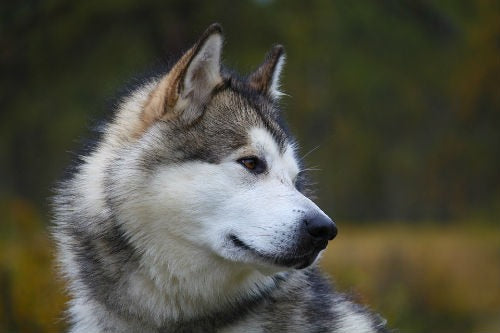
Among the great variety of breeds that exist, getting lost between the distinctive aspects of one or another is very easy. The search for a new canine companion can be complicated, especially if you do not know exactly the care and characteristics that each of these species has. Therefore, andIn this article we are going to introduce you to the great Alaskan Malamute Size: Big. Weight: Between 32 and 43kg. hair type: Long and dense. Character: Playful, Friendly, Devoted, Affectionate, Dignified, Loyal Health: Healthy and resistant breed Life expectancy: Between 10 and 12 years. Whether due to its size, need for exercise, food, space, hygiene or affection, knowing which is the ideal pet for any person should be a fundamental aspect before choosing the one that could become the best friend. That is why we have prepared a special article about a particularly interesting breed, as well as beautiful appearance. It is about the Alaskan Malamute, whose recognition, until now, has been for being an excellent sled puller and possessing great strength for this activity. Below you will find all the information you need to know this breed better, such as care, characteristics, history, health and the training required, among others. Origin The Arctic is the place where this dog breed is based, where existing tribes first bred it around the 19th century. His strength, great size and imposing appearance made him stand out as the most experienced dog in pulling sleds. Although it was not the fastest, it could carry up to 70 kilos of weight during a trip. The name adopted by these dogs is due to the existence of Eskimos named "Mahlamuits» or «Mahlemuts«, which they used to transport food and items necessary for their survival in these frozen areas. In addition to being an excellent sled puller, these dogs were also recognized in the tribes for their hunting skill. He was frequently observed in battle with polar bears, wolves or walruses, among other Alaskan animals, and emerged victorious. This also allowed travelers to be safe, so the protection of the tribes was also another function that this race played effectively. As such, The Alaskan Malamute were recognized in 1935. approximately. And since then they have become popular for their beauty and character. Alaskan Malamute Body Characteristics A muscular dog, with a strong and robust build. This is how the physical appearance of the Alaskan Malamute is presented. Because it is a sled-pulling dog, it has a notable firmness in its build, providing the image of tenacity and strength that the activity it has carried out since its beginnings requires: transporting sleds with heavy loads. The standard ideal size of these dogs is 93 centimeters. However, males reach up to 65 centimeters at the withers, while females average a height of 63 cm. In relation to weight, a male Alaskan can easily reach 70 kilos and females can reach between 48 and 63 kilos. It has a head proportionally adjusted to its physical build. Long and wide in shape. It always remains upright, which gives it an appearance of great security and majesty. A curious look is what characterizes the eyes of this breed, which are medium-sized and almond-shaped. Commonly dark or brown in color. Their ears are oval in shape, facing downwards. They are small and with round tips. However, when they are upright, they point outwards. The lower extremities of this breed are as prominent as the rest of its body. Firm, muscular and covered by their dense fur. Its legs have a type of thick pad that provides greater comfort and ease of movement. Regarding the coat of the Alaskan Malamute, it can be perceived as abundant and divided into two. An inner layer, softer and thinner, and another outer layer. The outer layer is thicker and rougher. Both protect it from the low temperatures in which it was raised. The coat color of this breed can be varied. It may well be unicolor (black and white the most common) or bicolor, or with different combinations of these shades. Behavior The character of the Alaskan Malamute breed can present some very detailed traits. To a large extent, this aspect depends on both your education and your environment. Let's see why: It is, in principle, a serene, self-confident and balanced dog. He has a calm demeanor most of the time. This does not mean that it is a trusting dog, on the contrary. When he perceives any danger or suspicion of risk around him, he immediately acts. It is a dog that does not usually bark unnecessarily, but rather warns of any scenario that requires it in order to protect its loved ones. Therefore it is characterized as a good company. It has an imposing presence, and thus continues to protect its home and loved ones. This breed has a tendency to be destructive if it feels overwhelmed by confinement. That is, living in a small space, such as an apartment, is not suitable for Alaskans. As for living with other dogs, he can be a little distrustful at first and feel invaded. However, this will happen as the days go by and as long as you do not feel attacked, you will remain calm. Later, he will adapt and coexist calmly with the other dogs. In relation to people, although he has a serious appearance, this breed is usually playful, affectionate and very happy, so living with new friends is not a problem once you know them. The need for exercises and outdoor activities is essential so that this dog keeps its energy channeled and does not become a rebellious, destructive and depressive animal. Therefore you should consider the time you have to dedicate to walking these animals. Loyalty, sweetness and protection towards their owners are the main characteristics that define the personality of this breed. However, at times he may develop tough behavior. In most cases, each of the aspects related to the behavior and character of the Alaskan Malamute will be determined by the education that is given to the breed from an early age. Alaskan Malamute Training Due to their origin and genetics, dogs of this breed can exhibit aggressive behavior and always be on the defensive if they are not properly educated. If you want to enjoy a sweet, balanced and energetic pet, the ideal is begin the training of the Alaska Malamute from the first weeks of life, this will guarantee, as he grows, a well-behaved dog. One of the aspects that should be considered a priority is teaching him to live and socialize with other animals, especially those smaller than him. This is because, by nature, this breed tends to be a hunter par excellence, and identifies smaller animals as its prey. Learning to live together will prevent you from running after any animal when you go outside. So this is a key aspect to train. For greater safety, leash walking can be adopted. However, this can be counterproductive, because it is a large animal that can easily drag its owner when fleeing. The most convenient thing is to constantly practice dog training to avoid these episodes. Although it is an intelligent and obedient dog, it is usually very independent, and this can influence its training. Being patient and using positive reinforcement will provide the best results in dog training. In addition, constantly doing short practices (10 to 15 minutes) will be enough for the dog to acquire the necessary knowledge based on good behavior. And we must not forget basic commands such as sit, stay still and walk with us. All this will be very useful in the routine of these animals. Health In general, The Alaskan Malamute is usually a very healthy animal, strong and robust. However, like other breeds, their health can be affected by diseases caused by genetic causes or external factors. None of these diseases are exclusive to the breed, that is, they can appear in this or any other canine. The most common are: Elbow and hip dysplasia Both pathologies are hereditary, that is, they will depend largely on the dog's offspring. This is a malformation in the hip or elbow joint of the animal. This disease has a greater tendency in large and heavy dogs. Hip dysplasia is usually more common than elbow dysplasia in Alaskan dogs. eye diseases Glaucoma, progressive retinal atrophy and corneal dystrophy are the most common conditions that can affect the visual health of this breed. They are of genetic origin in most cases. These pathologies can cause progressive deterioration of the dog's vision and even cause it to lose this sense completely. Loss of muscle mass In older and middle-aged dogs, this condition can appear very frequently. Also accompanied by lack of stability and coordination of movements. This cause may be associated with multiple factors. It is usually due to a polyneuropathy, which must be determined by the veterinarian. Epilepsy These dogs may at some point have continuous seizures. Which would affect your neurological system. In any case, when observing symptoms of any of these diseases, the most sensible thing is to visit a veterinarian periodically. In this way, it will be possible to determine, at an early age, how to treat these pathologies. Alaskan Malamute Care Because it is a rustic, strong and muscular dog, the care required by the Alaskan Malamute is not usually as special as in other more delicate breeds. However, it is necessary to maintain some conditions to take care of their health and well-being, especially during their puppy stage. It could be said that the first months of the Alaskan Malamute's life are where the foundations will be laid for it to continue its adult life with good health and energy. Let's see below some care that is needed to ensure the well-being of this great friend: Food As is common in large breed dogs, food plays a fundamental role to prevent the dog from suffering from obesity, in addition to maintaining the care of its shiny coat and preventing it from falling out. The joints of these dogs need to be constantly strengthened, and ensuring that their diet contains the elements that help them in this process is, without a doubt, of vital importance. Maintaining a balanced diet, with food that provides the necessary requirements for good health and that also provides the satiety that the dog needs, is the most recommended. Not exceeding the amount of food is equally necessary, as this produces overfeeding in the animal that can generate, in addition to obesity, other health conditions. Exercises Combining the Alaskan Malamute's diet with exercise is an essential task to ensure the health of our dog. Let us remember that this is a very energetic animal and is also accustomed to life outdoors, so if it does not receive walks or exercise routines constantly, it could develop not only obesity, or some other pathology, but also rebellious and aggressive behavior. Three daily walks, accompanied by 15-minute games or training, or one long walk a day, will be enough to keep these dogs calm and in good shape. Excessive exercises are also not recommended, as they can cause joint problems in the animal. Veterinarian Periodic visits to the veterinarian, complying with the vaccination and deworming schedule, are also essential to keep this breed free of diseases. Affection and attention Although it is a balanced and independent breed, the love and company of its owners cannot be missing. If you feel neglected, you may start causing damage to attract attention. So dedicate a good part of your time to showing your love for the Alaskan Malamute you have as a pet. Bath and Hygiene Although it is a rustic dog, it requires at least a bath once every two weeks or when it is really dirty. Brushing twice a week will be enough to keep his coat well-groomed and shiny. Conclusion A strong, muscular, intelligent and loyal breed is what characterizes Alaskan Malamute canines. This is a dog that, in addition to being excellent for hunting and transporting up to 70 kilos on a sled, can incessantly protect its owner and his home. Education in these dogs cannot be lacking, since their behavior will largely depend on it. So consider whether you have the time and patience to properly train this dog if you want to adopt it as a pet. What is known is that love and energy will never be lacking in your life if you keep this breed in mind. Get to know other dog breeds: Argentine Dogo Flanders Mountain Dog English Mastiff Spanish Mastiff Newfoundland German Shepherd Doberman bullmastiff Tibetan Mastiff Cane Corso Saint Bernard
Anemia canina: causas, síntomas y tratamiento

Our Blog

Canine anemia: causes, symptoms and treatment

by Lobo Azul in Jan 19 2022
Like ours, our dogs' health is conditioned by different aspects. Food, exercises, attention and care are the main elements that pets require to remain in stable well-being. A good diet is essential, especially when our dog has low defenses. It is recommended to use quality feed to offer a good diet. At Piensos Lobo Azul we have a wide catalog of Super Premium quality feed, references such as the super premium Lamb food for adults and the super premium Puppy Sensitive food for puppies would be two good options to feed our pets. However, there are diseases that affect dogs progressively and whose symptoms are not recognized with the naked eye. One of the most common is canine anemia. It is a disease caused by a lack of red blood cells, causing dogs to weaken and present different symptoms. But what is canine anemia? How do you know when a dog suffers from this condition? How can you treat it? These issues are unknown to many owners, causing the dog to be greatly affected. For this reason, we have prepared an informative article where we will provide all the details about anemia in dogs, its symptoms and the treatment that must be followed to reduce the disease. Be sure to read this important post and ensure good health for your dog. What is it? In the same way as happens with human beings, a large number of cells are found in the bodies of animals: from nutrients to red and white blood cells and platelets. These elements constitute a fundamental role for the health of the canine. Each one has a specific function and a certain presence in the blood that, if higher or lower than its standard, can cause alterations in the dog's health. In the specific case of red blood cells, their primary function is the transport of oxygen, not only to the blood itself, but to the entire body. Its presence in the blood of canines is usually no less than 39% and no more than 60%. A value lower than that indicated would mean the presence of anemia in the dog. Once the function of red blood cells in the blood is known, a decrease in these translates into a serious risk for the dog's health, since we would be talking about a oxygen deficiency in the canine's body. In simpler terms: canine anemia. But what is this disease due to? Let's find out below the main reasons for the appearance of anemia in a dog. Causes The causes of canine anemia They may vary according to the animal's organism. However, we will present the most common ones below: One of the main causes of anemia in a dog is that it does not produce the adequate amount of red blood cells. The body's deficient production of red blood cells is one of the problems that this disease generally causes. On the other hand, the self-destruction of red blood cells by the dog's immune system may be another cause of this disease. An external injury that causes excessive blood loss or internal bleeding can be another cause of canine anemia. The presence of parasites in the dog's digestive system, or serious infections in its body, can produce a decrease in red blood cell count, which would give way to this disease. Some medications given to the dog to treat other conditions can cause the red blood cells in the blood to decrease, causing anemia. Depending on the type of anemia that occurs, the causes may vary. Let's see the types of anemia and their causes. Types of canine anemia According to the factor causing anemia, its type or characterization can be identified individually. In this case, Three types of anemia can be distinguished that can affect the dog's health: Hemorrhagic anemia This type of anemia is directly associated with blood loss, whether due to internal bleeding, an open wound, the presence of parasites in the digestive system, the appearance of ulcers or bleeding in feces or urine, which can be causes of this condition. It is necessary to alert yourself if the dog suffers from any of these characteristics. hemolytic anemia We talk about this type of anemia when it is the dog's own immune system that destroys red blood cells, which reduces their production and prevents them from acting favorably on the animal's health. It can be of two types: Immune-mediated The destruction of red blood cells is produced by antibodies produced by the body itself. congenital The destruction of red blood cells is caused by inherited conditions. aplastic anemia It is caused when the number of red blood cells produced by the body is not enough to compensate for those destroyed. This may be associated with the presence of tumors or infections. Surely you are wondering how to identify canine anemia? Well, below, we will see some symptoms that will help you detect this disease. Symptoms of canine anemia Weakness in the canine is one of the most visible ways to show anemia in our dog. The deficiency of red blood cells results in a lack of oxygen in the tissues, therefore, you will not have the necessary strength to carry out your daily activities. Lack of appetite, depression and even fainting are also aspects that are commonly seen in a dog suffering from canine anemia. Also accompanied by bleeding in the stool, tachycardia and paleness in specific areas such as gums and mucous membranes. If you observe any of these symptoms, it is necessary to go to a veterinarian to diagnose the cause. Treatment Talking about a specific treatment for dogs suffering from anemia is a bit complicated, because it depends largely on the cause of the disease. Once the cause is determined, the veterinarian will be able to establish a treatment based mainly on diet, supply of vitamins and other aspects that significantly improve the dog's health and the disease disappears. Beyond talking about treatment, emphasizing the prevention of this disease is really important. Well, although not all causes are preventable, there are aspects that, when taken care of, can favorably improve the health of our dogs in this regard. In the first instance, take care of the diet, ensuring that it contains the vitamins and nutrients necessary for the dog to remain in good health. Likewise, periodic visits to the veterinarian and adequate care of the dog based on its quality of life will be enough to prevent this disease in some cases. Due to diet, there are some foods that can promote the health of a dog suffering from anemia: liver, yogurt or vitamin C are some of the most recommended foods. However, it will be the veterinarian who determines the diet and care that the dog should receive to improve its defenses. Other articles that may interest you: Toxic plants for our dogs How to treat my dog's cold Food allergy symptoms in dogs Kennel Cough - Symptoms and Treatment Leishmaniasis in dogs
¿Pueden los perros predecir terremotos?

Our Blog

Can dogs predict earthquakes?

by Lobo Azul in Jan 19 2022
Dogs are recognized as one of the best pets around the world. Depending on the breed, they have different abilities that in many cases have led them to gain not only popularity, but also the affection of many people. Loyalty, companionship, heroism, bravery, protection and many more qualities are used to characterize the abilities displayed by these animals classified as man's best friend. But what would you think if I told you that dogs can predict earthquakes too? Although it may seem crazy, these four-legged friends have the peculiar ability to sense the threat of a seismic movement. Do you want to know how it is possible? Be sure to read the following article, where we will not only justify this fact, but also explain how dogs handle the ability to predict an earthquake. Predicting earthquake: canine skill? Although it is still not very credible, the ability of dogs to predict these natural disasters is not an isolated fact, much less novel. Throughout history, institutions such as NASA have carried out studies to demonstrate that there is a great diversity of animals that can predict telluric movements, even a few days before they happen. In addition to this, there are recorded facts that reinforce this theory. One of the most notable was in 1975, in a community in China, where around a million snakes fled their habitat almost thirty days before a strong earthquake devastated the place. Similar scenarios were evident in Indonesia, where animals were able to predict a natural disaster in advance and flee the scene. Although the role of dogs in predicting an earthquake has not been scientifically determined, the ability that these animals have in this matter is not denied. This is demonstrated not only by the behavior they adopt in the face of the threat, but also by their need to seek protection for themselves and their loved ones. Sixth sense? Surely you are wondering how is it possible that a dog can predict earthquakes and a human cannot? Even though the dog may seem to have a sense that a person has failed to develop, the answer to this question is not complicated at all. Before an earthquake occurs, the earth presents a series of changes that a person probably cannot perceive at first glance. Dogs, like other animals, however, can sense some of these changes, allowing them to warn of an approaching earthquake. For example: the vibrations prior to an earthquake generally cause alterations in the chemical composition of sea water. In many cases, these alterations are harmful to the health of the animals, forcing them to look for another place to live. The sudden forced migration of animals can represent the warning of a natural threat. How do they do it? The mechanism used by dogs to predict earthquakes It is something that has not been studied in depth so far. However, some research has shown that it is a process given through the development of the senses. Although man's best friend It does not have the ability to perceive the natural threat days before it happens, minutes and even hours before the tremor occurs, the canine is capable of noticing the changes that the earth's layer presents prior to the event. However, this has not stopped dogs from being used as a very effective and popular tool to determine the presence of earthquakes. In fact, in countries like China and Japan, dogs and other animals support technological machines in detecting earthquakes, which has helped save lives and prevent material loss. The detection of electrostatic charges, accompanied by their ability to perceive high-frequency sounds that are difficult to detect by the human ear, are, according to studies, the abilities that canines possess to anticipate the presence of an earthquake. That is, it is a broader development of the senses of smell and hearing, which allow these animals to predict minutes, and even a couple of hours in advance, the threat that an earthquake means to society, especially if it is an earthquake above 6 on the Richter scale. Dog behavior before an earthquake Although dogs sense earthquakes moments before they happen, dogs do not keep the information, but rather try to alert their owners through different actions. First of all, these animals usually appear nervous when faced with this natural event, they show restlessness in their movements accompanied by incessant barking. This may be the dog's way of trying to communicate that an earthquake is approaching. Secondly, searching for a safe place to take refuge is another common action that canines perform when an earthquake approaches. So, if you notice any of these changes in the canine's behavior, it is better to pay attention, as it is likely that they are trying to warn about the arrival of an earthquake in the next few minutes and it is advisable to take shelter in a safe space. In any case, the presence of a dog will not only ensure the company, love and loyalty of the one who qualifies as man's best friend, but in addition, you will get an animal that could warn of the approach of an earthquake and help protect you from these natural events. What better combination than this in a single pet? More curiosities that may interest you: 10 Best Guard Dog Breeds Our dog's tail. How does it speak to us? Best family movies starring dogs How long does a cat live? The most popular dog breeds in the world Why do dogs howl? The best dog breeds for children
Bichón Habanero - Descubre si es la mascota que buscas

Our Blog

Havanese - Find out if it is the pet you are looking for

by Lobo Azul in Jan 19 2022
Are you looking for a first pet for you and your family? Do you want a sweet, active friend who enjoys living with his loved ones? All these characteristics seem to point to the Havanese, a friendly, energetic and obedient dog that will adapt very easily to the family nucleus. Size: Small. Weight: Between 4 and 8kg. hair type: Long straight hair Character: Playful, Affectionate, Intelligent, Receptive, Sociable, Gentle Health: Healthy Life expectancy: Between 13 and 15 years old. Characterized as an excellent companion animal, with a cheerful temperament and excessively dynamic behavior, this breed is considered an excellent pet for first-time owners, as they are very easy to care for and maintain. In addition, they will fill the home with joy at all times. However, they require early education, as they tend to adopt rebellious behavior if they are not trained properly and this makes it necessary for their guardians to be informed about everything necessary to correctly train this type of dog. Do you want to know more about this breed? Then be sure to read this article that we have prepared especially for you, where we will develop all the aspects associated with this breed. You will learn about its history, character, appearance, education and the care it requires below. History of the Havanese Bichon Although he origin of the Havanese is quite linked to the Island of Cuba, its first signs belong more certainly to the Mediterranean basin, in countries like Italy and Spain, places where the crossing between the Barbet and other dogs, which gave way to the appearance of the breed. This aspect seems to be characteristic of bichon dogs, since breeds such as the Bichon Frize, Maltese, and Bolognese also descend from the aforementioned line. However, the Havanese arrived in Cuba at the beginning of the 19th century, brought by Spanish sailors, where it developed tremendously, thanks to its proximity to the aristocracy of this country. By then, they were known as «Blanquitos de la Habana» because his fur was only white. Although this breed became truly recognized on the Island of Cuba, it did not seem to be enough to maintain itself in some moments where it was in notable danger of extinction during a period of the 20th century. It was the migration of some specimens with their families to the United States, which allowed dog lovers to maintain the breed that still existed, although with less recognition, but free from the danger of becoming extinct. It was from these events that the appearance of the habanero as recognized in modernity took place. Although its name in many cases is associated with its existence in Havana, it receives this name due to the distinctive color of its Havana-colored coat, as highlighted by the standard of the International Cynological Federation (FCI). Until now, he stands out as an excellent companion animal, dynamic, friendly, with a docile character and very demanding of attention from his loved ones. Appearance Within the physical characteristics of the Havanese Bichon Its small, compact body is denoted, slightly longer than it is tall, but well formed. All covered by its extensive and wavy fur. Its limbs are short, straight and strong, appropriate to the height of the breed. At the same time, they provide comfort and agility when moving. Let's see below a detailed description of the appearance of the breed. Height and weight Although currently the FCI has not established a defined weight within the standard for this breed. It is common to find specimens of Havanese whose weight reaches from 3 to 10 kilograms regardless of sex. Now, in terms of dimensions, these canines do not have a very pronounced size, their height ranges between 23 and reaches 37 centimeters. Face The dog's head is quite wide at the top and sides, but frontally it is a little flatter, with a very slightly pronounced stop. For their part, the eyes of these dogs reflect their behavior, as they show their sweetness, radiated by their enormous hazelnut-shaped size and generally dark color. The nose of the Havanese is medium in size, and can come in black and chocolate brown colors. On the other hand, their ears are in the shape of a triangle, set high, but hanging down to their cheeks. Queue A characteristic aspect of these dogs is their tail, as they have a kind of curve at the tip that resembles a cane. In addition, it is covered by its silky and soft long hair. It is set high and curvilinear towards the back. Fur A fairly long, wavy, silky and soft hair is what also characterizes the breed. This is one of the few breeds that survives without or very poorly developed undercoat. Its outer coat can measure up to 18 centimeters long in some cases, having some curly waves, which give it an admirably comical appearance. The colors in which the Havanese can be presented are; white, fawn, black, havana brown, tobacco and reddish. In some cases it is possible to find specimens with some spots and combinations between the colors already mentioned. Character If there is something that undoubtedly makes the Havanese an ideal pet, it is its charming temperament. Always active, playful, happy, and very fun. They are characteristics that stand out in the behavior of these canines, which will surely give you countless moments of laughter with their occurrences. In terms of coexistence, it is a widely sociable canine, both with other people and animals. However, it is important to carry out an adequate socialization process from puppies to strengthen this behavior, otherwise they could be rebellious and aggressive. This dog loves outdoor activities, especially walks and games with his owners. Because of this, it is also an animal that loves the company of its own, so prolonged loneliness can cause stress and anxiety. They are really obedient, attentive and very docile dogs, so their education will not be complicated if the appropriate measures are taken. If you do not have enough time to keep him company, train him and go for a walk, it is appropriate to look for a more independent pet, since these dogs demand a lot of time. Havanese canines generally do not present behavioral problems. However, if they feel alone or abandoned for a long time, it is normal for them to develop rebellious behavior that is reflected in the destruction of objects inside the house and frequent barking. If this situation does not arise, you can be sure that you will find a pet full of love, sweetness and energy to entertain even the little ones in the house, if that is the case. An ideal companion for the whole family or a single person, who will occupy a large part of your time. Education As mentioned, the intelligence and obedient behavior of this breed will allow its training to be really very pleasant, but this does not mean that time and perseverance should not be dedicated to it. On the contrary, these pets require an adequate education to form the foundations of your character. Starting at an early age and considering socialization as the first issue is essential, as in any dog ​​breed. These dogs need to learn to recognize their usual environment and the outside world, in this way they will get rid of insecurities and will not feel afraid when encountering other people or animals. Once advanced in this topic, it is important to teach basic obedience commands at home, especially because in this way, the canine will establish a good relationship with its owner, adequate communication and identify the things it should not do. Subsequently, you can learn tricks and games that will surely be very entertaining for the canine and its owner, who will enjoy watching you do what you have learned. These animals have a funny touch that will go very well with the tricks you want to teach them. We must remember the importance of positive reinforcement at all times of training, these dogs respond very easily to sweetness, kindness and good treatment, so if you put motivation and reward into practice in training they will have no problem carrying them out quickly and the results will be notable. Health Generally the Havanese health It is not a matter of concern. We are talking about a healthy, energetic and very active canine. It requires exercise to stay completely healthy. The appearance of diseases specific to the breed is very rare, practically non-existent. However, there are pathologies that can regularly affect these dogs, the most characteristic is knee dislocation or patellar dislocation, named after inadequate mobilization of the kneecap, causing extensive pain and difficulty in mobilizing dogs. Likewise, there are other pathologies that appear less frequently, such as progressive retinal atrophy, cataracts and otitis. It is important to say that, to a large extent, the health of these animals will depend on the care that their owners constantly give them, both to maintain their appearance and their state of health in good condition. Havanese Bichon Care Although they are not one care extraordinary, they require some special attention to stay healthy. First of all, the hygiene of these dogs is essential. Although it does not shed hair, which makes it a hypoallergenic pet, its coat tends to become tangled easily. That is why brushing it, at least once a day, will be very necessary to avoid the presence of knots. As for bathing, it should only be done when the dog is really dirty, no more than once a month and, as we say, only if it is really necessary. Hygiene in areas such as the eyes and ears is very important for the Havanese, because they are prone to diseases. Therefore, in addition to veterinary control, carrying out periodic inspections and cleanings in these areas will ensure their prevention. These canines require moderate exercise, although they are very active. A daily walk will be enough to keep them entertained and balanced. Combining this walk with games and training will be very good for your emotional balance. A unique aspect of these dogs is their outstanding ability and preference for swimming. That is to say, they can practice it very easily and they will feel quite entertained, as well as very healthy. Additionally provide a good diet rich in nutrients, without excesses, will keep the Havanese from obesity and will keep him consuming the vitamins and proteins necessary for his proper development. On the other hand, the demand for attention and company in the Havana bichon is excessive. They require great dedication from their owners, so it is important to evaluate whether you have enough time to dedicate to these pets. On the other hand, medical control is imperative for all dogs, in this way our little friend is kept in optimal health and properly vaccinated and dewormed. Conclusion Without a doubt, the Havanese is a pet for all tastes. Dynamic, happy, docile and loving. Also friendly and very fun, ideal for a single person or to brighten the days of an entire family with his occurrences. Having this pet for the first time will leave you with a pleasant experience and will teach you to value the company that these canines are willing to give you, since they greatly love spending time with their owners and tolerate loneliness very little. In addition, they adapt very easily to the presence of other animals and people, so coexistence and learning will not be problems. If you have a lot of free time, you want to invest it in walks, recreation and games, and you are looking for a companion, the presence of this dog is ideal for you. You may also like: Pomeranian Westy yorkshire terrier Boston Terrier Pug French Bulldog Beagle Maltese Bichon
Azawakh - Conoce los detalles más importantes de esta raza de perros

Our Blog

Azawakh - Learn the most important details of this dog breed

by Lobo Azul in Jan 19 2022
Choosing a dog among the different existing dog breeds can be somewhat complicated. Even more so, because there are some that are only known in their country of origin, despite having different attributes that make them worthy of recognition. Such is the case of Azawakh. Size: Medium. Weight: Between 15 and 25kg. hair type: Short, smooth and fine. Character: Reserved, Attentive, Affectionate. Health: Healthy Life expectancy: Between 10 and 12 years. The Azawakh is a dog breed from the African continent, it has characteristic aspects that make it an exceptional pet, mainly his dynamism and inexhaustible energy, which also allow him to excel in racing sports and also in hunting. It is a slender animal, with an impetuous character and numerous skills typical of sighthounds like him that its owner should know. It is for this reason that the following article focuses on detailing the most outstanding characteristics of this incredible dog. History, physical appearance, behavior, health, education and the care it requires are the most relevant topics before adopting this or any other pet. Be sure to read the following information and learn in depth everything related to this fascinating dog. Origin of Azawakh As we have said, the Azawakh's abilities, which we will mention later, have made it a popular dog in its country of origin, Africa. It is presumed that These canines come from the Mali region, an area near the Sahara desert. In principle, these canines were included within an African tribe, in which they were used for hunting and surveillance. This is because they innately showed great abilities in speed, vision and camouflage in nature, thanks to their physical characteristics. Initially, hunting consisted of capturing small animals. However, they were advancing in this aspect and including larger creatures such as foxes, jackals and even lions in their hunt. As time went by, it was not only an animal for hunting, but it was also considered a canine of great help in everyday life. That is, an excellent companion and pet, because in survival their participation was essential. The care and preservation of the breed became a priority, to the point that the sale of these dogs inside and outside the territory was prohibited because they were considered good luck charms. This is the main reason why the breed has not been as recognized in other parts of the world. In fact, it was not until the mid-1970s when these canines were transferred and known within the European continent, although they have not achieved the same popularity as other greyhounds. However, connoisseurs of this breed place great value on its different qualities. Physical characteristics The physical appearance of the Azawakh is very similar to that of the rest of the sighthounds, mainly characterized by their slender and stylized body, which provides them with great elegance. Long, thin legs, slim build and a notable height above its length. However, despite being a thin breed, they are known for having great strength, mobility and considerable speed. Which fits perfectly with its build and gives it the possibility of moving agilely whether in search of prey, playing or doing sports.   Next, let's look at some of the aspects related to the physical appearance of the Azawakh. Azawakh height and weight As mentioned, it is a dog evidently taller than it is long, its build is thin and fine although formidable and muscular. The females of these canines stand out for having a height between 60 and up to 70 centimeters, combined with a weight of up to 20 kilos. Azawakh males, for their part, have superior measurements: weight is between 20 and 25 kilos, while height averages between 64 and up to 74 centimeters. head Like the rest of its body, the head of this African greyhound has a thin and elongated shape. This gives even more presence and elegance to the breed, in addition to having become a defining aspect of it. These canines have elongated and thin necks, although they look muscular in detail. On the face, its muzzle also stands out, also elongated and slightly straight, forming a thin line that becomes narrower towards its black nose. On the other hand, the eyes are dark in an amber hue, while their ears are flat, triangular in shape, set high and hanging downwards, specifically at the level of their cheeks, which are also flat. Fur The Azawakh's coat is commonly fine, short, shiny and smooth. This makes it much easier to appreciate your body build. It is an animal with scant fur. In relation to the shades, they can be diverse, including different shades such as light sand or dark fawn. In some specimens it has become normal to find black or white spots, depending on the location. For example, in the breed standard it is normal to find them on the neck. Azawakh Behavior In addition to its physical appearance, if there is one detail that makes this or any other breed of greyhound stand out, it is its remarkably dynamic behavior. The energy of these canines is often uncontrollable in some cases. That is why they require not only an experienced owner to control them, but also a lot of physical activity on a daily basis. Dedication to this last aspect is what those who adopt this breed of dog should consider the most. The physical and emotional stability of this breed within your home will largely depend on an adequate exercise routine and other important care. In general, Azawakhs are kind, affectionate and intelligent dogs. However, they are also very independent and highly value their space, in addition to the tranquility that it generates, especially when they eat or rest.   They are considered appropriate dogs for hunting because, together with their speed and agility, they have a great attention span. That is, they are always attentive to any event and remain active much of the time. It is recommended that these dogs remain in open spaces, where they have enough freedom to discharge most of their energy. Otherwise, it is appropriate to have enough time to dedicate to exercise routines and walks outdoors. Azawakh training One of the most important aspects in adopting the Azawakh and any other dog breed is its education. Whether the canine becomes a stable and suitable pet to stay at home will largely depend on this aspect. In the case of these specimens, training should start from an early age. This will ensure that the bases for your behavior are well founded. The first step that must be taken into consideration is, without a doubt, socialization. It is important that while it is a puppy, the animal learns what is necessary to establish bonds with other pets and other people. The third week of life is the appropriate time for the puppy to acquire the necessary practices in this area. In conjunction with socialization, it is essential to take advantage of the first three months of the canine's life to provide guidance on how to relieve itself outside the home and the basic rules within the home. Later, when he has grown more, it is necessary to start taking walks and socializing outside his home, with the environment, and in this way also start practicing the basic obedience commands: walking, running, stopping, among others. Each of these steps will provide balanced and healthy behavior for the canine, as long as they are applied based on positive reinforcement. It is very unlikely that with traditional training, and especially based on shouting or violence, the dog will respond adequately. On the contrary, this and any other breed can respond negatively to these negative stimuli, so they are not recommended in any case. Once you have applied the previous recommendations, it is possible to continue the educational training with more difficult commands and more complex tricks or tasks, which the dog will surely learn easily as long as they are taught correctly. Azawakh Health The Azawakh is also characterized by having an optimal state of health. They are recognized as formidable and healthy canines. However, they require, like other breeds, care to ensure good health, as there are some diseases that, although rarely, can be present. Some of them are: Hypothyroidism, heart problems, hip dysplasia, drug allergies, stomach torsion, among others. In many cases, these diseases are difficult to prevent because they have genetic or degenerative causes; however, it is possible that they can be adequately controlled if they are detected in time.   It is important, therefore, to contribute with the care required by this dog breed to ensure in this way its longevity of up to 13 years. Azawakh Care Although we are talking about a largely healthy dog, care is just as necessary for this dog as for any other pet. These details, although simple, are very necessary if you want them to have good physical and emotional health. Hygiene Hygiene is one of the most important care that must be provided to these canines. It is therefore necessary that you enjoy one or two hair brushings a week. Like one bath a month, or when strictly necessary. It is important not to repeat the bath frequently, because this will eliminate the natural oils from the skin and cause the canine to lose the shine of its coat. Exercises Without a doubt, one of the essential care for maintaining the well-being of the African greyhound is dedication to an adequate and complete exercise routine. From daily and long walks outdoors, to exercise routines or practicing a sport, it is important to keep these canines always in constant activity. Let us remember that this is a highly energetic animal and exercise is one of the most effective alternatives to control its energy levels. Otherwise, they may suffer from anxiety, stress or adopt destructive behaviors at home. Feeding Complete, balanced and adequate nutrition is another care that must be provided to this breed. It is important to provide adequate amounts of water and food. Just like a quality feed that contributes to the growth and strengthening of the canine in different aspects. Veterinary care Visits to the veterinarian represent another important aspect. While it is true that this is a healthy canine, we have mentioned some common diseases that can affect its health in some cases. It is important to check with the veterinarian every 6 months, in combination with deworming and vaccination sessions. In this way, the dog will keep its immune system strengthened. Conclusion Although the Azawakh is a little-known dog breed, it is one of the most recommended alternatives as a pet. We are talking about a faithful, friendly, independent, intelligent and very energetic dog, so the company of an active person, accustomed to exercise or hunting, will suit him very well. It is a dog that easily adapts to any context. However, it is advisable to keep him in homes with spaces where he can move freely and have the opportunity to discharge his energy throughout the day. It is important that you have the time and the necessary disposition to offer the Azawakh the care it needs, because although these are not difficult aspects to manage, compliance with them is very important if you want to keep these animals in good health and happy. Learn more about other breeds: English Cocker Spaniel Barbet The Samoyed Schnauzer water dog French Bulldog Beagle border collie bull terrier Andalusian winemaker
Displasia de cadera en perros: síntomas, tratamiento y razas más afectadas

Our Blog

Hip dysplasia in dogs: symptoms, treatment and most affected breeds

by Lobo Azul in Jan 19 2022
Although there are diseases that can be prevented depending on the quality of life of our pet, there are a number of pathologies that appear due to factors that are difficult to control, such as genetics. One of the most mentioned in this case is the hip dysplasia. A very common condition in dogs of different breeds that can affect the mobility of the canine, to the point of completely limiting its walking, due to the pain that progressively worsens. But what is it? How to identify it? What should we do about this disease? All of these questions are common, because although it is very common in dogs, there are owners who still do not know it. For this reason, we have developed an article dedicated to delving into hip dysplasia. Don't stop reading it, it will help you learn in detail about each aspect of this condition. What is it? Like the human body, the skeletal system of dogs is linked by a type of "gears", which allows the function and mobility of each joint. If these gears do not fit perfectly in any of their cavities, an alteration may occur in the canine, among the most common of which is hip dysplasia and elbow dysplasia. This guy is about a deformity in the hip area, also known as the coxofemoral area, which occurs when the head of the femur (whose shape is a ball) does not fit properly into the concave cavity that corresponds to it (called the acetabulum) and is located within the pelvic bone. This imbalance causes the development of the joint to not take place properly. This happens given that the head of the femur, not being covered, does not remain in the aforementioned cavity, but, on the contrary, moves disorderly, which in the long run produces weakness of the dog's musculoskeletal tissues, accompanied by pain and inflammation. We talk about a degenerative disease. That is to say, it is not clearly evident in the first weeks of the canine's life, but rather becomes noticeable with its growth and development, since the wear and tear of the tissues with inadequate movement of the head of the femur makes the pathology progressively more visible. So it will be up to four or six months, and in some cases in adulthood, when signs of this disease begin to be noticed. What are the breeds most affected by hip dysplasia? This pathology most frequently affects large and heavy dogs, even more so when they have not received adequate care such as the necessary supply of calcium, a balanced diet and a favorable exercise routine to strengthen their joints. However, in certain cases, this disease can appear in small breed dogs, but with less incidence than in those mentioned. Next, let's look at some of the Breeds most likely to be affected by hip dysplasia: German Shepherd Belgian Shepherd Saint Bernard Great Dane Pyrenean Mastiff Neapolitan mastiff french bulldog english bulldog These breeds are the most associated with the disease, due not only to their size and weight, but also to other factors that make them more likely to suffer from it. Knowledge about the breed and how to prevent or reduce the risk factors associated with this condition can help provide our pets with adequate care for their well-being. Causes Hip dysplasia can be seen as a multi-causal disease, because it has different risk factors (both biological and environmental) that can increase the possibility of its appearance. Let's see below the risk factors associated with it: Environmental Among the environmental factors, one can locate aspects related to quality of life that people offer their pets, because, if the dog receives the necessary care, the possibility of suffering from this condition will decrease. We can mention the following as environmental factors: Bad diet Without a doubt, inadequate nutrition is one of the factors most related to hip dysplasia. Accompanied by a deficiency of calcium and minerals in the canine diet. If a dog does not receive adequate nutrition, it can also trigger obesity, an aspect that significantly influences the appearance of the disease. Hiking Although it may seem insignificant, practicing exercises in a dog's life is essential. Even more so if they are large and heavy breeds, as this will help them stay in shape and avoid such important aspects as obesity. A sedentary lifestyle for dogs can be really harmful, because in addition to gaining weight, it can atrophy their joints and increase the chances of dysplasia appearing. Biological The factor considered the most critical cause of hip dysplasia is hereditary. In these cases, it is most frequently associated with large dogs and heavy like those in the previous list. However, in canines of smaller weight and size, such as Spaniel or Pug, it is normal for this disease to appear on some occasions. In any case, although the genetic factor is always a constant and difficult to prevent, environmental factors are usually controllable to a large extent and will allow the dog to enjoy a good quality of life and health, if it is given adequate care. Symptoms of hip dysplasia Because it is a progressive and degenerative disease, the symptoms do not appear all at once, but rather become more acute as the dog grows. They are also intermittent, that is, they may not always be present. Let's see what manifestations canines with this disease can present: Refusal to perform physical activities such as climbing stairs Tendency towards inactivity progressively sharp pain Difficulty moving lameness Stiffness in the rear Instability sadness Apathy to play or run Curved back Limitation to get up Increased front muscles These are the most common symptoms of hip dysplasia in dogs. As the disease progresses, factors such as pain may increase, as well as difficulty moving, to the point that the dog may completely lose mobility due to the discomfort this causes. Treatments Properly, This is a disease that has no cure.. However, certain treatments can be applied to the dog that help improve its quality of life, minimize episodes of pain and feel a little more relieved. These treatments can be surgical or non-surgical, both will largely depend on the progression of the disease. Also considering other factors, from the size and age of the dog, to the cost of the treatment. Below we explain what each of these treatments consist of: Surgical The surgery to try to correct dysplasia hip is defined as triple pelvic osteotomy. In this case, the head of the femur is linked to the corresponding cavity artificially using plates that help it stay in place. This surgery is performed, in most cases, when non-surgical treatment no longer has the same effect. However, it presents great risks, so it is necessary to have the guidance of the veterinarian at all times to decide whether we should do it or not. Non-surgical The non-surgical medical treatment is more inclined to administer medicines that help the dog relieve the pain and discomfort caused by the disease. Anti-inflammatories and analgesics are the ones most commonly supplied for this purpose. On the other hand, these are complemented with hydrotherapy and physiotherapy sessions that help strengthen muscles and relieve pain. Non-surgical treatments are applied when the dysplasia is in its mildest phase. In this way its progression is slowed down even if it does not stop. Although hip dysplasia is a disease not curable and difficult to prevent due to its genetic factor, there is the possibility of offering our pets a good quality of life, attention and care that keeps them healthy and prevents this condition as far as possible. Other articles on canine health that may interest you: kennel cough canine anemia Toxic plants for dogs How to treat my dog's cold Food allergy in dogs Dandruff in dogs
Kelpie Australiano - Una de las razas favoritas

Our Blog

Australian Kelpie - One of the favorite breeds

by Lobo Azul in Jan 18 2022
The Australian Kelpie, in its country of origin and in many other places, is a widely recognized dog. Its physical qualities and wonderful temperament are a special combination that make this canine very attractive in the eyes of potential owners. Size: Medium. Weight: Between 10 and 25kg. hair type: Short and smooth. Character: Intelligent, Friendly, Energetic, Loyal, Alert, Enthusiastic Health: Healthy Life expectancy: About 12 years. The Australian Kelpie is happy, faithful, affectionate and very docile are some of the main attributes of this little friend's temperament. To which is added a fine, athletic and slender appearance that makes him very good looking. These dogs are considered excellent companions for both children and adults. Families enjoy a playful and obedient animal, as well as sociable. However, like all existing dog breeds, this one requires some important care to maintain its well-being. That is why in the following article we will develop all the details related to this special dog breed. Discover all the aspects associated with it and consider if this pet is the right one for you. Origin of the Australian Kelpie Very little is known about the beginnings of the Australian Kelpie. Its history is not widely recorded. However, it is known that their descent is attributed to Scottish dogs, that is, they are closely related to the different types of Collie. The ancestors of these dogs were brought to Australia for herding activities. At that time, the numerous herds required dogs with outstanding skills in this profession. The Collie, of course, excelled in this. However, the quest to improve canine skills resulted in English collies being crossed with other breeds. In one of these attempts, a little dog named Kelpie, which was the first of this dog breed. As they expanded throughout Australia, their popularity grew. Mainly because of their excellent skills as a herding dog, which never ceased to surprise. And secondly, for the excellent temperament that characterizes them. These dogs earned the preference of the inhabitants of this country, especially in the fields, where they were in great demand. Thus they were also transferred to other countries such as Europe where they were also widely accepted, although to a lesser extent. physical appearance Although these are dogs of average height, that is, medium-sized, the physical appearance reveals an athletic, muscular dog with a well-proportioned body. Characteristic of herding dogs that generally have great physical dexterity. Australian Kelpies are strong, robust dogs, but at the same time elegant in appearance. Among the physical characteristics of these dogs, what stands out most is the difference in height between males and females. The latter are generally smaller. Let's look at these aspects in more detail below: Weight and height The weight of these dogs can average between 11 and 20 kilos for both females and males. Meanwhile, in height, the difference is notable. Males can measure between 46 and 51 centimeters. The females, for their part, are between 43 and do not exceed 50 centimeters in height at the withers. That is, they are visibly shorter than the males. head and face A formidable and wide head, with a slightly rounded shape. His eyes are dark, almond-shaped and medium in size. A particular aspect of these dogs is their medium-sized nose, its color varies depending on its coat. The ears, on the other hand, stand well erect. High set and medium size. They have a triangular shape that is displayed in a pointed finish. Fur These dogs have the quality of being air-conditioned. Well, its fur divided into two layers, one external and one internal, allows it to adapt very easily to low temperatures. And also to the sun's rays. Its fur is visibly dense, hard and bushy. It can measure between two or 3 centimeters. The colors allowed are black, fawn, chocolate, red, and also combinations ranging from black and tan to red and tan. Character of the Australian Kelpie The main reason why Australian kelpies are one of the most sought after breeds in countries like Australia and other areas is their wonderful temperament, which does an exceptional pet. They are quite energetic dogs, full of dynamism, as well as collaborators, so they will carry out the tasks ordered to them immediately. Their intelligence is another admirable quality in them.. For this reason, training will not be a matter of excessive concern. They are docile, obedient, affectionate and very happy, that is, an ideal pet in homes where there are children, with whom they will surely get along very well and always remain playful.   They are also protective and loyal dogs to their human family, meaning that love and company will not be lacking in homes where one of these specimens exists. His temperament helps him feel comfortable in different spaces. It can live peacefully both in apartments, closed spaces, and in fields with large plots of land. However, it must be taken into account that because they are very dynamic animals, they greatly require walks and time outdoors in which they can release all the accumulated energy. Also accompanied by a considerable amount of exercise. In this way, the dog will remain happy and in a completely healthy state of well-being. Coexistence with other pets is also a favorable point with these dogs. He generally gets along very well with other races. However, constant and adequate socialization will ensure that this dog maintains the special character that characterizes it. Education As mentioned, their level of obedience and intelligence mean that training is not a matter of great concern. However, in some cases it is often difficult to handle a dog with an excessive amount of energy, as in this case. For inexperienced tutors, this can be frustrating, and they mistakenly end up using conventional methods for their training. Abuse, yelling, or punishment will never be an efficient alternative for training any pet. On the contrary, the use of these methods can encourage a negative, even aggressive, attitude in the canine that is not favorable for anyone close to it. The appropriate thing is to use positive reinforcement, motivation and reward when the dog pays attention to the instructions given to them. Start the education process of these dogs with socialization as the first topic, and then addressing the basic obedience commands (sit, walk, come, lie down...) is essential to reinforce the canine's communication and good behavior. Once these aspects are covered, the canine will be ready to practice more complex commands, tricks and games that it will surely love and will be very useful to improve its energetic behavior. [embed]https://www.youtube.com/watch?v=XxHZm79vw2M[/embed] Australian Kelpie Health If the character of the Australian Kelpie is impressive to you, its health is another of its strong points. It has a life expectancy of approximately 12 to 14 years. In which you will enjoy a canine companion, healthy, strong and resistant. On rare occasions, these dogs may suffer from visual problems such as alterations in the retina, but this rarely affects their well-being. However, their impressive strength makes them feel more energetic when they are sick, so it can be difficult to determine the presence of any discomfort in these dogs. Periodic medical check-ups are one of the most appropriate ways to maintain the Kelpie's health. Care Although we have mentioned that it is a strong, resistant and healthy canine, they require, like other pets, care to maintain good physical and emotional conditions. Let's look at some of the most basic ones below: Australian Kelpie Feeding Adequate nutrition is key to ensuring good health. It is important to consider feeding it with a quality feed that provides the necessary nutrients so that the dog grows stronger and, in addition, its coat remains dense and shiny. Exercises If there is one aspect that should not be neglected, it is the constant practice of exercises, walks outdoors and games. It is important that the Australian Kelpie maintain an active exercise routine, play dog sports or take long walks daily. The energy that these dogs have is impressive and must be controlled. Otherwise, they may adopt destructive or depressive behaviors at home due to the lack of space in which to function. Up to 4 daily walks are necessary in the life of these canines. Therefore, dedication to this aspect must be rigorously fulfilled. This is a nice detail to consider when adopting a Kelpie as a pet.   Hygiene Due to the structure of their coat, care is not as demanding as other pets. However, it is important to consider at least weekly brushing, in order to maintain its shine and cleanliness. Bathing these dogs should only be done when they are really dirty. That is, when they really need a deep clean. Otherwise, they can lose the natural oil that gives shine to their coat and protects their skin. Medical checks As mentioned, visits to the veterinarian are very necessary to maintain the well-being of the canine. At least a check-up every 6 months will be indicated for this to be a healthy dog. Vaccination and deworming on the indicated date is also an aspect that needs to be strictly followed. Only then will it be a truly healthy and strong dog to entertain the whole family. Conclusion When it comes to good pets, without a doubt this wonderful dog occupies one of the first places in people's favoritism. And its attractive character, combined with a strong and athletic physical appearance, make this specimen ideal for all people. As a sports companion, to go running, walking, playing, or simply filling your human family with love, These dogs will adapt very easily to any space and context.. They are docile, intelligent and very loyal. That is, their owners will enjoy not only their company but also their protection and attention at all times. Despite this, they are also very independent dogs so, outside of exercise, they do not demand that their owners always be by their side. These dogs will fill your entire home with joy, fun and love. However, it is important to consider the exercise demand they need, because if you do not have the time to dedicate to this aspect, the breed may present a destructive or anxious character that will not do it any good. Consider whether you have the time to devote to Australian Kelpie physical activity and enjoy the love and fun that this beautiful pet has to offer. Other dog breeds that may interest you: border collie Andalusian winemaker bull terrier French Bulldog Beagle The Samoyed Schnauzer
Plantas tóxicas para nuestros perros

Our Blog

Toxic plants for our dogs

by Lobo Azul in Jan 18 2022
If you are a pet and plant lover, we advise you to be especially careful with the combination of both, as you should know that there is a great variety of plants that are toxic and they represent a terrible threat to dogs. Plants contain substances that can cause severe poisoning in animals. Therefore, it is important to know both the plants that can cause harm to dogs, like the symptoms of poisoning caused by them and what to do if they occur. Symptoms of plant poisoning We don't always see our furry friends when they ingest any herb or plant that could harm them. Therefore, it is important that you know the symptoms that occur when they suffer poisoning by eating or licking any of the plants that contain substances toxic to them. The most common symptoms are: Respiratory problems: that occur with asphyxiation and drowning. Kidney failure: which can cause the loss of an organ and even death. Nervous system problems: causing tremors, paralysis, seizures, disorientation and, in extreme cases, can induce a coma in the dog. Digestive conditions: They normally manifest with diarrhea, vomiting and abdominal pain, which can worsen by causing intestinal bleeding. heart problems: which present as arrhythmias and can even lead to a heart attack. Mucous membrane lesions: which manifest themselves with bleeding gums, excessive salivation and difficulty swallowing. Skin inflammation and rashes may also occur on your delicate skin. If you notice any of these symptoms in your pet, do not waste time, as it is key in a case of poisoning. You must go urgently to the vet. You should not improvise and it is recommended not to give the dog water, food, or any type of medication, as it can be counterproductive. If you have plants, take a sample of them to the veterinarian to possible rule out the cause of the poisoning, and thus apply the appropriate treatment as quickly as possible. In any case, it is advisable that you identify the type of plants you have at home to know whether or not they are toxic to your dog. You should be equally careful when you take it for a walk. Flowers and plants toxic to dogs There are numerous seemingly harmless flowers and plants that adorn our homes, inside or outside. But if there are pets in the house, attention must be paid to the type of flora we select to avoid accidents that could harm our furry friends. Below we mention some of those dangerous plants for dogs: Aloe Vera This plant has many healing benefits for humans. However, It is very dangerous for canines. This gel can cause problems in the nervous and digestive systems. Colchicum autumnale Commonly known as autumn daffodil or dog killer. Its name is due to toxic effect that it produces if a dog consumes it. It can cause severe vomiting, respiratory failure, and kidney and liver damage in the animal. Mistletoe If a dog eats the berries or leaves of this plant, it is very dangerous, since they contain substances capable of causing diarrhea, vomiting and convulsions, and can even induce a coma in dogs. Lily of the valley (Convallaria majalis) This is a plant with very striking bell-shaped flowers and a sweet smell, so it may attract the attention of our playful companions. However, It is a very plant poisonous. Therefore, you should pay close attention and not leave them close to the animals' reach. These seemingly harmless flowers contain toxins that cause diarrhea, vomiting, serious heart problems and seizures. If a dog ingests this plant, an emergency visit to the veterinarian should be made. Azalea and Rhododendron These beautiful and decorative flowers are normally found in every garden. But they are as beautiful as they are toxic to dogs. Therefore, if your faithful friend consumes the flowers or leaves, the effects can be fatal: starting with vomiting, diarrhea, tremors, paralysis, serious heart problems and coma. Dieffenbachia and Philodendron These are other very ornamental plants that normally adorn homes. However, represent a danger to dogs, since its toxicity can cause severe digestive problems, suffocation, tremors and injuries to the mucous membranes, such as bleeding in the gums, excess saliva and difficulty swallowing. Cyclamen The roots of this plant are particularly dangerous. Poisoning, if a dog eats it, causes severe vomiting, abdominal pain, kidney failure, paralysis, seizures and can even cause death. This, due to the component it contains called cyclamine, that has the effect of a powerful purgative. Kalanchoe These can cause vomiting, diarrhea and cardiac arrhythmia problems. Oleanders Its leaves and flowers are very toxic. They can cause severe vomiting, slow the pulse and can even cause death in dogs. This plant is found anywhere, so you have to be alert so that the dog does not come into contact with it. Lilium There are various types of this plant, some can cause irritation to the tongue, mouth and esophagus, among them are Callas, Alstroemeria and Spathiphyllum. Narcissus If your dog ingests these flowers you should take him to the vet, since this plant contains a substance called liquorine, which is a toxic crystalline alkaloid that causes diarrhea, vomiting, pain, and even cardiac arrhythmias. Sago Palm (Cycas revoluta) Also known as false palm tree, consumption of its seeds and leaves can cause dogs to vomit, damage to the stomach, blood in the stool, severe liver problems and can lead to death. Tulips and Hyacinths The toxic part of these plants is found in the roots, so you must pay attention that your dog does not remove them from the ground, because if they bite them they can cause irritation in the mouth and esophagus, excessive salivation, diarrhea and vomiting. Marijuana Cannabis has been tested on dogs in some scientific studies. Although it is not fatal, the consequences of its consumption due to the toxicity it contains can result in loss of consciousness, tremors, cardiac arrhythmias, disorientation and excessive salivation. To finish Now that you know which plants are harmful to our dogs, be careful when you go out for a walk with your faithful friend to play in the park or pay attention to the plants and flowers you have in the garden. More articles that may interest you: Kennel cough: symptoms and treatments How to treat my dog's cold Food allergy symptoms in dogs How to change our dog's feed Toxic dog food Prevent and cure dandruff in dogs
La cola de nuestro perro, ¿Cómo nos habla con ella?

Our Blog

Our dog's tail, how does it speak to us?

by Lobo Azul in Jan 18 2022
These loving and faithful little furry friends can't talk like humans, but they have their own way of communicating. Dogs express their emotions through the fascinating body language they have: erection of their fur, their gaze when their pupils contract or dilate, movements of their ears, certain postures, tremors and their barking. and one of the most expressive parts of its body is its tail. The canine's tail is one of the elements they use to interact and socialize with the other inhabitants of their environment. At the same time, human beings and other animals learn to recognize the emotions that the dog experiences through movement of his tail. Dogs have a great capacity to emit visual signals with information that is quite complex to understand. However, some scientists and animal behaviorists have conducted several studies in which they have found a close relationship. relationship between Tail movements and the different moods of dogs. They have studied each movement in order to decipher its meaning. The conclusions have shown that animals control their movements in a similar way to human beings, that is, that our dear canine friends "control the muscles on the left side of their tail with the right side of their brain, and vice versa." At the same time, they have discovered that negative feelings are expressed by movements to the left, while positive feelings incline them to move to the right. Meaning of the different positions of the tail Normally, with him tail movement dogs express excitement and, the greater the movement, the greater the excitement. On the other hand, the nuances given to the movement of the tail depend on the breed and size, which are specific to each morphology. In any case, both the movement and the position will indicate the reason for its excitement. These are some of the most common positions that dogs adopt with their tail: fast movements: This behavior can mean a strong emotion of anxiety, happiness or nervousness. circular movements- When your furry friend is waving his tail in big circles, these types of movements mean he's having fun, whether he's playing with people or other animals. At that moment, he does not feel dominant or submissive, he just wants to have fun and is expressing joy and invitation to continue the game. horizontal position: If the dog's tail is in an extended, horizontal but not completely rigid posture, it is transmitting attention. upright position or tail fully raised: In this case, your dog will be expressing dominance and wants to demonstrate his power, security and authority when surrounded by other dogs. Tail down with movements near the legs: in this case, insecurity and anxiety are manifested on the part of the animal. Even if he tends to move it to the left, it is a sign that he feels threatened. Position of the tail up but curved towards the back: It should not be confused with the previous position, since the tail erect and directed slightly towards the back implies a feeling of tranquility and confidence. Tail down and relaxed position: It is the most common position of a dog. When its tail is lowered but does not reach its legs, the animal is expressing tranquility. It is a sign that you are calm, relaxed and without any worries. Position near the legs: When the dog has its tail low but very close to its legs, it is expressing a state of insecurity. Tail position between legs: If the canine is afraid, by keeping its tail between its legs it is expressing submission. He is stating that he is not the dominant one in that situation. Tail taut in fully rigid position: If it is extended and horizontal, your furry friend is trying to intimidate an intruder who is invading his territory. In these cases, their hair also tends to stand on end. And, if it also tends to move its tail to the left, it means that the dog is analyzing another unknown dog. This position of the tail is part of a process of getting to know another animal. It is part of the rite of hierarchy between animals of the same species. Shaking position: If the dog moves its tail slightly, it is greeting. Beyond the wagging tail dogs show another type of behavior with his tail. They not only use it to communicate their emotions, but they play with it. It may be the case that you see your dog chasing his tail. This situation is sometimes normal, especially if they are puppies, since they simply do it when they feel bored. This is a way they use to entertain themselves, and even more so, when pets realize that their owners have fun watching them try to catch their tail. So, they do it with the aim of attracting the attention of their owner. On the other hand, you should know that this behavior with the tail can be caused by other reasons that should be paid attention to. For example, the reason may come from a parasite that is bothering you and causing some illness. Also, in some breeds such as the German Shepherd, this excessively repetitive behavior can be a sign of stress and frustration, and they use it to reduce those unpleasant sensations. And, the most disturbing reason, is a mental illness called “compulsive canine disorder”, which is similar to the obsessive-compulsive disorder known as OCD in humans. Due to the possible alarming causes, we recommend that you pay special attention to your pet when he insistently chases his tail, and if necessary, go to a dog behaviorist. Don't abuse your dog's tail As we have mentioned, a dog's tail is one of its most important elements to express its emotions. Therefore, we recommend that, before making a sad and painful mistake for your beloved and faithful friend simply for aesthetic reasons, you think that by cutting a dog's tail you are cutting off the capacity for communication and relationship that is maintained between you and him. If you found this post interesting, you can also read these: Best family movies starring dogs How long does a cat live? All About canine ethology Best apps for dogs dog breedsyes most popular Best dog breeds for children Why do dogs howl?
Corgi Galés: el preferido de la realeza

Our Blog

Welsh Corgi: the favorite of royalty

by Lobo Azul in Jan 18 2022
Are you looking for the company of a small and dynamic dog? There are a variety of small breeds that are sure to attract your attention. But would you like to have the royals' favorite dog? If so, the Welsh Corgi He is the little friend you are looking for. Size: Small. Weight: Between 10 and 14kg. hair type: Straight and medium length. Character: Playful, Extroverted, Tenacious, Friendly, Bold, Protective Health: Prone to some health problems. Life expectancy: Between 12 and 15 years. A popular and recognized breed in different parts of the world, not only for its beauty, but also for being the favorite breed of Queen Elizabeth II, a situation that has made it privileged and very special. The Welsh Corgi is a canine native to Great Britain, with a history and peculiar character that has led it to earn a space in society as an excellent pet. However, although its size and fame make one believe that it is a dog for anyone, this peculiar four-legged friend has a very special character, which requires adequate education and careful dedication. Are you interested in learning more about this breed? Then you cannot stop reading the article that we have prepared for you on this occasion. Learn every detail of this distinguished breed that won the love of the English crown. Origin of the Welsh Corgi The history of the Welsh Corgi, also known as Pembroke Welsh Corgi, Welsh Pembroke Corgi or simply Pembroke, contains different facts of great interest that make it very entertaining. This breed is native to the British Isles, Great Britain, specifically Wales, where the ancestors who are presumed to have given rise to the breed as it is currently known took place. Although its origin is not completely clarified, the most accurate theory is the arrival of Visigothic or Celtic dogs, brought to these islands by the Vikings. During their stay on the island, these dogs were used as herding dogs and farm caretakers. Despite its small size, They did an excellent job moving the cattle. The most effective technique was to bite the cattle's legs to provoke their movement. Establishing themselves not only as an exceptional dog in their work, but as one of the oldest herding breeds in the world, these animals became very popular in this task. The crossings to reach the current specimen resulted in different specimens, which were initially recognized as part of the same breed. However, in approximately 1934, the distinction of the latter was carried out, with other dogs of similar appearance, known as the Cardigan Welsh Corgi. The differences between one and the other are few. Mainly, the Pembroke had its origin in the county of pembrokeshire, while the Cardigan began in the county of Cardiganshire, hence the names of both. Once the separation of both breeds was carried out, the popularity of the Pembroke began to grow, while the Cardigan did not suffer the same fate. of royalty The final blow of fame for this little friend from Pembroke was given in the 20th century, at which time Queen Elizabeth II expressed her strong preference for this breed, dedicating himself to raising them personally, which made him a royal dog. Currently, the Queen of England's fixation on these canines has not ceased. Se conoce, de hecho, que ha llegado a tener hasta 8 ejemplares al mismo tiempo, y que se ha dedicado a criarlos para posteriormente regalarlos a sus parientes. The first Corgi was given to the Queen when she was a little girl, by her father George VI in 1933, who was named Dookie. Since then, her love and dedication to this breed has not ceased, and her dogs live with her at Buckingham Palace, full of attention and pampering. Currently, these dogs are excellent companion dogs, complimented by their appearance, similar to a dachshund, but with great class and a very special character. Corgi Characteristics This dog hides a strong personality in its small and compact body. Due to its size, it has classified in the standard as a small dog, with short legs, and a well-defined and robust body structure despite its height. Let's see the most notable physical characteristics of this little animal: Dimensions As we have said, this is a small dog, in context wider than tall. In this aspect similar to a dachshund. Cuenta con un tamaño que oscila entre 25 a 30 centímetros a la cruz. Weight, for its part, presents a minimal difference according to sex. The males of this breed reach 10 and 12 kilograms. While females weigh between 10 and 11 kg. head If there is something that stands out in the physique of this Corgi, it is, without a doubt, its head. Of pronounced size for his body; Similar in appearance to that of a fox, the head and face of this breed reflect attention, security and intelligence. Their ears are medium-sized and triangular in shape, set high, helping to keep them in a constant state of alert. His eyes are circular, medium-sized and brown. While his nose is black and small. Queue Unlike the Cardigan, the Pembroke is born with a naturally short tail so, fortunately, the practice of tail amputation has been avoided. The breed standard states that the tail of these dogs should be short. Fur The coat of these dogs is usually not very long. Smooth, thick in appearance and with an even denser inner layer. The colors accepted for this dog are red, tan, charcoal fawn and combinations such as red and tan. Furthermore, on their lower limbs, chest and neck, they usually have white spots, an appearance that distinguishes them from other breeds. Character The Corgi's temperament can come as a surprise. It may be mistakenly believed that because it is a tiny dog, it is shy or fearful. The reality is quite the opposite. These dogs are active, intelligent and very attentive. Fit for a royal dog, His character is distinguished and he is self-confident, although he is usually affectionate and loyal to his family unit. As a good watchman, this is an animal that is naturally distrustful of the presence of unknown people and other pets. This is why the issue of socialization must be paramount in the training of this breed. A special advantage of these canines is that they can live both in the countryside and in a city apartment, as long as they are given the necessary time to go for walks and play freely. They are an ideal breed for children, once they are taught to interact with canines. Corgis are patient and dynamic when it comes to activities with the little ones. This breed deeply loves family time, and loneliness can be bad company, to the point of causing destructive behavior or anxiety. Excessive barking and damage to objects inside the house may be a reflection of this. Training and socialization are points that these animals must practice from a very young age to acquire appropriate behavior at home and outside of it. Education and training of the Corgi Training the Welsh Corgi is of great importance. First of all, these animals require great mental stimulation, as well as practices to channel the energy accumulated in their body. Training is an alternative to achieve both objectives and maintain this breed with balanced behavior. Likewise, emphasizing this from the first weeks of life is essential, since dogs have behaviors rooted in their beginnings as herding dogs. For example, they tend to bite people's ankles, as they did with cattle. To avoid these habits, it is necessary carry out proper socialization and correct educational training, based on positive reinforcement, motivation and reward. When abused, they can become an aggressive animal, and this is not desired. Training this breed will not be difficult, as they are really intelligent. However, you have to be constant and patient to achieve expected results and a correct interaction with the canine's environment. Health Although in many cases it will depend on the care provided to the breed, it is generally in very good physical condition. Its longevity can reach up to 12 years, if properly cared for. However, some conditions and diseases can appear suddenly, affecting the health of the breed. Obesity is one of the most common, this is because the dog receives more food than normal for its size and build. On the other hand, this breed is prone to suffering from hip dysplasia due to inappropriate movements in their exercise routine or excessive exercise. Eye disorders such as cataracts or progressive retinal atrophy can affect their health, even more so as they approach old age. Other diseases such as epilepsy, disc problems in the spine or elbow dysplasia can also appear in this breed. Adequate medical control can be very favorable for the prevention or detection of some of these pathologies. Care Although Corgis are show dogs in some cases, these dogs do not require excessive care. That is, they do not require great effort on the part of their owners in this matter. In relation to hygiene, it is important to consider brushing at least twice a week. While the bath can be once a month or when the fur looks really dirty. Exceeding these aspects can be harmful, as the dog would lose the natural protection and shine of its coat. Taking care of the diet of these canines is a matter of great importance, because the excessive supply of food can cause obesity, which in these cases is highly harmful. Consulting your veterinarian about the amount and type of food appropriate for this breed, depending on its age and size, will be of great help to keep it healthy. In addition to this, practicing exercises is essential. These dogs require a considerable amount of physical activity to maintain their well-being. Let's remember that they are herding dogs and need to keep moving. At least two walks a day, combined with exercise routines and games, will be very helpful for the dog to maintain its physical and mental balance. On the other hand, it is necessary to remember that these dogs do not tolerate loneliness. That is, they demand a large amount of company and dedication of time from their family. To finish with care, medical control is also necessary for the prevention and detection of diseases in time. This way you will stay in good health. In summary The Welsh Corgi is a special dog in many ways. With a reserved character, but dynamic and loving. Intelligent and attentive, great protector and vigilant despite his size. These dogs have endless virtues that make them a highly desired pet. For this reason it has gained great popularity, in addition to the fact that it is characterized by being the favorite breed of the Queen of England. An ideal dog for inexperienced people who want to learn more about the canine world. It requires a lot of company time and exercises. In addition, he loves life outdoors and you will be able to enjoy great moments of adventure and fun with him. Consider whether you have the time to dedicate to the Welsh Corgi and enjoy his loving and protective character, every day. We recommend you also read: Westy yorkshire Boston Terrier French Bulldog Beagle Pomeranian Maltese Bichon Andalusian winemaker
El Pastor de Brie, un intrépido amigo peludo

Our Blog

The Brie Shepherd, an intrepid furry friend

by Lobo Azul in Jan 18 2022
the dog Brie Shepherd It is a specimen belonging to one of the oldest French breeds and is part of a large group of European shepherd breeds. It is also known as briard (as it is called in English) or Berger de Brie, and is related to the Beauce Shepherd or Beauceron, from which it was differentiated only until the end of the last century when P. Ménguin determined a difference in the coat, indicating that the Brie is long-haired, while the Beauce breed has short hair. Like all European dog breeds, this shepherd also has an interesting history. Size: Big. Weight: Between 23 and 41kg. hair type: Curly and long. Character: Intelligent, Faithful, Fearless, Loyal, Obedient, Protective Health: Predisposition to certain diseases Life expectancy: Between 10 and 12 years. Origin of the Briard It is said that the evolution of the Brie Shepherds comes from the Brie region, France, and the furry ones that share their lineage live in various areas, from the Balkans to Scotland. It is a descendant of the sheepdog breeds that were found on the plains of the Paris Basin.   An excellent guard and companion dog This breed of dog has been used for many generations as a herding dog and as a guard dog, even during times marked by war. But thanks to its friendly character, it has become and is currently highly appreciated as one of the guard and companion dogs par excellence. The Brie Shepherd is identified with one of those breeds that transmit a lot of calm and tranquility. They are super affectionate animals with their owners and, especially, with the little ones in the house, with whom they share and show great tolerance for carrying out any type of activity. Furthermore, They are very loyal to their owners. Behavior of the Brie Shepherd Dogs of this breed are primarily working dogs, however, they currently also make excellent companion pets. Since it was known, it has been used basically as a shepherd dog, but also as a guard, defense, rescue animal and even as a guide dog. They have a great capacity to fulfill their herding role. In fact, there are those who claim that two or three dogs of this breed can easily control large quantities of animals, around 500 to 700 head of livestock. When used as surveillance and defense dogs, these magnificent specimens are very attentive to what is happening around them and are always ready to go into action in case the area they must guard is subject to invasion by an unknown person. Despite their rustic nature, the excess of energy and even rebellion that characterizes them, they are very intelligent, sensitive and happy dogs. Therefore, it is important to channel all these traits by educating them correctly, to achieve an excellent and harmonious coexistence with them. And, a very important aspect due to their great sensitivity, is that they require demonstrations of large doses of affection and you must make them feel the pleasure of living in a home with a family.   Brie Shepherd Temperament Those who breed this breed know its temperament perfectly and, for these people, it is especially important to make the most of this great treasure of qualities that characterize the Briard. This beautiful animal has great mental balance and, despite being an excellent guard dog, does not demonstrate aggressive behavior. As for his way of relating to people close to him, he is not a shy dog. In addition, he shows a lot of self-confidence, he is very strong and really fearless. His tenacity and intelligence allow him to learn very quickly and easily. Thanks to its temperament, it is possible to train it to develop the great traits that this breed of dog has. It can become a versatile canine such as a guide dog, a search and rescue dog, a therapy dog, a detector of illegal substances and even an effective police dog. Physical appearance As for its appearance, it is a rustic but very well proportioned, flexible and muscular dog. Its body structure is of a medium size and its measurements range between 55 to 68 centimeters in height, measured at the withers. Maybe the size is a little bigger if you measure from the ischium to the end of the shoulders. Its weight can reach up to more than 30 kilos. These dogs have dark eyes, which are usually covered by their hairy eyebrows. Their average life expectancy is between twelve and fourteen years.   The peculiar fur coat of the Briard This dog's distinctive feature is its hair. In fact, he has an abundant coat on his face and fur on his chin that turns into a beard. This coat is made up of a type of hair very similar to “goat hair”. Its coat is long, wavy, dry, soft and has an undercoat of fine, thick hair, which serves as protection against the cold and also gives it more volume. The coat can be found in various colors, but never white. A coat in gray, black and blue tones can be combined with slightly lighter areas and there are also fawn tones. On the other hand, gray tones are quite common in combination with any other color mentioned. For experienced Brie Shepherd breeders who are interested in improving the breed, The cloak represents one of the most important aspects and that requires greater care. In fact, they have to maintain a standard in size, that is, they must have a length of seven centimeters or more and not be straight or woolly. If they do not meet the ideal characteristics, they are set aside and cannot be used to proliferate the breed.   Care of the Brie Shepherd The Brie Shepherd's coat is relatively easy to care for, compared to other similar breeds. This is due to the rustic and strongly textured mantle that covers it, even though it is long and abundant. But, equally, it is important to maintain a care routine to avoid damage to the coat. It should not be washed very often, but it should be brushed with a hard textured brush. Bathroom When bathing your Brie Shepherd, you can use a shampoo with the appropriate pH to keep its hair hydrated and, if necessary, a conditioner can be included in the process to prevent and undo knots. It is important to focus on the undercoat, which must be well soaped, free of knots and, when rinsing, care must be taken to completely remove the applied products. Any remains left on the dog's coat can cause dermatitis or any other problem on the animal's skin. Don't forget that it is a breed with a double coat of hair, so it retains a lot of liquid and soap.   Brie Shepherd Brushing The hair on the head, cheeks, beard, eyebrows and ears should be brushed firmly with a metal-toothed comb, but taking care not to pull out the hair. While, to brush the body, start with the undercoat with a metal bristle brush and by hand, to ensure that this area is free of knots. Then, with a metal-toothed but wider comb, brush the cover coat, being very careful not to break it and eliminating any tangles that appear. And, to care for the tail, a comb should also be used to smooth the fringes. Ear and paw care The ears of the Brie Shepherd Dog are one of the parts of a sheepdog's body that require the most care. Therefore, its cleaning is essential. First of all, you must keep the ear canal free of hair and, to clean the inside of the canal, there are cleaners available on the market that come in liquid or powder form. Finally, for the outermost area, you can use wet wipes designed especially for this purpose. To care for the paws, you should brush in the opposite direction of hair growth, with a metal card, to easily remove particles and dirt accumulated on the feet. Once the paws are clean and tangle-free, comb them down to restore the natural shape of their hair. Finally, you should keep the nails short to avoid mobility difficulties for the dog. They should be cut crosswise and being careful not to reach the fleshy part of the nail.   Brie Shepherd Feeding This very active and large breed of dog requires a specific balance of nutrients, so they must eat a diet rich in vitamins, minerals and mainly proteins, especially from meat, in order to guarantee the health of the dog's muscular system. And, for the well-being of your skin and coat, as well as some organs, it is also necessary to focus on the quality of fatty acids and fats. On the other hand, you must control your partner's great appetite, since he is prone to stomach problems such as distension of the organ. Therefore, a good technique to avoid stomach problems is to provide reduced portions more frequently. The health of the Brie Shepherd This is a breed of dog that generally enjoys good health. However, like many other breeds but very infrequently, there can be cases of hip dysplasia, which can lead to mobility problems or hereditary eye diseases, such as retinal pigment epithelium dystrophy or stationary night blindness. On the other hand, there is a more serious health problem that this breed is prone to suffer from, stomach torsion. In any case, it is advisable to subject the puppies to medical examinations to rule out any of these conditions and take the appropriate actions if they suffer from them. Likewise, the best thing to do is to go to the veterinarian for the ideal treatment that the animal requires in case of any disease and, of course, for routine vaccination and deworming control and treatment. Training and exercise It can be said that the Brie Shepherd is a dog that can be adopted by any type of person. However, whoever decides to have it as a pet must consider that this dog needs the dedication and company of its owners to carry out the necessary physical activity that allows it to satisfy all its energy. But, although he loves living outdoors, he also loves sharing moments inside the house, with his family. It should be noted that a person who is starting out in the world of pets, and especially those who have a dog for the first time, may need a little support from someone with experience to start training these dogs. But, with a little information, you will surely not find any major difficulties in training this beautiful canine.   To develop and take advantage of all the qualities of the Brie Shepherd, proper training is absolutely necessary. Many experts in the world of dog training consider that this breed learns a little slower compared to other shepherd breeds, but this is because they require greater concentration and analysis to protect the animals in their care. The best thing to do is to start training when they are puppies and always firmly, but with tenderness and patience, since these dogs in their “adolescence” stage tend to be dominant and challenging. So, the goal is to teach them to socialize properly, and in this way, you will have a manageable and obedient pet companion. Regardless of the age of the dog, the training of the Brie Shepherd must begin quickly and be constant. On the other hand, you must consider that these dogs do not respond to severe techniques used for their training, nor do they adapt to injustice or excesses of authority. On the contrary, in these types of circumstances they could develop aggressive behavior. If you are lucky enough to train a dog of this breed from a newborn, you must teach it to socialize from the first moment and, in this way, you will be able to have a more versatile dog, teaching it everything from search and rescue tasks to protection and police dog work. We also recommend: German Shepherd Cane Corso Argentine Dogo Flanders Mountain Dog Pachón Navarro Labrador Retriever Doberman
Los 10 alimentos humanos que más daño hacen a tu perro

Our Blog

The 10 human foods that do the most harm to your dog

by Lobo Azul in Jan 18 2022
Although feeding our dogs is not a very complicated issue, it should not be taken lightly, since it requires certain care and special attention to guarantee the health of the canine. One of the most frequent mistakes in the nutrition of our pets is feeding them foods that are not suitable for consumption. Generally, we believe that they can consume the same nutrients as us, and the reality is that these can affect them considerably, some to a greater extent than others. ButWhat human foods are bad for my dog?? This question can be very common and ignorance of the foods that affect our pet's health causes us to share foods with them that are not indicated. Next, we will show the 10 human foods that do the most harm to your dog. chocolate Although it is a delicious food that our dogs may love, it is highly harmful. Chocolate is characterized by providing energy to our body thanks to a substance called theobromine, component that the dog's digestive system does not easily process. Consumption of chocolate can cause everything from vomiting, diarrhea and low blood pressure, to heart attacks or paralysis. Dogs have a much weaker nervous system than a human to protect themselves from this, so processing chocolate is a more complicated issue. Preventing our canine from consuming this product can be harmful to the canine's health.   Grapes and raisins Regardless of the breed or age of the canine, the consumption of grapes or raisins in minimal quantities will immediately negatively affect the canine's well-being. This can cause vomiting, lethargy and even depression in the canine. In addition, raisins can affect the functioning of the canine's kidneys. Therefore, avoiding sharing these foods with dogs is really essential if we want their health to remain stable. onion and garlic Both foods contribute to the destruction of red blood cells in the canine's body. Most of the foods cooked at home are seasoned with these products, and although a small amount may not cause discomfort, the frequency with which it is consumed can cause severe poisoning, which also causes anemia. In canines, anemia manifests itself with loss of appetite, difficulty breathing, vomiting, weakness and fatigue. Macadamia nuts This is one of the foods with the highest level of toxicity if they are consumed by a canine. Although peanuts are suitable for dogs to consume, all nuts are harmful, including macadamia nuts. They can instantly end your pet's life.. Tachycardia, muscle spasms, frequent vomiting or high fever are the most visible symptoms when the puppy consumes macadamia nuts. Even more so if you consume nuts with chocolate, as both are toxic separately, and together they can be even more harmful.   Avocado Despite being a natural food and beneficial to humans, feeding a dog with avocado, even a minimal amount, will considerably affect its health. The content of a substance called persina makes canines unable to consume it. This substance is found throughout the avocado, so Under no circumstances is it recommended that dogs try this food.. Dairy Consumption of dairy products in minimal quantities is not harmful. However, overfeeding your canine with dairy products is not recommended. When it comes to giving your dog rewards, a little cheese is an excellent option. However, consuming ice cream in large quantities or milk can cause parasites, vomiting, diarrhea and even stomach upset that leads to a severe allergy. Caffeine Like the consumption of chocolate, caffeine is a highly dangerous product for canine consumption. So much so that in large and frequent doses it can considerably affect the dog's health. Dogs' bodies cannot process caffeine in the same way as humans, and the effect will not be the same for the canine, who will be highly affected if you share your coffee with him. Hyperventilation, heart attacks and muscle spasms are the most frequent symptoms that can be observed when the canine has consumed a dose of caffeine that considerably affects its health. Sweets with xylitol The xylitol It is a component used as a sugar substitute, it considerably harms the health of our canines, so it is necessary to prevent it from being consumed by them. As much as possible, try not to share the sweets you eat with your canine friend. Xylitol as a sugar substitute causes insulin levels in the blood to decrease significantly, causing the liver to function inadequately and the puppy's body to progressively deteriorate. The dog, upon consuming this component, may experience vomiting, lethargy and even seizures.   alcoholic substances Although it may seem fun to give alcoholic substances to animals, this joke can end up harming your canine's health. Certainly the effect of alcohol consumption is the same in humans and dogs, but it can cause greater harm to the latter. Difficulty breathing, diarrhea, vomiting, and even death are some of the consequences triggered by the supply of alcohol to canines, especially if they are puppies. bones Thinking that bones are good food for dogs is a mistake, especially if they are small, sharp bones that can cause choking. Worse still, perforation of the intestine or an intestinal obstruction are the most serious consequences. Although it seems natural, feeding dogs bones is not recommended. They can be replaced by other foods that are of greater benefit to our canines. Now that you know these 10 human foods that should not be consumed by canines, you can avoid feeding them to your pets and make their health a priority. The well-being of our pets is our main responsibility, therefore, to take care of them, aspects such as the foods they can or cannot consume must be considered and in this way keep them healthy. Discover more articles about dog care here: kennel cough Food allergy symptoms in dogs Toxic dog food Dandruff in dogs Common canine diseases due to poor diet
Trucos para que tu perro coma pienso

Our Blog

Tricks to get your dog to eat feed

by Lobo Azul in Jan 18 2022
A dog not wanting to eat food can become a real problem for its owners, right? You know that your furry friend needs a balanced diet to grow strong and healthy. That's why you're worried that the only reaction your dog has when you present him with a good portion of food is to look askance at his food bowl without taking a bite. In the end, you end up giving him something more succulent like a treat, wet food or table scraps to prevent him from going without eating. But you know that this is bad habits and you deprive him of a complete diet, which increases the chances of him developing obesity and other diseases (kidney failure, hair loss, allergies...). The good news is that there are tricks to get your dog to eat feed and that you can start today. Discover them in this article. Why doesn't my dog want to eat I think? Before motivating your dog to eat dry food, you should find out the reasons why he has lost his appetite or is avoiding this food. Disease If until now your dog was eating dry food normally and you have suddenly noticed a lack of appetite with subsequent weight loss, there may be a health problem. In this case, we recommend that you visit the veterinarian to rule out serious pathologies. Dental problems Check that there are no dental problems such as broken or bad teeth, swollen gums or any other lesion in the mouth that prevents your dog from eating normally. Recent vaccination Vaccines are essential for your pet's health and sometimes come with mild side effects such as loss of appetite. These symptoms generally disappear within 24 hours, although they can last longer. Travel, unknown environment or emotional problems Changes in daily routine affect dogs just as they do to humans. A move, a trip or a family breakup are situations that can alter the appetite of furry dogs and cause them to reject the food they previously ate normally. In these cases, be patient so that the dog recovers its usual feeding routine. Behavior problems Your dog may not want to eat food simply because he has become picky and has a behavioral problem. Think that dogs respond to stimuli through learned behaviors. Your canine knows that, to get a more appetizing food, such as sweets or homemade food, what he should do is not taste the food. If you give in to these situations, you are promoting that learned behavior of not eating feed or eating it only if it comes seasoned with an extra that you like more. quality feed Make sure that the food you offer your dog is of quality, meets its nutritional needs and, of course, is in good condition. Check the expiration date of the product and verify that it does not give off a bad smell or have a strange color. If you suspect that the feed is not good, throw it away immediately. It is vital that the food you offer your dog is safe, complete and nutritious for a healthy diet. Tricks to get my dog to eat feed If the loss of appetite is caused by an illness, your veterinarian will tell you how to proceed. But, if your dog does not want to eat food due to a behavioral problem, these are the tricks you can use to beat him. Change your feed Something as simple as changing brands or choosing a different flavor of food can help awaken your dog's appetite again. Look for premium dog food that contains real meat as the main ingredient. It can be sheep, venison, chicken or duck meat. Feeds with a high content of fish such as salmon or tuna are also very beneficial and tasty. Make sure that the feed does not contain artificial colors or aromas so that it is as healthy as possible and does not cause intolerances (vomiting, diarrhea...). If you have just changed brands and you think that this novelty is what has caused your dog not to eat the food, you can facilitate the transition by mixing a small amount of the new food with the old. Gradually reduce the proportion of old feed until it is completely replaced. This way you will get used to the new flavor. Another trick is to add a small amount of warm water to the feed. By hydrating it you will intensify the smell of the food and this will encourage the dog to eat until it gets used to its new food. Avoid giving your dog leftovers If your dog is used to being fed table scraps, it is normal that his palate prefers these new flavors and rejects the food. However, human food poses risks for your dog because it is not balanced and can cause weight gain, loss of essential nutrients for its development and even poisoning. These are signs that your dog is not well fed. If you want to stop this bad behavior you should stop giving him leftovers. It is normal for your dog to show signs of displeasure when you refuse to give him what he asks for. With this attitude, the canine expects you to give in. But you must stand firm. When the dog sees that leftovers are prohibited and that feed is the only food, he will internalize the message and will have no choice but to eat it. For this strategy to work, it is essential that, if you live with more people, all family members understand that they should not offer any extra food like candy or leftovers. Otherwise, you will have a harder time eradicating the behavior. When you implement this tactic Make sure your dog always has water available. This way you ensure that he will be hydrated, even if he refuses to eat feed for a few days. Modify the eating routine and respect the schedules sometimes, small changes in routine They can make your dog more willing to eat dry food. Some of the keys you can implement are changing the location or height of their feeder, replacing the feeder itself with a different one or putting part of the feed on the ground around the food bowl to stimulate their sense of smell. It has been proven that having to use the nose to locate food is satisfactory for the canine. Another trick to get your dog to eat I think that is effective is offer you a quiet place so that he eats alone away from distractions or competition from other pets. Also, you must respect feeding schedules. As a general rule, dogs usually eat between two and three meals a day. Offer the food to your dog with each meal and remove it after 30 minutes. Also, avoid offering treats or any other food between meals. Thus, you will learn that there are certain times of the day when you should eat and you will get used to certain times. Exercise your dog regularly Physical activity whets anyone's appetite, right? The same thing happens to dogs. After the activity and the burning of calories they get hungry. You can Play or take a walk with your dog before serving him the food. Not only will you stimulate their appetite, but you will also be promoting a healthy, energetic and active lifestyle. You can even turn these walks or games into a routine so that they associate the outing with the subsequent meal time. First of all, be very patient with your dog. Observe him continually for signs of illness and be firm in preventing him from eating foods that are unhealthy for him. Time and discipline will allow you to change your pet's behavior until the phrase “my dog doesn't want to eat food” is a thing of the past. Other articles on training that may interest you: What can I do to stop my dog from asking for food at the table? Agility: Sport and fun for dogs and their owners How to train a puppy 6 tips to walk your dog correctly 10 basic orders that everythingror should i learn
Conoce las 10 mejores razas de perros guardianes para cuidar tu hogar

Our Blog

Learn about the 10 best guard dog breeds to guard your home

by Lobo Azul in Jan 18 2022
Adopting a guard dog for our home may be one of the best ideas that can cross our mind, since in him or her we will find a faithful and affectionate companion who also knows how to take care of us and our loved ones if necessary. Here are ten of the best guard dog breeds: Neapolitan Mastiff A truly impressive dog. Its size and ferocious appearance give it a huge advantage among all guard dogs. In its origins, its breeders considered that its size and fierceness would keep intruders away who tried to enter their properties. The result was good, the muscles and bones of almost 100 kilograms which is the Neapolitan Mastiff He became a beloved member of Italian families at the time and even today acts as a watchdog and family dog around the world. Boxer have a boxer It is synonymous with having a faithful friend in the family. These brachiocephalic dogs overflow intelligence and ability. His company will be friendly, as long as he meets people close to him. On the other hand, when it comes to intruders or people other than the dog, Boxers can be ferocious creatures that will not hesitate for a second to protect their family. The Boxer's bite is one of the most powerful due to its strong jaw, and while it is an excellent companion dog, its excellence undoubtedly extends to its skills as a guard dog. Shar-Pei These beauties of Chinese origin may seem like the cutest dogs in the world, however, behind those faces of infinite tenderness they hide a fierce enemy for snoops. What makes the Shar-Pei be a excellent guard dog is that it was used as a defense dog in its origins (about two thousand years ago). As is well known, some attitudes and instincts have always lived intrinsically with animals. The Shar-Pei is a very independent dog and, although it is loyal and very loving with the family, it is also a great candidate for a guard dog. Doberman The Doberman is not only recognized for its stylized figure and delicate agility, This dog is also one of the most intelligent breeds we can find. It has a past as a guard dog, as it was used by the police and the army for a long time, it is an extremely familiar and faithful dog. Dobermans have a considerable learning capacity and they have been trained for a large number of jobs, their curriculum includes: guard dog and attack dog. pit bull terrier Unfortunately, Pitbulls have a very bad reputation; some believe them to be aggressive and even dangerous dogs. The truth is that Pitbulls are not violent towards human beings, this is not part of their nature, unless of course they feel under threat. Instead, these dogs are extremely active and playful. However, its owner must be someone of great character who can subdue the Dominant character of the Pitbull Terrier. It is important to teach them to socialize from a young age, as well as teach them manners from an early age, because when they are adults it will be impossible to manage their temperament. Great Dane The Great Dane is a guard dog by nature, its large size leaves no doubt about how fierce it can be to protect its own. It is one of the best options if you are looking for a guardian for the homeThey are affectionate, playful, kind and have a lot of patience with children. If you are looking for a Great Dane to become your guard dog, you better have a big house. German Shepherd German Shepherds are the favorites of many for their great fidelity., his leadership and skill. German Shepherds have been in everything. They are often seen at airports or with police officers as anti-narcotics dogs. They are excellent guide dogs, performing other functions either with police or military, or as its name indicates: herding sheep. These dogs have a great capacity for learning and are brave and loyal like no other, if trained as a guard dog, it is almost certain that there will be no better one than him. https://www.youtube.com/watch?v=R3FvEjqekqU Akita This breed originally from Japan is commonly known as territorial and quite distrustful of strangers. Do not be fooled by its beautiful appearance, like all the aforementioned breeds, lAkitas are good pets and loyal to their owners. (as is the case of Hachiko, the Akita dog famous for its undying loyalty to its owner), however, when it comes to other dogs, they are somewhat intolerant. They are large, territorial dogs of great ferocity, They will not hesitate for a moment to defend what was entrusted to them.. Still, it is not advisable for an inexperienced handler to raise one of these puppies, as their haughty temperament makes them difficult to train, and training is precisely what they need to become the best guard dogs. Rottweiler These canine friends are reputed to be the bullies of the dog world. The Rottweiler is a capable and intelligent dog., its large size and fierceness have placed it as one of the best guard dogs. These dogs have their origin in Germany, where they made a great contribution in the First World War. With the family he is affectionate and patient with children, although due to his great intelligence and prudence he prefers to be in a secluded place, rather than being the family lapdog. If you have small children, the most important thing is to give your Rottweiler the best training possible, since its size and strength is such that accidents could occur. This dog is loyal and reliable and is usually the best choice when it comes to guard dogs. chow chow Perhaps the cutest breed on the entire list, this dog exudes tenderness wherever he goes. Among the physical characteristics that stand out the most are his lion's mane and his tongue pigmented between blue and black, they are what we would call teddy bears. Beyond the cute facade, Chow Chows are a very reckless breed of dog. They are overprotective of their own, their families and their territory, which is why they do not accept strangers or other animals getting too close to what they consider "their area." Their protective personality makes them the perfect guardiansThey will always alert their owner if an intruder arrives unexpectedly and will protect each member of the family until their last effort. They are always alert and only need good training from a young age to become the best family caregivers. Other curiosities that may interest you Our dog's tail The best family movies starring dogs How long does a cat live? The most famous movie dogs
Las mejores películas familiares protagonizadas por perros

Our Blog

The best family movies starring dogs

by Lobo Azul in Jan 17 2022
Dogs are an important part of human life. They are considered man's best friend, they serve as help as police officers, rescuers, for the disabled and contribute with curative therapies. In addition, they are tender, affectionate, intelligent, faithful and endearing. People adopt a dog and it becomes another member of the family. Dogs can be trained and educated to have appropriate behavior, but also, thanks to their intelligence, they are trained to perform as actors. There are numerous movies based on dog stories in which they are protagonists of great feats that end up reminding us why they are so important in our lives. Famous movies starring dogs There are many dog movies that have been brought to the big screen. Action, animation, humor, drama or any type, with real images or cartoons, we have all enjoyed one at some point. Below we remind you of some of the most famous that you should enjoy and that you will surely always remember: Lassie Come Home This cute dog is perhaps the most famous of all time when it comes to movies. The story of this loyal Rough Collie was filmed in 1943 and tells how Lassie fights to reunite with her family, who was forced to sell it to a rich duke. From this movie also arose famous television series “Lassie.” Benji This famous family film starred an intelligent 15-year-old canine named Higgins. The story of this heroic dog It is based on the rescue he achieved of two kidnapped children. This film served as the basis for the creation of the television series Petticoat Junction, which became a classic. https://www.youtube.com/watch?v=ykhLfA_5WPg Partners and Hounds (Turner and Hooch) This is one of the classics of the police and dog movies which allowed us to enjoy the renowned actor Tom Hanks in his role as an elegant detective alongside a French Mastiff named Hooch, a not so well behaved dog. The animal helps him solve a crime but, at the same time, a sweet and fun relationship between the two characters is shown. Hachiko: Always by your side (Hachi: A Dog's Tale) This moving film is based on a true story from the 1920s. A Tokyo university professor, played by Richard Gere, encounters an adorable Akita dog at the train station that he calls Hachiko. The professor decides to adopt him, from which a beautiful relationship is born that lasts more than ten years. During that time, the loyal animal waited for his owner every day at the station until he returned from work. After the professor's sudden death, Hachiko continues to go to the station every day to wait for him. https://www.youtube.com/watch?v=vjIKiQu96DY This is the remake of the Japanese film also called Hachiko. In the moving film you will be able to appreciate the honesty and loyalty of a dog towards a person. In fact, in Japan there is a monument in honor of Hachiko. Beethoven Who doesn't know this great success? The children, especially, were fascinated by this film. The protagonist is an adorable Saint Bernard who is pursued by an evil veterinarian who tries to use him for experiments, but is finally saved by the father of the family who had adopted him. A couple of three (Marley and Me) The adorable breed dog Labrador Retriever named Marley comes into a couple's life to give them moments of excitement, mischief, sweetness and even sadness. It is based on the story of a book written by John Grogan. https://www.youtube.com/watch?v=oH_jNw5ftzs The husband's fear of having a baby leads him to give his wife a cute puppy to distract her and postpone the moment of becoming parents, but this little friend ends up becoming his “adopted” son. Below Zero (Eight Below) It is also based on a true story and the famous Japanese film Antarctica. This feature film tells the story of the rescue of two dogs Alaskan Malamutes and six dogs Siberian Huskies, which their trainer unfortunately had to abandon at a research station due to a strong storm. Between the beautiful scenery, the dogs' unique personalities, and Paul Walker's excellent performance, the film becomes a spectacle to behold. https://www.youtube.com/watch?v=7ky_rzdvYUw 101 dalmatians The Disney classic, filmed in both cartoons and live-action settings with real-life characters, is a must-see. This film shows the story of a couple of people who bring their two dogs together. Dalmatians, Pongo and Perdita. After their canines increase their family with a litter of 99 puppies, they have to fight hard against an evil and obsessive designer, Cruella de Vil, who wants to trap the dogs to make her outfits and coats with their beautiful furs. K9 Super Agent Another story about a police dog that you should include in your list of movies to watch. Here again a dog has a main role. This time, Agent Dooyle, played by James Belushi, is assigned a co-worker, a beautiful German Shepherd dog. This is a police dog, named Jerry Lee, an expert in detecting narcotics. It is a comedy that guarantees laughter, emotion, action and suspense. A beautiful friendship grows between the detective and the police canine, despite the fact that the dog causes compromising situations that generate stressful moments. The film It was so successful that two sequels were filmed. of the exciting film. My dog Skip, a puppy to grow (My Dog Skip) This film was based on a novel by Willie Morris, one of his best-selling works. Optimistic and with a social message full of hope. The protagonist is a shy and lonely boy from Mississippi named Willie, who is given a gift by his parents. Jack Russell Terrier puppy. The role of the dog is its important participation in the child's evolution, helping him to gain self-confidence and face his problems in socializing. The film received excellent reviews and won a Critic's Choice Award for Best Family Film. This work shows the well-being that a pet can provide to the entire family and, mainly, to the little ones.
Boyero de Flandes: una raza enorme y versátil

Our Blog

Flanders Mountain Dog: a huge and versatile breed

by Lobo Azul in Jan 17 2022
In the group of large dogs with notable abilities, the Flanders Mountain Dog, a breed of prominent size, recognized for its livestock herding work, which is why it is commonly seen growing on farms and outdoor spaces. Size: Big-Giant. Weight: Between 27 and 40kg. hair type: Thick and abundant. Character: Intelligent, docile and friendly Health: Healthy Life expectancy: Between 10 and 12 years. A robust animal, with a remarkable appearance, to a certain extent intimidating, with a loyal and overprotective behavior, with numerous qualities that make it an exceptional companion. Do you want to know more about the Bouvier of Flanders? In the following article, we will develop the basic aspects about this breed. History, physical characteristics, behavior, education, health and care. Be sure to read the information we have prepared and discover if this canine is the companion you need. Origin of the Flanders Mountain Dog There is, until now, no specific documentation related to the history of the Bouvier of Flanders. The theories are diverse, what is quite clear is the influence of breeds such as the Mastiff, the Barbet and the Picardo in the creation of this canine species. Among the different theories surrounding the beginnings of this breed, two are the most recognized. Firstly, the offspring of these dogs is directly associated with the peat bog dog, a wild animal that managed to be domesticated by humans. Secondly, and until now the most accepted theory, is the transfer of these dogs to Flanders, Belgium, by the Spanish during the 16th century. However, the breed as it is known today resulted from a crossing carried out by the owners of herds in said city in order to gather the necessary characteristics for the protection of their livestock in a single animal. Hence these dogs were used mainly for this purpose: herding flocks. However, his skills grew. He became an excellent shooting dog, also a high-caliber tracker, and currently his role as a guard dog is also well recognized in his hometown. The first breed standard was published in 1912, accepting different colors and sizes. Later, around 1922, the characteristics of this great friend, also known as «Bouvier«Although its popularity has not been that great, This breed is highly valued by dog breeders and agricultural workers.. Its physical characteristics greatly facilitate the fulfillment of its functions and have also made it an easy-care dog that prefers a quiet life in the countryside rather than in the city. Characteristics of the Flanders Mountain Dog The Bouvier is undoubtedly characterized by its imposing and robust body build, and by being slightly longer than tall. A dog that also stands out for the abundant thick fur that covers its body, especially on its face. He is of prominent height and weight, adding, in addition to presence, a strong image in accordance with his role as guardian and shepherd. Let's look at some of the most striking characteristics of this dog breed: Weight and height As mentioned, this breed is large, regardless of its sex. Regarding size, it can reach between 62 and 68 centimeters. While the weight is around 30 to 45 kilograms. head and face The head of this breed of cattle dog is large, proportional to its body. It has a rounded and thick appearance. A distinctive aspect of it is that its face is covered by dense fur, a kind of beard. Their eyes are oval, usually light in color, unlike their dark-colored nose, which is medium and protruding. It has an unremarkable medium snout, as it is covered by fur that disguises a strong bite. Its ears are located on the top of its head. Normally, these fall slightly to their cheeks. However, in some countries they are cut into a high insertion and triangular shape, a situation that is unpleasant. However, fortunately, this practice has now been limited. Queue Typically, the tail of this breed is docked at an early age. Although in some cases, these dogs have the peculiarity of being born without a tail, an aspect that makes them even more different from the rest of the breeds. Coat of the Flanders Mountain Dog Thick, dense and medium long, this is the outer coat of this furry companion, which predominates in areas such as the face where it is excessively evident. However, they also have an inner layer, which is more like a kind of soft and silky wool, whose function is to protect you from very cold temperatures. The accepted colors for this breed can vary from black to gray, through colorations such as brindle or tan. Temperament of these dogs Due to its size and the function it performs as a herding and guard dog, it is believed that the Flanders Mountain Dog is a dog with a difficult character. The reality is that it is a really intelligent, docile and friendly breed, but also very energetic, which always remains active. The loyalty to loved ones It is an aspect that stands out in these dogs, they are on most occasions loving towards them and enjoy spending time with their loved ones, in addition to the displays of affection and attention they give them. Coexistence with the Flanders Mountain Dog is a very simple issue, since they love to be outdoors, which is why they prefer life in the countryside, where they have enough space to get all their energy out on walks and exercises. With strangers he is distant at first. However, he adapts easily, as well as in the presence of other dogs. It is important to educate them in this aspect, so that they grow as an emotionally balanced animal and can share their space. With the little ones in the house, these dogs are patient, playful and an inexhaustible source of energy, so they will get along very well. However, it is important to teach children how to treat the canine to ensure that there are no actions that the dog may consider as abuse. These dogs love the company of their families, they do not tolerate being alone for a long time, therefore, it is necessary to have time daily to dedicate enough attention to them so that they are emotionally stable. Bouvier Education As we have detailed, This is a very intelligent breed., so its training is not a complicated issue. However, in these dogs, maturity is a really slow process. In fact, they are considered to have reached maturity at least until they are three years old. Therefore, education is essential to build your character. As in many breeds, the main aspect that must be taken into account from an early age in the training of the Flanders Mountain Dog is socialization. Starting from its first weeks of life will ensure that it is a friendly, balanced animal and prepared to live with other people and animals. On the other hand, training about the rules that must be followed inside and outside the home are really important because, being a very active animal, it can cause different damage if it is not properly guided. His learning may be slow, but he will enjoy every aspect of his education as long as it is carried out in a positive and constant way, avoiding shouting and abuse that can trigger negative behaviors such as aggression. On the contrary, training these dogs with motivation strategies, games, and rewards will guarantee a comfortable and trusting relationship between the tutor and the canine, which will undoubtedly give very good results, evidenced in its behavior. Health The Flanders Mountain Dog has been characterized as a truly healthy breed. Their life expectancy is between 10 and 12 years, enjoying high well-being, however, this will largely depend on the care that their owners provide in relation to food, hygiene, among others that we will talk about later. Although their health is, in most cases, very good, these canines can be affected by hereditary diseases such as elbow or hip dysplasia, in which cases medications should be consulted with the veterinarian to make the discomfort caused by them milder. Some digestive disorders, such as stomach torsion, are another pathology that can affect the Bouvier of Flanders, although its appearance only occurs on some occasions, it is not common. However, it is important to avoid the aspects that may cause it to occur. In the case of females of this breed, the appearance of cysts in the ovaries can be a common health problem; it is necessary for the veterinarian to constantly evaluate their condition to determine the steps to follow in these cases, so as to avoid more serious conditions. Care of the Flanders Mountain Dog Although, as mentioned above, it is a very healthy breed, care for the Flanders Mountain Dog is as important for its well-being as for any other animal. That is why knowing the aspects that need to be paid the most attention is really necessary. Let's see what care this dog needs for its well-being: Physical activity First of all, we must mention the Outdoor exercise as a priority in the care of this breed. It has been detailed that it is a very energetic and active animal, which is why it needs a large amount of daily exercise to stay mentally and physically balanced. At least three walks a day, 30 minutes each, will be necessary. Furthermore, it should be noted that these dogs need constant space. They are fully accustomed to life in the countryside, although they adapt easily to other spaces; it is important to have a large garden where they can move freely. Nutrition Although it is not an issue that requires great rigor, it is important to take care of the eating habits of this pet, as it can cause stomach disorders and even suffer from obesity if the quantity and quality of the meals are not carefully controlled. Hygiene Although it is a rustic pet, accustomed to life in the countryside, hygiene, especially brushing these dogs, is very important to maintain their coat. Carrying out this process several times a week and a bath at least every fifteen days will be enough care for these canines. Attention The Flanders Mountain Dogs, despite their size, demand a considerable amount of time and company, otherwise they could suffer from anxiety due to depression. That is why these aspects must be taken care of and have the appropriate time to dedicate to these dogs. Conclusion Although it is an animal that became popular as an excellent herding dog and for its guarding skills. The Flanders Mountain Dog is much more than that. Its noble, friendly, intelligent and energetic behavior makes it worthy of recognition as a great pet. He is a cooperative dog, full of temperance and very self-confident, but with a temperament as sweet as his enormous body. Ideal for outdoor activities and country life, as they prefer open spaces. These dogs will not fail to fill you with affection and help in the tasks that you can assign to them, as far as possible. More dog breeds that may interest you: The Pachón Navarro Siberian Husky Labrador Retriever Doberman German Shepherd Cane Corso
¿Qué hacer para que mi perro no pida comida en la mesa?

Our Blog

What can I do to stop my dog ​​from asking for food at the table?

by Lobo Azul in Jan 17 2022
A situation that is common in families with pets is that at mealtime, the dog is hanging around the table, with a sad face, waiting to be given a bite of food. This fact, in some cases, can be funny due to the endearing and constant look that your dog shows to achieve his goal of getting a little bit of your plate. However, repetitively it becomes a bad habit. And let's remember that feeding a dog human food is very harmful to its health. When it becomes frequent, this bad habit notably reflects inappropriate behavior on the part of your dog, and the lack of appropriate training to reduce this type of behavior. But, it is never too late to correct this type of situation. There are effective and very favorable solutions that can help eliminate this habit from your pet's behavior. Do you want to know what to do so your dog doesn't ask for food at the table? Read this complete article and you will find the easiest solution to this situation. Understand this behavior Before taking any action to eliminate your dog's habit of asking for food at the table, it is important that you understand that it is an innate habit in him. Although it is true that, When it becomes frequent it is due to lack of training, dogs by nature are animals with frequent need for food, a behavior inherited from their descendants, the wolves. The latter, accustomed to hunting smaller prey in order to feed themselves, took advantage of every opportunity to eat, because it was sometimes difficult to provide food. From there, dogs inherited a kind of instinct that always makes them want to eat. For this reason, although it is an unpleasant habit, especially in the presence of guests, it is natural for dogs to approach the table with a languid look, waiting for a bite. However, despite being a behavior of canine nature, there are different techniques that can be applied to remedy this situation and stop your dog from asking for food at the table. What should I do? It is very important to understand canine behavior before carrying out this action, since understanding the reason for this behavior will allow you to take the appropriate measures to prevent it from becoming an unpleasant habit that your pet adopts. In the following paragraphs you will find different techniques that will help you prevent your dog from asking for food at the table in a progressive, but also very effective way, without having to resort to mistreatment or erroneous actions. Where to start to eliminate this habit? Let's see: Ignore the canine while eating One of the main reasons why dogs have the recurring habit of asking for food at the table is that, by doing it insistently, someone succumbs to their request and ends up giving them some food. Therefore, the first method to eradicate the problem It would be ignoring your request. The moment we are at the table, it will be necessary to pretend that the dog is not there. In this way, when he realizes that they are not paying attention to him, he will withdraw and will not insist on it anymore. Establish a meal order One way to prevent your dog from staying near the table when you are eating is to feed him before sitting down to eat, or preferably at the same time. In this way, the canine will stay busy and satisfied and will not go near the table at least for a while. If fed twice a day, schedule a time that coincides with family meal times It will be appropriate to prevent him from hanging around the dining room. Take it off the table If the dog gets too close to the table, the ideal is to remove it calmly and gently, indicating that it should not be there. Decidedly, although not using screams, say No! And make it clear to him that this is not his place or his food. Show him his food Another way to reduce this situation is to show him his food bowl every time he insists on eating your food. This will convince him to feed from his feeder, and not be near the table. Persevere in the lessons A really important aspect to reduce this behavior in your dog is stay firm and persevere in telling him that he should not remain at the table and that you will not share your food. If one day you give in to his request, you will have gone backwards in his training and the dog will feel that it is not a bad habit. Make family consensus If your dog tends to ask for food at the table, it is necessary that none of the diners feed him. That is why there must be a family consensus so that no family member provides food at meal time. Otherwise the habit will not disappear. Reward him when he obeys Teaching your dog not to ask for food at the table is an educational process like any other in which you teach him orders and tricks. For this reason, it must be carried out progressively, patiently and above all constantly, remembering the use of positive reinforcement. If you say No! and the dog stops insisting, recognizes its obedience with a reward, this will work in such a way that some time later the dog will not get closer to the table and a treat will not be necessary as a reward, but it will become part of its good habits. To conclude An aspect that is important to consider is the persistence, both of the family group and of the guests of the house, to not encourage this bad behavior in the canine, feeding it while at the table. Another effective way is to teach him to stay in his resting place, which can be located a few meters from the table, comfortably, without having to be among the diners to order food. In any case, the most important thing is perseverance in an education process that, if carried out correctly, will provide favorable results and your dog will stop asking for food at the table forever. We recommend: Agility: Sport and fun for dogs. How to train a puppy 6 tips to walk your dog correctly 10 basic commands that every dog should learn
Westy - conoce al pequeño terrier que querrás adoptar

Our Blog

Westy - meet the little terrier you'll want to adopt

by Lobo Azul in Jan 17 2022
Knowing all the details of a dog before adopting it is the best way to gain its trust and, in addition, offer it an adequate quality of life. Even more important is to know if the breed we want to adopt adapts to our expectations of an ideal pet, since in many cases the physical appearance can give us a wrong perception of the canine's behavior, as happens with the Westy. Size: Small. Weight: Between 6 and 10kg. hair type: Abundant, messy and white. Character: Balanced and loving Health: Healthy Life expectancy: Between 12 and 16 years old. Also known as West Highland White Terrier or westie, this breed of dog has a calm, shy and tender appearance. But, like a good terrier, he is an energetic and brave dog. In addition to the beautiful white color of its coat, this dog is characterized by its incredible personality, which is why it has been classified as one of the best pets. Although their origins in Scotland were destined for hunting and surveillance, regardless of their height, these dogs gained popularity in society until they became excellent companion animals. Do you want to know more about the Westy? In this article we give you all the details you need to know about this breed. This way you will discover if it is the pet you are looking for for your home. History of the Westy The West Highland White Terrier, or white terrier as it has also been called, has its origins in Scotland, specifically in the western highlands of the country. In fact, the name "west highland white terrier" translates to western highland white terrier, which makes its origin clear. Used mainly for hunting small prey such as rabbits, foxes and badgers, these dogs were considered part of the pack of short-legged terrier that inhabited Scotland, such as the Cairn, the Dandie Dinmont and the Scottish Terrier. However, some time later, these dogs were separated until they were identified as individual breeds. As for the specific appearance of the Westie, it has been said that it was due to an incident that the Colonel Edward Malcolm had with one of its red canines, where the small animal was killed when it was mistaken for one of the prey it hunted. From that moment, Malcolm decided to start breeding white terrier dogs only, to be used in hunting. Although the absolute veracity of this story has not been confirmed, it agrees in some aspects with the origin of this little friend, suggesting that it may be the basis of his birth. After its appearance, This breed earned the preference of society, both as a hunting dog and for other activities, including surveillance and, above all, companionship. Their popularity has not ceased since 1907, when they were presented at a dog show, where attention was focused on them. Until now it continues to be widely accepted within homes, large or small, ideal as a hiking companion, or simply to fill the whole family with love. Appearance of the West Highland White Terrier Although it is a small dog, the white terrier is characterized by its formidable and compact physical appearance. He has a well-built, muscular and strong build. His back is straight, and his chest is deep and muscular. The limbs of these dogs are short but muscular, which provides them with great agility and excellent posture. They are ideal dogs for small spaces, due to their compact size that favors them in this regard. Let's take a closer look at the Westie's physical characteristics below: Height and weight As we have detailed, it is a dog with a small stature. In fact, it does not exceed 35 centimeters at the withers, being in the case of females a little smaller in height. In the case of weight, these dogs can reach up to 10 kilograms maximum, that is, it is not a dog with exaggerated dimensions. head Its head is a characteristic aspect, as it tends to appear larger than the rest of its body. In addition, it is covered by abundant and slightly messy fur. His facial expression is a curious aspect, because he shows great tenderness, but also the characteristic intelligence of a terrier. The eyes of these dogs are small, round and usually dark in color. His nose is black and medium in size. While its snout is slightly protruding, with a strong bite due to its large, well-placed teeth. This aspect provides it with a significant advantage when hunting foxes inside their den. The Westy's ears are another interesting point, they are set high, pointed and raised, although small. They give the appearance of always being attentive. Queue A detail of this terrier that is curiously valued is its tail: it is thin, but covered with abundant and somewhat thick fur that makes it look a little thicker. It has a length of 12 to 15 centimeters, always remaining straight and pointing upwards. Fur If there is something that cannot be overlooked when we talk about the Westy, it is his coat. Bright white in color, the only one accepted in the standard, it has an abundant canvas that grows to exceed its spine, divided into two layers. The inner layer, ideal for protection from cold temperatures, is dense, smooth and soft. While the external one, rougher, thicker and more abundant, makes it worth regular visits to the hairdresser to avoid knots and excessive hair loss. Westy Behavior The temperament of the West Highland White Terrier makes it classified as one of the best pets, especially in homes where there are children. These dogs are balanced, affectionate, with a tender and alert look. Besides that, They are characterized by a determined personality, very self-confident, brave and energetic. All of these attributes seem exaggerated due to his small stature, but the Westy is a dog that handles its dynamism very well. It is about some sociable dogs and they generally tend to get along well with other people and animals. However, the innate function of hunters and watchers offers an instinct that remains active. If he perceives any danger or risk towards his people, he will not hesitate to attack in some way. His sympathy is not only towards people, but also towards other dogs, he is usually very playful and adapts perfectly to other dogs without any problem. With other animals it is a little more limited, because it is a hunter by nature. In homes where there are children, the Westy is an exemplary dog., perfect for playing and entertaining the little ones in the house with its tenderness and energy. However, it is necessary to be careful how children treat these dogs, because due to their size, rough play can be counterproductive. The height and weight of these dogs allows them to be easily adapted, especially to small spaces such as apartments. They do not usually remain very calm, in fact they have a pronounced tendency to bark excessively and make holes in the ground, so if you have a garden or you like permanent silence, this dog is not a good option. However, their training will not be complicated, since It is an intelligent animal that learns very quickly the orders given to him, although he requires patience, as he is usually independent and stubborn, he does not like to receive orders frequently. Westy Education Although they have a strong, independent and very confident personality, Training these terriers is not complicated at all.. His great intelligence and attention span make training him very enjoyable. However, it requires that this education process be constant and regular, since they also have an independent and very lively behavior, so they will make their own decisions about their actions. It must also be remembered that These are hunting dogs by nature.That is, with smaller animals they can be a little aggressive because they consider them prey. This instinct can be controlled with an adequate teaching process where socialization is the main basis. It should begin to be trained at an early age because, although it does not have obvious behavioral problems, if it is not trained it can be a dog with destructive behavior and uncontrollable barking. It is also important to keep in mind that traditional education or shouting and abuse will not work in training a Westie. These dogs respond effectively to positive reinforcement, that is, motivation and reward based technique. Although you don't need to be an education expert to train this canine, you do need to know how to handle its energetic and confident personality. So that there is a connection between the dog and its owner, the teaching process will be easier and even fun. Practicing tricks will be a lot of fun and will also make him show off more easily, as he tends to be a friendly dog ​​by nature. Westy Health The little Westy is a generally healthy breed. It has a life expectancy that reaches between 12 and 14 years, usually in perfect health. However, There are breed-specific diseases that must be highlighted and that in most cases the main cause of appearance is genetic. These are: Craniomandibular osteopathy It is a pathology that consists of abnormal growth of the canine jaw. It is mainly hereditary in origin and begins to be pronounced in Westies from puppies, around the first 3 months of life. Although it is not a highly serious pathology, it requires medical attention and, above all, application of treatment for its disappearance. In most cases, this disease disappears by 12 months of life. Others Globoid leukodystrophy, dislocations, eye problems and copper poisoning are some of the diseases that rarely affect these dogs. However, adequate veterinary control and care adapted to their needs will be enough to maintain an adequate state of health. How to care for the West Highland White Terrier If you are wondering the proper way to care for your Westy once you have adopted it, you should read the following aspects that are essential to maintain an adequate state of health in these canines: Bathroom The Westie's skin and coat are a bit delicate, which is why the issue of bathing must be treated with special dedication. First of all, it should be noted that if you bathe very frequently, you may suffer from skin rashes. For this reason, a proper bath at least every four weeks will be enough to keep these canines impeccable. It is necessary to keep in mind that the shampoo and conditioner used must be exclusive to this breed. The vet will be able to give you more details about it. After each bath it must be dried evenly and completely. Especially the ears, care must be taken to ensure that they do not remain wet, as this can lead to infections. Brushing Regular brushing is essential to maintain hygiene, shine and, above all, avoid knots in the Westie's coat. Practicing this several times a week will be of great help. Furthermore, this is a dog that feels good when brushed. It is necessary to pay attention to areas such as the paws and mouth, which are the most likely to get dirty. A good way to clean their white fur in these cases is with wet wipes, for example. Exercises Although it is not a dog that requires an exaggerated amount of exercises, These dogs need to be constantly active., because they must channel their energy in some way. At least three walks a day, complemented with exercise routines either outdoors or at home, will be enough for the Westie to stay healthy, avoid obesity and also be a completely emotionally balanced animal. Company Despite being characterized by their independence and security, these dogs greatly enjoy the company of their owners and the entire family. That is why they require attention and frequent sharing with their loved ones. You must then have a considerable amount of time to dedicate to these canines and prevent them from suffering from separation anxiety or loneliness. Conclusion After having known the most precise details of the Westy, we can highlight that it is a great dog in a small size. Their energetic, brave, independent personality, but also tender, friendly and full of fun, contrast perfectly and provide their owners with a perfect companion dog. These canines are also excellent watchdogs and protectors. Despite their height, they have outstanding courage and this makes them stand out, in addition to the easy adaptation to small spaces without problem. Enjoy the company of these canines at all times, now that you know more about them, consider if it is the ideal pet for you. We suggest: yorkshire terrier Boston Terrier Pug French Bulldog Pomeranian Maltese Bichon Andalusian winemaker