Our Blog

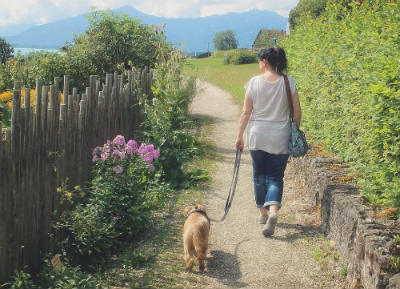
¿Cómo debes pasear perro a tu perro?

Our Blog

How should you walk your dog?

by Lobo Azul in Apr 25 2023
Walking the dog is one of the main obligations we have as owners. In the street he relieves himself, entertains himself by smelling aromas of all kinds, interacts with people, with other dogs and exercises. How long is it advisable to walk your dog? A healthy dog should walk at least one hour a day, although nothing happens if we walk it more. In fact, the best thing is to go outside whenever we can and for as long as possible. These sixty minutes of daily walking are an estimate, so it's okay if one day we only go out for forty because we don't have time for more, but we do have to try to be outside for at least an hour every day. How many times to walk a puppy Puppies are one of the special cases when it comes to walking, since when they are small we must go out more times and for less time, which is the opposite of what is recommended in the case of adults. So, With puppies you have to start by going outside about five times a day (better to take him where adult dogs do not go until we finish vaccinating them) and in very short periods of just a few minutes. There is a reason that explains why they have to go out so much and it is that they are not able to control themselves. For this reason, they will do their business inside the house, so while we get them used to it we have to take them out more times. As for time, you have to be very careful. If we force them to exercise too much, they can suffer bone problems when they reach adulthood. How many times to walk an adult dog As the puppy grows and when we consider that the dog is an adult, the walks can be reduced in quantity and increased in time. It is always said that you should go out at least three times a day with an adult dog, walks that should last at least 20 minutes whenever possible, although this is only indicative. This way, if daytime walks are very short due to work or other obligations, we will compensate for it at night when we can have more time. The daily hour is just an estimate, since there is no problem in going out twice if we can. Furthermore, here you have to take the breed into account, since walking with a Chihuahua is not the same as walking with a Labrador, since their exercise needs are very different. How many times do you walk an elderly dog? Another special case is that of elderly dogs, whose walks will be very similar to those of puppies. When a dog reaches senescence there is a period in which we see that gradual changes occur, so that It will be enough for us to walk a little slower, without the need to shorten distances. However, as the months go by, we have to completely change the way we carry out walks, as we notice how the deterioration advances at high speed, affecting the capabilities of our best friend. It is at this time that we introduce changes, walking around five times a day, shortening the distances considerably. and the rhythm. The reason is that they can no longer hold their pee like before (if we don't take them out they will often urinate at home) and that on many occasions we have to give them diuretics for their heart, so they urinate a lot more and need to go out often. Tips for walking your dog Walking your dog is very important. Therefore, we must follow a series of guidelines or rules in order to make it pleasant for both him and us. You have to walk with many dogs since the animal is very young Once the puppy has completed the vaccination schedule, it must be taken to a place where dogs gather for walks, always asking for the calmest ones so that it can begin to socialize. If we do this, the puppy will become a balanced adult who will be able to walk with any dog, without aggression or fights. Be careful during the hottest hours At the end of spring the heat is already suffocating in Spain, so we have to be very careful when we go for a walk, avoiding the central hours of the day and moving the exits to the cooler ones, which are usually the first and last of the day. This care must be taken extra in the case of puppies, elderly dogs and brachycephalic dogs such as boxers or pugs, which breathe worse due to the shape of their head. We must always keep this in mind, because if we forget it, the animal can suffer heat stroke that leads to death. We avoid humid areas In many places there are water courses such as rivers and streams, which invite relaxation and are cool places, but are usually crowded with mosquitoes when we go out for a walk. In addition to the discomfort of the bites, Mosquitoes transmit leishmaniasis to dogs (also to us), so it is advisable to stay away from areas where there are many insects of this type. We move away from cars The biggest danger we face every time we take a dog out for a walk is getting hit by a car. In this way, you should do everything possible to stay away from cars, going out to remote areas or going to parks with spaces for dogs, where there is a fence that separates them from other users and cars. You have to change routes from time to time Routines are part of our lives, so little by little and almost without realizing it we will be walking the same route every day. This is not bad, but the truth is that Dogs love to explore new places, face different smells, etc., so they will appreciate if we make a change of itinerary. You don't have to take the car and go to the mountains, but it will be enough to go through other streets, enter another park or exit through another area of ​​the city. Other training tips that may interest you: Teach your dog to crawl When should I reward my dog? What should I do if my dog ​​eats too fast? Why is my dog ​​afraid of other dogs? Why does my dog ​​follow me everywhere?
Enseña a tu perro a arrastrarse o gatear

Our Blog

Teach your dog to crawl

by Lobo Azul in Feb 28 2023
There are several tricks that we can teach our dog, with which we will show off to our friends and have fun for a while, in addition to feeling very proud of the animal when everyone is staring. One of them is crawling or crawling on the ground, a movement that is not natural in dogs, but that they can learn in a very simple way with a little work and some rewards. First you have to learn some previous orders We cannot begin to teach the command “crawl” without first having memorized some previous commands, such as sit and stay, which are even easier to teach, especially if we do it when they are puppies. In any case, an adult dog can also learn them, just like crawling, although it will cost us a little more and we must be more patient, repeating the sessions and making them somewhat shorter. How do we teach him to crawl? We have to go to a quiet place where the animal has no stimuli that distract it., like a room in the house, our garden, a park without many people, etc. There we give him the order to sit and then to stay still. Immediately, and without waiting too long so as not to tire the dog, what you have to achieve is to direct it towards the ground. We can do it in several ways, either with the command “lie down” if you know it, although it is more spectacular if you do it from a sitting position, so when he is like this we show him a treat that we will not give him if he gets up. Getting your attention We make him look at his favorite snack and we move him to the floor, with the idea that he lies down on his own., but when he does it we are not going to give him the prize, because we want him to crawl. Therefore, we have to distance ourselves a little by showing him the candy. If he crawls on the ground we say “crawl” and then we reward him. This must be repeated several times without tiring him, starting again the next day until he starts crawling when we ask him to, always giving him his reward if he does it well, at the right time when he starts crawling. The clicker can be useful to us, a tool that is nothing more than a sheet of metal that makes a sound, after which we reward it. It is used a lot in positive training, since the dog associates the “click” with a stimulus and will be aware of the clicker, which helps it to be focused on the training and not be distracted by anything. At first it may be a little difficult. Just start It may be a little difficult for him to crawl, since what he will do is get up and come running when we show him the prize, which should not be given in this case. As he does it wrong, our dog will realize that it is not what we expect of him, so he will begin to crawl towards us, perhaps a little at first and getting up, although he will understand as soon as he does it a couple of times and receives his reward. Depending on the breed, it will be more difficult to assimilate it, but it is not a complicated exercise and any dog ​​can do it if we set our mind to it. We can complicate it a little by giving the order remotely When the dog already crawls without failing on most occasions, which means that he has the trick under control, we can take it a step further and complicate it. For this What we have to do is add distance when we give the order. This means that we ask him to sit and stay, we move a few meters away and then we tell him to crawl. With this, what we achieve is that the distance it travels attached to the ground is increasingly greater, making the trick more spectacular, although always with caution and only letting it do it for a few meters, because we do not want our dog to get hurt. After a while, it will no longer be necessary to give him a treat, although it is advisable to do so from time to time and congratulate him profusely, give him his favorite toy, etc., all so that the dog understands that we are very happy with what he has done. It helps keep your head busy. In addition to showing off, teach him this trick It will serve to keep your head busy, since there are several breeds that need it, such as sheepdogs and all those that are very active. On many occasions, some of these dogs end up in shelters because their owners do not know how to give them what they need, which is nothing more than spending time with them and teaching them tricks of this kind, with which the animals enjoy and occupy their brains learning. Other training tips: When should I reward my dog? What should I do if my dog ​​eats too fast? 5 advantages of training our dog with positive reinforcement Discover Agility How to train a puppy Tips for walking your dog correctly 10 basic commands that your dog must learn
¿Cuándo debo premiar a mi perro?

Our Blog

When should I reward my dog?

by Lobo Azul in Feb 07 2023
It is very common to reward our dog, as that is a way for him to know that he is doing things well, which will help us when it comes to reinforcing positive behaviors. Here we must be careful, because sometimes we don't reward the animal well, and we even contribute to unwanted behaviors without realizing it. The prize must be given immediately The prize works by association, so as soon as he does what we want we give it to him. Thus, if we are teaching him to lie down, the moment his belly touches the ground, we reward him. We do not wait a while later nor do we do it before, because the animal will not know what we want, only that we give it a reward for trying to lie down or for getting up, which will make teaching it to lie down very complicated. We must avoid reinforcing behaviors that do not interest us Let's imagine the previous scenario again. We proudly see how our dog lies down on command and when we go to give him reinforcement he starts barking nervously, or gets up and jumps towards us. If at that moment we give him his reward, the only thing we are going to achieve is that he believes that barking or jumping on him is okay, so from that moment on he will do it waiting for his treat, without understanding what is wrong if we get angry. So, It is essential to reward him only if he is completely calm, which would be when he lies down without doing anything else, staying calm. That's when we give him his favorite treat, a toy, or pet him. This is useful whenever we are teaching him something or even in daily life, when we do not have to say nice words to him, give him a caress or scratch him if he is in a state of excitement that never suits us. What do we do if he doesn't calm down? If he does not calm down, you should never resort to physical punishment, much less yelling at him as if the dog managed to understand us. It is best to ignore it. We will not pay attention to him, we will not touch him, and much less will we reward him, until he calms down and is still. In this way we will make him understand that what we want from him is for him to remain calm, since only in that situation can he interact with us. Various kinds of rewards can be used We already know when to give rewards and now we have to know which ones to use, the main ones being food. For example, There is no dog that can resist a piece of cut sausage, a cat pellet or a little sausage, although we can also buy special treats for them, which we will ensure are healthy. They sell healthy treats, made of meat or fish and only with natural products, although it is not necessary that we always reward them with food. We can also use one of his favorite toys, such as a ball or one of those in the shape of an animal that whistles, and give it to him at the same moment in which we want to congratulate him for something he has done well. It is best to vary the rewards so that they do not get tired quickly.. Therefore, in addition to the above, we can also caress him while saying words that show that we are happy with him. The amount of rewards must be reduced as the animal learns. We must not forget that rewards must be given with the idea of reinforcing good behaviors, something that is usually done when the animal is a puppy and we are educating it. Therefore, As he grows and learns, the amount of rewards must be reducedWell, we are not going to always have a snack in hand when he does something well several times a day. At the moment when the behavior we ask of him is normal for him, we can stop rewarding him so much and do it only from time to time, with a caress, a time of play or even with a little food. This will serve as a reminder to the dog that when he behaves well he receives his reward, so he will be more willing to do what we ask of him. Other training articles that may interest you: Intelligence games for dogs What should I do if my dog eats too fast? Tips to strengthen your dog's defenses 5 advantages of training our dog with positive reinforcement What are the best treats for dogs? What can I do to stop my dog ​​from asking for food at the table?
Descubre  los juegos de inteligencia para perros

Our Blog

Discover intelligence games for dogs

by Lobo Azul in Dec 13 2022
Dogs love to play, and in fact most of them do so even when they are so old that it is difficult for them to move, despite which they do not hesitate to make an effort to play with their owners. In addition to hanging out with him with the typical ball, There are alternatives such as intelligence games, with which we can stimulate their brain and keep them busy. What are intelligence games for dogs? Until very recently, most dogs had a function such as guarding farms, leading the flock, hunting, rescuing people, etc., which have been relegated as these animals dedicated themselves exclusively to keeping us company. With these occupations, the dogs faced constant challenges, which caused their brains to start working in order to solve different challenges, thus creating very intelligent breeds such as sheepdogs. Now there are hardly any animals that work daily, but At home we can do something and that is to pose these challenges in the form of intelligence games.. Best intelligence games There are several intelligence games with which to test our dog, always knowing that the way their brain works has nothing to do with ours and that we should not get frustrated if they do not understand any of these practices. No dog is the same and not all have the same abilities, so we will give them very simple challenges, increasing the difficulty very little by little, otherwise our best friend may lose interest completely. hide and seek game One of the easiest games that all dogs usually like. It consists of taking your favorite toy, or one of them, and hiding it without him seeing us doing it at home or on the street. We can start in our home, since it will be easier for you to find it. First we hide it in places where we know that it will be discovered immediately, to vary the difficulty as the days go by. Then we take him to the street, the park, the field or any place where it is safe for him to be loose and we do the same, making it more and more difficult for him. In order to get him more interested, instead of a toy, we hide a kong full of food, wet if we want the dog to start searching like crazy. follow the trail The dog's most developed sense is smell, so we are going to use it to get to work. You have to teach him a new smell until he assimilates it, something that has a characteristic aroma like a fruit or even a specialized air freshener that is sold for this type of activities. Once he has smelled it several times, we hide it and tell him to look for it, helping him the first few times if necessary until he finds it, and rewarding him when he does, so it won't take him long to associate the search with something good and he will want to play all the time. Food dispensers Here we will have a huge variety of dispensers and it is one of the best intelligence games to start practicing, because when associated with food the dog will not be reticent. One of the simplest is the kong, a rubber toy that has holes through which we put granules and which we then cover with wet food or a special paste, so the dog must uncover it and then move the kong if he wants the granules to come out, which can take a while. We also have other more complex games, such as the feeders that give food if you press a button that lights up, or the bell like the one in hotel receptions, that our pets ring if they want to feed. Obedience This type of game is the most useful of all, because in addition to having fun, we can teach our dog something that will be helpful and that will make our daily lives much easier, such as sitting, lying down, or even fun tricks such as shaking hands. It is always easier to do it when they are puppies, as they learn much better, but as adults they can also be taught with a little more patience and knowing that it will take more time. Our great ally will be positive reinforcement, giving treats, small pieces of sausage or even some pellets when you get it right. In fact, with adult dogs we can wait to practice these tricks a little before feeding them, when we know they are hungry. This will help us to be more attentive to the treats and to make more of an effort to do well, enjoying every granule we give them as a reward. Puzzles If we go to a pet store we will see that there are several types of puzzles for dogs, very simple and similar to those made by very young children. They do not have to place hundreds of pieces, like in humans, but these are simple challenges, but they are not always easy for dogs who have never had to solve one. Among them, The most typical is that of shapes that have to fit into place, taking them with your mouth and putting them in the correct hole. Others bring a series of lids that they must open or slide and inside they find food. We can buy a pair and leave them with them in order to see how they do, helping them the first few times with the idea that they don't get tired if they can't solve it at first. Catch objects on the fly One of the simplest intelligence games for dogs is to catch objects on the fly, since a ball or even a stick is enough. You will have to calculate the trajectory, know when to jump, synchronize your entire body with the moment of capturing the object and you will also get a lot of exercise, which is very good for animals prone to obesity, such as Labradors. It is possible to complicate it a little more, and always practicing first with balls and sticks, buying a fresbee, one of those flying discs with which we can do tricks and our dog will have a lot of fun. Of course, here you have to know when to end the game, because some dogs go crazy with these objects and never want to stop picking them up in the air to bring them to our feet.  In this way, it is best to establish a period, a few minutes, so that at the end we stop playing immediately. Other curiosities that may interest you: 16 calmest dog breeds How to teach your dog to play dead 10 best-known dog breeds What should I do if my dog eats too fast? Your dog's sense of smell, its most outstanding characteristic
¿Qué pasa si el perro se come la comida del gato?

Our Blog

What happens if the dog eats the cat's food?

by Lobo Azul in Mar 02 2022
Let's see why the dog should not eat cat food. Who lives with a dog and a cat often has a problem: convincing the dog not to eat the cat's food. The problem is that, on average, the dog is greedier, the cat has a habit of eating little and often, and many times the food remains in the container: the dog can thus find extra food and eat as much as it can. There are dogs that always go to the cat's bowl to get their food even if it is not full since they have a very developed sense of smell. If they have this habit they can end up eating double their portion on many occasions. What's wrong with my dog? First we must understand that the cat is not a small dog: there are parameters in its physiology and anatomy that are completely different. This implies that nutritional requirements are different. What owners don't always understand, in fact, sometimes they can't even understand the fact that cats and dogs not only have different nutritional needs from each other, but they also have different nutritional needs from humans. This means there is a reason why commercial dog and cat diets have different formulations. All this means that the dog should not eat the cat's food.  If the dog eats a kibble of cat food just once, nothing happens, as long as the dog in question does not have any allergic disease, skin, intestinal and particularly pancreatic diseases. In this case, any food that is different from your specific dog food can cause the symptoms of these ailments to appear. However, if the dog eats cat food every day, even a small amount, it becomes problematic in the long run. This is because cat food has a higher amount of protein than dog food. On the other hand, the cat is a carnivorous animal, while the dog is an omnivore that tends to be carnivorous. This increased protein load repeated throughout the days can cause problems both in the intestinal tract and, above all, in the kidney. In addition to the fact that the minerals and vitamins are formulated for cats and therefore are not in line with dog food. To do? First of all, you have to teach the dog not to eat anything that is around and on the ground. This is a fundamental point in the education that each owner must teach their dog: having a dog does not mean giving it just love, it means educating and giving love. If you can't stop the dog from eating the cat food, you can try feeding them in separate rooms, but the problem here is that the cat likes to eat little and often from its bowl, so in fact, the problem would persist. The other alternative is to take advantage of the feline's agility: Place the container in a higher place that the cat can easily access, but that cannot be reached by the dog. Other articles that may be of interest to you: Carbohydrates in our dog's diet Benefits of fish oil for your dog 13 myths about your dog's nutrition Can dogs eat bread? What vegetables for dogs can my pet eat? Should I give my puppy calcium?
¿Qué hacer si mi perro come muy rápido?

Our Blog

What should I do if my dog ​​eats too fast?

by Lobo Azul in Feb 22 2022
It is very common to see puppies and adult dogs eat quickly, it seems something natural in them and, although It's not the healthiest behavior., veterinarians and experts have not issued a very harsh judgment regarding this either. Let us remember that as animals, they were at one time wild, dogs had to fight for their survival, and even if they are the most spoiled member of the family, for them surviving continues to be a primary task. Cubs are often born as part of a pack and have to compete with the rest of their siblings for their mother's milk and, later, for the food they need to grow and be healthy. This competition for food also lies in the fact that, among carnivorous animals, whoever eats the most is the one who survives, is also the one who has the greatest chance of reproducing.  Likewise we can associate it with greedy behavior, if the dog is eating to prevent others from getting their share as well. Generally this behavior could also make him aggressive towards people who approach him while he is eating. It is almost never related to a nutritional problem and, at first glance, it may not seem like a very serious problem. However, there are several options that we can take and implement to Prevent our puppies from eating too quickly. How can we make them eat slower? Some dogs eat so quickly that they don't even taste the taste of their food.. In addition to not enjoying it, these bad manners could cause other problems such as: vomiting, bloating due to gas or even choking with so much food passing through their throat. There are some tricks that we can implement to improve the eating behavior of our pet and you don't need to go too far to find the solution, with a little imagination you can appease that greedy behavior. Here are some tricks:  There are bowls specially designed to prevent our pets from eating too quickly. The way they work is based on the fact that they do not have a conventional shape. This means that it is not the typical deep bowl, but rather like those special cups we bring for lunch, which have compartments. This way, instead of having all the space to bury its head in the food and devour it, the dog will have to work harder to reach the food between the dividers. The aim is for you to realize the flavor it has and learn to enjoy it more. Not all pet stores have these special containers so that your dog does not eat so quickly. Let's say it's not something that many consider a problem. However, if you can't get it, something that could also help you slow down the speed at which your puppy eats is a cookie cutter, as these have several containers so the dog will have to work to get all the food. Another effective way to help your dog eat more calmly It is through games and activities. It is well known that dogs love to play, and many of them live for tricks and, of course, to share with their owner. If you have a garden or patio at home, a good option is to hide small amounts of food in strategic places so that the dog can look for food on its own. With the help of your sense of smell, your senses will develop more as you train, you will exercise and receive rewards for your effort. By hiding small amounts of food we make sure that the dog does not eat everything in one bite But, instead, notice how you are receiving rewards with every effort you make. At the end of this, we can always pamper them even more with some of their favorite snacks, which will ensure that they feel even more confident and the next time you feed them this way they will do it automatically, because they already know that their effort will be very well rewarded. Finally, if it is not a problem for everyone at home, you can take turns feeding the puppy several times a day, always in small portions every time. To take into account No matter how small or how insignificant a repetitive behavior may seem to us, there is always room for doubt. How do we know if this behavior is normal or harmful for our pet? It is best to keep ourselves informed and take care of them in such a way that these behaviors do not have major consequences. In the case of dogs, it is well known that most of them eat excessively quickly. This type of behavior can have serious consequences for our pet., so the most advisable thing is to put into practice the techniques that you have just learned so that your puppy can have some healthier eating habits that in the long run help you stay fit and in good condition.  Our pets are the great darlings of the family, they do not have a way of communicating in our language, but they do communicate in many other ways. Pay attention to the signs they give you whether at meal time, when sharing with family or other animals and, on a day-to-day basis, your pet will surely give you signs of how well they feel or if they are not in the best of condition. It's all about paying attention and giving them the best care we have available. Without forgetting visits to the vet, if something worries you, no matter how small. Consult your veterinarian and he or she will surely give you the answers and tools to improve it. Take a look at these articles that may interest you: Why is my dog afraid of other dogs? The dog's smell Why does my dog yesgue everywhere? Tricks to get your dog to eat feed How to train a puppy 10 basic commands that every dog should learn
¿Por qué mi perro tiene miedo a otros perros? Causas y soluciones

Our Blog

Why is my dog ​​afraid of other dogs? Causes and solutions

by Lobo Azul in Feb 17 2022
The sociability It is one of the characteristic features of the canine species. In general, dogs are animated when sharing with their human family, with their peers and with other species. Even so, it is normal to come across domestic pets expressing fear and insecurity in front of other dogs. Each dog has a different personality and behavior, appropriate to its habits, life history and even breed. Therefore, just as there are extroverted dogs, there are others that are more shy and withdrawn. How to interpret what my dog ​​expresses? Body language is the main tool you have at the time of identify what your pet is feeling. The postures and movements, especially of its tail and ears, in addition to barking, growling and vocalizations, are the way it expresses its emotions. By being aware of this set, it will be easier to act appropriately to help you overcome fears.  Identifying body language The look: When feeling vulnerable, the dog's gaze appears from below, taking care not to lose sight of the figure or situation that generates distress and at the same time trying to look threatening. the ears: They tend to be backwards as a sign of alert and close to the head. The body: The contraction of the muscles and the shrinking backwards is intended to show helplessness, as well as remaining paralyzed or using the human as a wall of protection. the tail: The shrunken rear area and the tail tucked between the legs shows nervousness and is a protective maneuver for the body. If your pet adopts some of these postures and attitudes towards other dogs, keep in mind that your goal should not be to eliminate fear, understanding that it is a natural alert reaction to any situation that represents danger to it. Your job will be to make him progressively understand that he can relate to your environment without it being a problem and that you will be there to guarantee their well-being. Otherwise, fear can become a phobia capable of causing greater harm. Causes of fear in dogs To determine which situations involving other dogs make your pet uneasy, pay attention and study their behavior. There are various factors that influence the way they establish bonds with other canines.  Traumatic experiences: A dog's fears, even towards others of its species, can be the product of strong or traumatic emotions from the past, especially from its first years of life. If your dog is adopted, ask his previous family for details about his puppy life. Any data, no matter how minimal it may seem, is important. Even a rough game you had with a larger, more energetic partner could have caused the damage. Poor socialization: The lack of contact with the outside world during the puppy stage, essentially between 2 and 4 months of age, harms the dog's adult life. If it was not related to other dogs, with children and adults; or with sounds, smells and public spaces, now it will be more complex. Genetic predisposition has an implicit quota; some dog breeds are “less social” or more solitary. Having been separated from his mother and siblings early could also be detrimental to the canine. Reinforced fear: Your behavior can also reinforce their fears. Although it may seem cruel, avoid petting it, hugging it, or speaking in too soft a tone when it appears distressed in front of other four-legged dogs. By doing so you would be approving his behavior and telling him that he does have something to fear. Just because you don't consent to it doesn't mean you're indifferent to what it's expressing. What can I do to help you? Help your furry friend overcome his fears of other dogs requires an action plan with clear strategies and a period of adaptation. The effectiveness of the two elements will depend almost 90% on your dedication. The key words are: patience, love and progressiveness. When we talk about strategies we are referring to the techniques used for dog training. You don't have to be an expert to apply them, but you do have to be consistent and follow them almost to the letter. Progressive desensitization: Despite sounding complicated, these are simple tasks like walking with your pet in places they generally frequent and where they will face their fears. The objective is for him to share the same space as other dogs, maintaining a safe distance that will gradually be reduced. It is not about forcing it to socialize, but about being able to tolerate the presence of another animal. It won't be a matter of an afternoon in the park, it will be days of training. Another good exercise for get him used to the presence of other dogs It is to keep them in the same environment, separated from the others by a glass door or window through which they can see and smell each other, but avoiding friction that may make them uncomfortable.  If you have a pack, your support stick will be the canine with leader attitudes (the one who is insecure will then be his follower), but show the excitable and dominant dog that you are still the boss, in this way you will be claiming the territory of the insecure one and making him strong. Don't push the shy one, wait for him to just come into contact. The same thing that applies in situations with unknown dogs with your pet. positive reinforcement: Once you consider that your pet is already overcoming its greatest fear, being in the same environment with other animals, then apply positive reinforcement. It is about rewarding him for what is considered good behavior, the incentive can be anything from a cookie to a toy. It must be taken into account… It is important respect your pet's learning process and adapt the techniques according to the answers you give. Affection and patience will be the basis of a new and happy experience for your pet with others of its species. That said, if you don't feel confident that you can perform these techniques without putting your dog at risk, then it is best to turn to a professional. Find more information about pets on our blog: Our dog's sense of smell: Its most outstanding characteristic 5 advantages of training our dog with positive reinforcement. Agility: Sport and fun for dogs and their owners How to train a puppy 6 tips to walk your dog correctly
El olfato del perro: su característica más destacada

Our Blog

The dog's sense of smell: its most outstanding characteristic

by Lobo Azul in Feb 15 2022
The sense of smell is the most developed in dogs, is up to 10,000 times more sensitive than your sense of taste and much sharper than your vision. If we compare it with that of human beings, they leave us far behind. Dogs have between 200 and 300 million olfactory receptors, compared to the five million that we may have. These receptors are distributed in your nose lining the mucosa, which is highly folded, thus increasing the receptor surface.   Furthermore, comparing ourselves based on the brain area dedicated to smell, in dogs it is 40 times larger than in humans. This great quality of our good furry friends has been used to carry out different activities in which we must have a good sense of smell to guide you. Importance of smell for dogs It is said that dogs "see" through their nose due to the sensitivity they have to distinguish odors. This sensitivity is given by the presence of an organ located in the nose, on the vomer bone, called Jacobson organ. This organ is present in many vertebrate animals, but in dogs its functioning is particularly important to allow them to extract odors from the air. The particles that make up odors represent traces that can be followed by a dog even though they have been expelled some time ago.  Smells also help our good friends orient themselves and communicate. The great olfactory capacity they possess It causes them to develop an olfactory memory that allows them to remember objects, people, places and other animals by their smell, along with the vision they have of them. They would even find their owner in the middle of a stadium full of people just because of the unique scent trace they can pick up! But not everything is rosy for dogs' noses. Due to their high sensitivity, there are some odors that may be unbearable for them. The smell of citrus can cause irritation in the respiratory tract, vinegar, spices, nail polish, cleaning products, sprays and even perfumes can be unpleasant and even unbearable for dogs. How does dogs' sense of smell help us? hunting dogs Dogs have been, par excellence, our great companions in various daily or sporting activities, in which Your olfactory ability is your best quality. Of course, one of the best-known activities we do with dogs is hunting. And there are enormous differences between breeds and even between litters in terms of their olfactory ability. But not always a good olfactory ability indicates a good adventure companion. Also the disposition to search for prey must complement the sense of smell to select the best specimen to do the job. The breed of dog best valued for hunting, worthy even of a king, is the Bloodhound. Many of its physical characteristics make this dog ideal for tracking: its fine sense of smell in a nose with large, very open nostrils; its long ears, which allow it to "collect" the smell from the ground and carry it upwards; and the fur on the neck and head loose enough to trap and retain odors. shepherd dogs The shepherd dogs of different types of flocks are another example of help in which they have accompanied us in our daily lives. Dogs use their sense of smell not only to recognize members of the flock, but also to detect the presence of predators. Sheepdogs are usually intelligent, agile animals, with a great capacity for learning and solving problems. unforeseen situations. The herding dog par excellence is the border collie, which is almost "designed" for that job. It is an intelligent and agile dog, which requires constant movement in open spaces. Attentive and affectionate with his owner, he is always willing to do the work entrusted to him. truffle dogs And since dogs can be trained to distinguish a particular characteristic smell, they also help us improve our culinary art. Dogs can be trained to look for different types of mushrooms, in addition to the highly valued truffle. The so-called truffle dogs They spend a lot of time walking around and sniffing a field in search of the smell given off by a truffle found underground. Once they find it, they begin to dig at the site until the owner arrives to harvest it. Bloodhounds and also the Labrador Retriever have traditionally been used to search for truffles, but Any dog can be trained for this activity. However, you must meet certain conditions to do this type of work: have a good sense of smell, of course; be very obedient and not get lost; calm, but in good physical shape to spend many hours in the field sniffing and moving from one place to another. Police and search and rescue dogs Their infallible sense of smell is widely used for the detection of drugs and explosives. It is almost impossible to outwit the olfactory capacity of a dog well trained for these tasks.. They can distinguish between a wide variety of drugs and even detect stashes of paper money. Furthermore, whenever a tragedy happens, they are the first ones we see doing an almost frantic search to detect any trace of life. Their ability to distinguish a certain smell among many others has allowed them to be the great heroes in rescuing people buried in an earthquake or kidnapping victims. The Golden Retriever, the German Shepherd and the Belgian Shepherd are some of the most used breeds. Visit the next post on our blog to learn more about police dogs. Detecting diseases Recently, studies have begun to see how train dogs' sense of smell to detect diseases. Positive results have been obtained detecting prostate cancer through the smell of patients' urine. Work has also been done with diabetic patients and the dog has been able to detect a hypoglycemic attack even before it occurs. You can also read about other breeds here: 5 advantages of training our dog with positive reinforcement Why does my dog follow me everywhere? Tricks to get your dog to eat feed What can I do to stop my dog from asking for food at the table? 10 basic commands that every dog should learn
5 ventajas de educar a nuestro perro con refuerzo positivo

Our Blog

5 advantages of training our dog with positive reinforcement

by Lobo Azul in Feb 01 2022
Dogs are many people's favorite pets, they give us joy, love and company at any time. But when this new member arrives in the family and we want to share time with him, we cannot leave aside his teaching, something that often seems like a headache. There are multiple methods to train our pets, but very few offer good results, while being considerate of the dog's well-being. From there, positive reinforcement was born along with the use of clicker. It is a canine teaching technique based on the use of a button that emits a “click” to attract the dog's attention at a certain time, followed by a reward after each behavior considered good or relevant.   The process takes some time, but it definitely brings great rewards. First of all you need to help your pet identify the meaning of the “click” and associate it with rewards. For this it is necessary to start with a click immediately followed by a reward. This is done a series of times until the dog associates the sound. From there, we must click every time we identify a positive action in the dog, which he will interpret as his reward and begin the process of associating the actions with the click. Positive reinforcement even works when the dog is away from us, as long as he can hear the sound of the dog. clicker. Rewards or prizes can be made with treats, favorite foods, walks, praise, petting, games or any other activity that the canine loves. Use This method of training our dogs has excellent advantages which we will explain below. 1. It will promote a special bond with your pet What we look for most when teaching our dogs is a method that includes not only learning, but also creates close ties of friendship between us, so that we can teach without making them hate us or fear the way in which this teaching is carried out.   Positive reinforcement is undoubtedly indicated for this. Canines will be happy to comply with our requests and modify their behavior, improving, if that means unlimited petting and praise, treats, or great walks. In addition, it allows us to give all the love and attention that we want so much, being an excellent method that will foster a closer and more special relationship with our best friends. 2. You don't need to be an expert to do it This teaching method can be done by anyone, whether or not you have enough experience to do it. It just requires a lot of patience and time availability, as well as applying it regularly, being consistent so that the dog can modify its behavior. This is an excellent addition to prevent you from spending money on trainers, whom we often do not trust and who can make our canines uncomfortable. 3. You can use it in different situations When we look for some learning methods, we must take into account what we want to teach and what our pet's regular behavior is. Positive reinforcement can be used when we want to teach dogs from puppies and get them used to following fairly simple commands or rules at home, such as not urinating inside the home, not biting furniture, waiting for mealtime, among many others. Likewise, we can use it to teach simple or difficult tricks to adult dogs, it can even be used for our older pets.   On the other hand, the different personalities of our canines do not always get along well with some learning methods. Scolding and punishing a dog with an aggressive or "overprotective" personality will increase this type of attitude towards us, even representing a danger. Likewise, when we have a skittish dog, these methods will keep him away from us and make him unhappy in the home. This is something that does not happen with positive reinforcement, since It is a method focused on reinforcing good actions, and not to punish the bad ones. Rewards for good actions will help the dog modify its attitudes by identifying which ones its owner wants and therefore generate rewards. 4. Your dog will better understand what he should and should not do Yelling, scolding or hitting our pets does not leave a clear lesson that allows the dog to differentiate what is okay or what is not, increasing moments of stress and disasters. That is, if we want to teach him that he should not bite the furniture and we do it by scolding him or hitting him with newspapers, our dog can understand different things, such as: that he can do it but that it is wrong to do it in front of us. For this reason, it is very common that, when we leave him alone and return to the room, we find that he made a big mess, resorting to shouting and hitting again, creating a circle from which he will never get out.   Through positive reinforcement our dogs will learn little by little and in the best way, which is what they should do to be able to receive their favorite prize and stay happy while learning what they should avoid because, by doing that type of behavior, they will not receive any prize. 5. Positive reinforcement can be fun Both our pets and we can have fun moments in positive reinforcement sessions. If we have small training sessions where we are rewarding our dogs every time they do a good deed, they will end up identifying these sessions as play times. Therefore, they will eagerly wait for it to arrive and will want to repeat it every time possible to be able to share with their owners and receive all the love from us.   Reading all the advantages we understand that our best friends will learn, be happy and have better health when we teach them with love, patience and a reward system through putting positive reinforcement into practice. Without a doubt, it is the best learning method that we can use for any occasion, it will give us excellent results in a very short time, maintaining your freedom, trust and fidelity. What are you waiting for to put positive reinforcement into practice with your pet? Find more interesting articles about dogs on our blog: Why does my dog follow me everywhere? What are the best treats for dogs? What can I do to stop my dog ​​from asking for food at the table? How to train a puppy 6 tips to walk your dog correctly 10 basic commands that your dog must learn
¿Por qué mi perro me sigue a todas partes?

Our Blog

Why does my dog ​​follow me everywhere?

by Lobo Azul in Jan 25 2022
Have you noticed that your dog follows you everywhere lately? Do you want to know why he does it? Do you want to prevent that from happening? Dogs are not only very sociable animals, but also very loyal to those they consider their owners or part of their family, so if lately you notice that they follow you everywhere, it may be because they see you as a leader or simply because they want to be by your side. This is no reason to worry. However, there are cases in which a dog's excessive dependence on its owner can become an illness, to the point of causing anxiety in the animal just by being left alone at home. If you want to know the reasons why your dog follows you everywhere, we invite you to read the following article, where we will explain the reasons for this situation and recommend how to act in response to this fact. Pure canine love One of the main reasons why your dog follows you everywhere is because he loves you. Without a doubt, love is what moves the hearts of these animals. So if you notice how he follows you wherever you move, it may be because he loves being close to you, hearing your voice and feeling your caresses. Dogs are really intelligent and they also have the ability to perceive when a person is good or has bad intentions, so if they follow you everywhere in the house, it is because he loves being around you and enjoy it, even if you are not doing anything special. Security If you notice that when you are on the street your dog follows you wherever you go, it is because your company provides him with security, especially in unfamiliar spaces. And inside the house it will be no different. Your pet will stay by your side, because in addition to enjoying your company, you make him feel safe and comfortable. This is why it will follow you everywhere you go in the house. Food In addition to love and security, another aspect that drives canines is food. And, without a doubt, this is one of the most prominent reasons why a dog can constantly follow you. Enjoying food scraps that fall on the ground or that you can give them, makes dogs become your loyal followers. But be careful, not all foods that are eaten by humans can be given to pets but, in some cases, offering them a little of what we eat (in case the dog can eat it) is not bad. And this makes your dog become your most faithful follower. What should I do to stop my dog ​​from following me? Probably, in some cases you find it uncomfortable that your dog follows you everywhere and you want to find a way to make him stop doing it. However, we should not think that this behavior is indicative of any disease or disorder. It simply means that your pet wants to spend most of the time with you. If it is because he enjoys your company, because he wants to play or because he feels safe and comfortable, following you is not a problem. On the contrary, depriving your dog of these moments in which he wants to be with you can cause depression or a feeling of loneliness that could possibly end up transforming his character in a negative way or cause episodes of anxiety due to lack of attention. The appropriate thing in this situation is not to prevent your dog from following you, because the limitations you put on the animal could make it feel isolated or deprived of your affection. The most advisable thing would be prevent this persecution from turning into dependency. This way, you won't have problems when you have to stay home alone. There are some ways in which you can train your dog to control him following you everywhere, let's look at some of them: Training Teaching your dog basic commands, such as sit or stay, will help him stop following you at some point. That is why training is considered a key element in the life of a dog. And in this case, very appropriate if you want to control that it follows your footprint everywhere. In this aspect of training, positive reinforcement should not be forgotten. Inappropriately forcing your dog to stop following you can cause changes in his behavior. Since this is not what is desired, achieving training through rewards and prizes will be more beneficial and productive for him and for you. Reinforcement of their socialization It must never be forgotten that the dog is a social animal, which requires maintaining interaction with other animals and, in most cases, with their owners. Therefore, you should not deprive him of your company. However, it is important to keep him in constant socialization and that he can enjoy moments with you playing or simply being by your side. another companion The presence of another animal could be an important element in reducing the fact that your dog follows you. These are used to living in a pack, and by having another companion by their side, they could focus their attention a little more on him than on following you. How do you know when this is a problem? In some cases, having your dog constantly follow you can become a non-beneficial situation. This is because by leaving him alone for some reason, he could feel abandoned and start an episode of anxiety. These cases can be identified given that the dog adopts negative behavior in which it causes destruction inside the house, may defecate excessively and even appears sad or cries frequently. The best way to avoid these situations is with adequate training of the canine and promoting socialization, so that it can adapt to those small moments in which you must leave the house and it is left alone without feeling that you abandoned it. Other articles of interest: Best treats for dogs Tricks to get your dog to eat feed What do I do to stop my dog from asking for food at the table? How to train a puppy 6 Tips to walk your dog correctly 10 basic commands that every dog should learn
¿Cuáles son los mejores premios para perros?

Our Blog

What are the best treats for dogs?

by Lobo Azul in Jan 20 2022
Although it may seem insignificant, one of the ways to reinforce good behavior and appropriate habits in our dog is by giving him a reward every time he does something correctly. Whether it is a trick, a pirouette, obeys a request on our part, or simply performs some action appropriately such as not breaking things or something similar, the rewards or prizes They should not be kept waiting. This, in addition to encouraging the dog to continue with these habits, is a sign of our love for him, so it is of great importance to keep these details in mind. However, not everything we consider an appropriate “treat” or reward for our prize usually is. For example, it is well known that canines cannot eat the same foods as an adult, so rewarding them with one of our treats can be harmful to their health. In view of this, we have developed this article with the purpose of identifying which are the best treats for dogs. In this way, we will make training easier and more satisfactory for our pet and for ourselves. How do you know which one is the best? Just like training a dog, finding an ideal treat for him is not an easy task either. Currently there are a large number of treats on the market that can be considered an ideal reward while practicing good habits in our pet. However, it is necessary to identify the one that our canine friend likes the most. In this way, he will feel greater motivation when carrying out the training practices, knowing that, if he does it well, he will obtain a reward that he will like. What should I consider when choosing a prize? The first thing that needs to be considered when choosing a treat for our dog is that it is a specialized product for them. That is, it contains not only an exquisite flavor, but is processed with the nutrients and proteins that the dog needs. This way you are not only pleasing him, but you are also contributing favorably to his nutrition. Avoid obesity Within this, it is essential to review the caloric and protein components that snacks commercials contain. Well, an excessive load of them can lead to the dog suffering from obesity, a situation that is not desired at all. Control rewards Another elementary aspect in providing treats to our dog is controlling the amount we give him. A very effective trick, also recommended by veterinarians, is to complement the treats with petting and a pleasant voice. In this way, the consumption of sweets as a reward will be moderate. Seek to maintain interest The idea of reward the dog when you are training it It is not only about contributing to their diet in a practical way, but also about maintaining interest in learning, since there will be a reward for it. What product should I choose? A common mistake is to downplay the importance of the product that is selected to reward the canine during its training. This, although it may not seem like it, can have negative consequences for your health. A low-quality treat, or one with little protein content, can cause obesity or intestinal allergies in the animal, causing diarrhea and other nutritional diseases. Hence, the importance of doing a thorough examination of the product we are thinking of purchasing. To a large extent, the well-being of our dog and even its performance in training will depend on it. There are currently physical stores and online stores where buying dog food products is very simple. In most of them you will find a description of it and the contributions they offer to the dog's health. Some aspects that can be considered when choosing a product are: The age of the dog: whether it is an adult or puppy Size: whether large or small To improve your coat Specialized: if the puppy has health problems In addition, taking into account the nutrients, vitamins and cereals they have is another important point. homemade prizes For those who are not convinced by commercial products, having homemade treats is a highly recommended option. And there are a large number of homemade foods that can be used as a reward for the dog during training. Some of them are: Fruits and vegetables Carrots, pears, melon, watermelon and apples are the most common and provide great nutritional value for a dog. Due to its high fiber content and exquisite flavor, it will leave our canine very pleased after training. Banana is also a good option. Like blackberries, strawberries and blueberries, they play a great role as antioxidants. Liver Liver is another very favorable and economical option. Cut it into small pieces or strips and then bake it without seasonings or dressings, which will make it a great delicacy as a reward for your dog. Chicken, turkey or fish This is another good alternative to reward our dog's arduous training. You just have to cook it a little and bone it, since cooked bones or spines are not recommended due to the risk of clogging the stomach and causing discomfort to the canines. What should I NOT give him? A fairly common question is what foods we should avoid giving our dog as a treat or reward. The list is a bit extensive, however, we will mention some of the less indicated ones, such as chocolate. Coffee, milk, raw meat, raw egg, raisins, salt, alcohol, onion, tea... among others. These foods are not recommended to be given as treats or snacks to our puppies, as they can cause side effects that affect the dog's health and well-being. Avoid the consumption of the latter and appropriately choose the reward that we will give to our pet During their apprenticeship it will ensure a happy animal and very beneficial training. Other training articles that may interest you: Tricks to get your dog to eat feed What can I do to stop my dog from asking for food at the table? Agility: Sport and fun for dogs How to train a puppy 6 tips to walk your dog correctly 10 basic commands your dog should learn
Trucos para que tu perro coma pienso

Our Blog

Tricks to get your dog to eat feed

by Lobo Azul in Jan 18 2022
A dog not wanting to eat food can become a real problem for its owners, right? You know that your furry friend needs a balanced diet to grow strong and healthy. That's why you're worried that the only reaction your dog has when you present him with a good portion of food is to look askance at his food bowl without taking a bite. In the end, you end up giving him something more succulent like a treat, wet food or table scraps to prevent him from going without eating. But you know that this is bad habits and you deprive him of a complete diet, which increases the chances of him developing obesity and other diseases (kidney failure, hair loss, allergies...). The good news is that there are tricks to get your dog to eat feed and that you can start today. Discover them in this article. Why doesn't my dog want to eat I think? Before motivating your dog to eat dry food, you should find out the reasons why he has lost his appetite or is avoiding this food. Disease If until now your dog was eating dry food normally and you have suddenly noticed a lack of appetite with subsequent weight loss, there may be a health problem. In this case, we recommend that you visit the veterinarian to rule out serious pathologies. Dental problems Check that there are no dental problems such as broken or bad teeth, swollen gums or any other lesion in the mouth that prevents your dog from eating normally. Recent vaccination Vaccines are essential for your pet's health and sometimes come with mild side effects such as loss of appetite. These symptoms generally disappear within 24 hours, although they can last longer. Travel, unknown environment or emotional problems Changes in daily routine affect dogs just as they do to humans. A move, a trip or a family breakup are situations that can alter the appetite of furry dogs and cause them to reject the food they previously ate normally. In these cases, be patient so that the dog recovers its usual feeding routine. Behavior problems Your dog may not want to eat food simply because he has become picky and has a behavioral problem. Think that dogs respond to stimuli through learned behaviors. Your canine knows that, to get a more appetizing food, such as sweets or homemade food, what he should do is not taste the food. If you give in to these situations, you are promoting that learned behavior of not eating feed or eating it only if it comes seasoned with an extra that you like more. quality feed Make sure that the food you offer your dog is of quality, meets its nutritional needs and, of course, is in good condition. Check the expiration date of the product and verify that it does not give off a bad smell or have a strange color. If you suspect that the feed is not good, throw it away immediately. It is vital that the food you offer your dog is safe, complete and nutritious for a healthy diet. Tricks to get my dog to eat feed If the loss of appetite is caused by an illness, your veterinarian will tell you how to proceed. But, if your dog does not want to eat food due to a behavioral problem, these are the tricks you can use to beat him. Change your feed Something as simple as changing brands or choosing a different flavor of food can help awaken your dog's appetite again. Look for premium dog food that contains real meat as the main ingredient. It can be sheep, venison, chicken or duck meat. Feeds with a high content of fish such as salmon or tuna are also very beneficial and tasty. Make sure that the feed does not contain artificial colors or aromas so that it is as healthy as possible and does not cause intolerances (vomiting, diarrhea...). If you have just changed brands and you think that this novelty is what has caused your dog not to eat the food, you can facilitate the transition by mixing a small amount of the new food with the old. Gradually reduce the proportion of old feed until it is completely replaced. This way you will get used to the new flavor. Another trick is to add a small amount of warm water to the feed. By hydrating it you will intensify the smell of the food and this will encourage the dog to eat until it gets used to its new food. Avoid giving your dog leftovers If your dog is used to being fed table scraps, it is normal that his palate prefers these new flavors and rejects the food. However, human food poses risks for your dog because it is not balanced and can cause weight gain, loss of essential nutrients for its development and even poisoning. These are signs that your dog is not well fed. If you want to stop this bad behavior you should stop giving him leftovers. It is normal for your dog to show signs of displeasure when you refuse to give him what he asks for. With this attitude, the canine expects you to give in. But you must stand firm. When the dog sees that leftovers are prohibited and that feed is the only food, he will internalize the message and will have no choice but to eat it. For this strategy to work, it is essential that, if you live with more people, all family members understand that they should not offer any extra food like candy or leftovers. Otherwise, you will have a harder time eradicating the behavior. When you implement this tactic Make sure your dog always has water available. This way you ensure that he will be hydrated, even if he refuses to eat feed for a few days. Modify the eating routine and respect the schedules sometimes, small changes in routine They can make your dog more willing to eat dry food. Some of the keys you can implement are changing the location or height of their feeder, replacing the feeder itself with a different one or putting part of the feed on the ground around the food bowl to stimulate their sense of smell. It has been proven that having to use the nose to locate food is satisfactory for the canine. Another trick to get your dog to eat I think that is effective is offer you a quiet place so that he eats alone away from distractions or competition from other pets. Also, you must respect feeding schedules. As a general rule, dogs usually eat between two and three meals a day. Offer the food to your dog with each meal and remove it after 30 minutes. Also, avoid offering treats or any other food between meals. Thus, you will learn that there are certain times of the day when you should eat and you will get used to certain times. Exercise your dog regularly Physical activity whets anyone's appetite, right? The same thing happens to dogs. After the activity and the burning of calories they get hungry. You can Play or take a walk with your dog before serving him the food. Not only will you stimulate their appetite, but you will also be promoting a healthy, energetic and active lifestyle. You can even turn these walks or games into a routine so that they associate the outing with the subsequent meal time. First of all, be very patient with your dog. Observe him continually for signs of illness and be firm in preventing him from eating foods that are unhealthy for him. Time and discipline will allow you to change your pet's behavior until the phrase “my dog doesn't want to eat food” is a thing of the past. Other articles on training that may interest you: What can I do to stop my dog from asking for food at the table? Agility: Sport and fun for dogs and their owners How to train a puppy 6 tips to walk your dog correctly 10 basic orders that everythingror should i learn
Todo lo que debes saber si quieres ser voluntario ayudando a animales

Our Blog

Everything you need to know if you want to volunteer helping animals

by Lobo Azul in Jan 15 2022
To become volunteer to help animalsThe most important thing is that you must be sure that you feel love for them. From that feeling, you can do anything to help those helpless beings. If you do not have the possibility of having your own pet, you have the option of offering attention and affection to the animals, in addition to enjoying their company, sharing with them moments that you will not forget, through volunteering in associations dedicated to their care. Work of animal protection associations We are wrong to think that only people need help. Well, some animals also need attention and care. In fact, there are numerous associations that are dedicated to the welfare of animals, as well as defending their rights. They take care of the sanitary conditions of the animals, their vaccinations and legal registrations on behalf of the protective association. They are also dedicated to their education, training and rehabilitation, teaching them good behavior. And, their ultimate goal is to find responsible people to adopt the pets they protect. They are generally non-profit institutions and, obviously, these organizations need the help of volunteers to carry out their admirable work. Therefore, they offer different programs and activities that adapt to each one. For be a volunteer in a animal protection association You do not need to have a degree as a veterinarian, nor is experience in animal care essential. For most of these institutions, it is enough to be of legal age and, of course, the most important thing: to love animals and have true motivation, patience and responsibility to carry out this activity. Another very important aspect that is taken into account when becoming a volunteer is to have sensitivity against abandonment and mistreatment of animals. Tips for becoming a volunteer The first step to follow to work as a volunteer is to choose the appropriate society with which you can collaborate in the care of animals. It is important that it operates regularly in compliance with the necessary legal requirements. It should generate confidence in you, so we recommend that you inform yourself well before choosing it. Contacting the organization will help you to have more information and verify if you have the possibility of working with them. Once the organization is located, you must decide how you can participate and collaborate with the activities of the animal protector. The options are varied, you can help financially, work directly on site and even carry out any activity from your own home. Regardless of the way you choose to volunteer, keep in mind that it is a responsibility you are assuming, so you must show a commitment to the help you will provide and the activities you must carry out. As we have mentioned, it is generally not essential to have some type of experience to volunteer. When you sign up for the organization, the institution will be in charge of helping you in your training through courses facilitated by the community, talks information about the protection and care of animals, the performance of the protective institution and its objectives. Preparation courses are taught according to the task selected to be carried out at the center, as well as general knowledge about behavioral therapies and follow-up visits once the animals are adopted. Through this training, the volunteer can understand more deeply the importance of what the commendable work carried out by the reception center can mean and, in this way, they will be able to perform as well as possible in their role as collaborator. Which largely guarantees the main objective, which is the well-being of the adorable animals. It is necessary to remember and emphasize the importance of the responsibility and commitment that each volunteer must assume when making the decision to participate in this honorable activity. The correct functioning and success of the organization depends absolutely on the work carried out by the volunteers, therefore, to make their work possible, each one must seriously get involved in the activities under their responsibility. Activities of animal shelters An animal protection center always has a large number of activities to carry out, let's look at some examples: Volunteer directly at the center: The shelter requires people who collaborate with cleaning and maintenance, who are dedicated to the animals in terms of grooming, walks and feeding. Transport work: Transportation is also an important aspect, whether it is transporting animals to veterinary clinics, transporting donated items to the shelter or transporting rescued animals. Therefore, volunteers are needed for both transportation and rescuers. Animal adoptions and its monitoring: one of the functions of animal protection centers is to search and find those interested in adopting a pet. Therefore, they need to have collaborators available to establish contact with potential candidates to get to know them and verify if the animal will be in good hands. On the other hand, after the adoption process, monitoring must be carried out in order to verify the condition of the pet and help people with any questions or inconveniences that may arise. Contact and control can occur by telephone, email and visits. Dissemination in the media: disseminate the important function of the organization through the different available media and make the work and needs of the protector reach the largest number of people possible. Creation of editorial material: The center needs personnel who are in charge of preparing photographic material of the animals, writing articles and stories about them, and preparing designs for events, workshops or courses that are carried out. Public relations management: for the association to become known and have the possibility of requesting the collaboration of veterinary clinics, pet stores, companies or other foundations to raise funds to help cover the expenses generated by the shelter, it must have people who are in charge of handling public relations. These people must also be responsible for making the animals they have in their care known. To conclude As you can see, volunteering at an animal shelter is not an easy task, but it is very comforting for those who feel devotion to our furry friends. Think carefully about whether you want to dedicate yourself to this and then carefully research the shelter you choose before registering with the association. You can ask the shelter itself for information online or by visiting its facilities, so you can see how the animals live there. You can read more dog tips here: What is Agility? How to train a puppy 10 basic commands that every dog should learn
Cómo educar a un cachorro

Our Blog

How to train a puppy

by Lobo Azul in Jan 11 2022
The arrival of a puppy at home is a moment of great joy, but we must remember that this new member requires care and will surely change the routine of the entire family. That is why in this post we will tell you how to train a puppy. Therefore, before adopting or buying one, you should be sure of your choice and, if you have any doubts, consult a veterinarian or a trainer for guidance. If you don't have the time or patience to train a puppy, simply don't adopt one. They demand a lot of attention, as they are in an exploratory phase and fight for their place within the hierarchy of their family. Adult dogs learn their place quickly and are calmer. From 50 days of life, The puppies can now be trained And although they learn at any age, starting training as soon as possible can avoid future behavioral problems. Soon your puppy will know what you expect from him and will avoid certain unwanted habits. The secret is to train a puppy. How to train a puppy to do its business wherever you want? Never attack your puppy, even if he has relieved himself in the wrong place. To prevent him from doing this, simply place coins or nails in a can and when you see him about to relieve himself where he shouldn't, hide and make noise to scare him away. When he tries to do them in that place again, he will remember the scare he had and will look for another more convenient place. Take a piece of newspaper, collect the debris and place it where you want it to be from then on. Clean the floor with a product that eliminates odor. Attention!: do not clean in front of him, as this will make him drink his urine or eat his feces to imitate you. How to stop him from biting the furniture? After the birth of the puppy, when it is still perceiving the world around it, the only thing that robs it of peace is its appetite, which is only satisfied by a breast full of milk. The days pass and for a while this sequence is repeated: appetite > anxiety > milk > peace. His mother's breast becomes an antidote to his anxiety. Since then, the puppy learns to use your mouth as an escape valve for that condition caused by insecurity, conflict or frustration. The same thing happens with humans, since it is common to use the mouth to relieve this disorder: pacifier, cigarette, drink, food, nail biting, etc. When the human family replaces the canine family from which the puppy came, it will have to set new rules. To do this, we will have to show him what the escape valves for anxiety are, which will be accepted from the moment he steps foot in the new home. Follow these tips for training a puppy and prevent him from biting furniture and other objects To train a puppy, prevention is the best remedy. Remove small objects from the puppy's reach, the same way you would with a child. Cover the outlets, put remedies and cleaning products up high, and lock the drawers. Protect the corners of furniture and the legs of chairs and tables from your pup's little teeth. To do this, you will have to use a bitter-tasting repellent over them, which is usually sold in stores. dog product stores, to prevent the puppy from chewing the furniture. Use these repellents daily. Leave on hand a toy that can bite to relieve your anxiety. Puppies, like children, change their teeth and need to bite something to relieve the pain they feel. If you see your puppy chewing on some furniture or object, draw his attention and put a chew toy at his feet. Take him for a walk daily, at least three times a day to prevent anxiety from building up and reduce the habit of biting. How to train a puppy not to eat plants? As curious as they are It is important to train a puppy so that you do not eat the plants, since many of them can be toxic. If you have indoor plants that are within reach, it is best to put them on top of a piece of furniture or a shelf so that they do not have access to them. You will also have to train a puppy to know that plants are not his toys. Every time you buy a plant, let it sniff it and then spray it with vinegar or lemon diluted in water (three parts water to one part lemon or apple cider vinegar). By doing so, the puppy will understand that he should not approach her. How to stop him from grunting while eating? Don't let him growl at you or other people and dogs when he eats, otherwise he may become food aggressive. If he threatens to growl, take the food out (without scolding or saying anything, just ignoring him) and offer it to him another time. When he's behaving well, give him a bite or pet him. How to train a puppy to sleep alone? If your dog howls or barks at night and requires your company, it is because he has been separated from his mother and siblings and is not used to sleeping alone. In this situation, do not yell at him, but rather ignore him so that he understands that the basket is his bed and that he should sleep at night, since if he receives attention, he will get used to waking you up at night. Furthermore, it is good that they get used to being independent and not being in the arms of their owners all day. Although the transition period is a bit annoying and during the first week he will howl, scratch at the door and bark at night, you should not put him to bed. If you don't want him to get on the bed or couch as an adult, then don't let him do it as a puppy. Otherwise, you will have to destroy a behavior that you yourself encouraged. Training a puppy can be difficult during the first weeks, so I advise you to let your neighbors know that you have added a new member to your family and that you need them to be patient if they hear him howling or barking. The first walk Trainers and animal behavior specialists recommend introducing the puppy to the street very early, that is, from two months of age. However, until it receives all the vaccines, the puppy should not step on the street or have direct contact with other animals that circulate on it. Before taking your puppy for a walk, have him accompany you in the car so he can become familiar with the sounds of the street. That will avoid behavioral problems. Whenever the puppy is exposed to something different, he will need to receive snacks and affection to keep him calm. Don't reward him if he is aggressive or anxious. Buy a leash of 1.15m or 1.80m maximum and a nylon or cotton collar according to the size of the puppy to take it for a walk. In the first few times, It is normal for the puppy to make attempts to pull of the strap. At these times, divert his attention by showing him a toy or a snack and give it to him when you have put the leash and collar on him. Take him for a walk inside the house for 5 to 15 minutes and reward him with his favorite snack if he walks without pulling or biting on the leash. Never drag or throw it. At the end of the session, remove the leash and put it away. Once you have achieved train a puppy to walk with the strap Without pulling or biting, keep training and wait until the vaccination is finished to take him for a walk down the street. Small dogs have a lot of energy and need activities to spend it. How to train a puppy to socialize? Socialization is the most important part in puppy development. Therefore, it is essential to educate a puppy to be sociable, since if it does not socialize, it may become an adult who does not know how to interact with other people, places and animals. Some dogs may be super anxious around the presence of people or other pets, while others remain distracted, scared, and insecure. Contrary to what many people believe, socialization is not simply taking your puppy to a park, putting him on a leash, and letting him play with other puppies. You need to have good experiences with all those new things. Socialization should be carried out up to a year and a half, and not only with other dogs, but also with other species such as birds, cats, horses and also with us, humans. Make him have good experiences and socialize with as many people as possible, since he needs to meet new people, new dogs and new places. It is also important to educate a puppy so that he knows that there will be dogs and people who do not want to interact with him just as you do not want to be greeted by all the people you meet on the street. Simply stay in the same environment as those dogs and make a positive association, training, playing or doing something that entertains your puppy. You can check the behavior of puppies of other breeds such as the Bernese Mountain Dog or the Tibetan Mastiff on our blog. Train a puppy with basic commands Teach him commands like sit, stay, let's go for a walk, lie down, let go and come. In addition to increasing the connection between you, training a puppy with these commands will be super useful for your routine. For example, let him sit down to put the leash on him, let him lie down when you need to brush his hair, let him stay still when you open the door, let him come when you need him to do something or go somewhere, let him drop toys or something he has grabbed and doesn't want to give back, etc. How to educate a puppy: teach him to live together Although They are super pretty and naughty, it is essential to educate a puppy so that it learns to live with us. Logically, learning will take time, but with patience coexistence will be perfect. When the puppy barks inside the house, don't pet him or laugh, just say “no” or “shhh” so he knows not to do it inside the house. When you are eating, avoid giving him part of your food, since it is not healthy for your puppy and, furthermore, he will get used to being next to you when you eat, waiting for a piece of food to fall or for you to give him one. If you don't, he'll probably start crying and making a sad face to convince you. Don't make the mistake of giving him your food, because he already has his. If he wants to play at a time when you cannot dedicate time to him, he must understand that you, as the alpha male, will give him the OK to play when you can. This does not mean that if it comes with a toy you should not sit down and play with it, because you can do so whenever you want. Finally, remember that puppies are puppies, and they will always want to play and discover the world. So don't waste your time training a puppy at all costs. Let it grow, but set your rules for it. As I mentioned at the beginning of the post, from 50 days of age you can begin to train a puppy, but, ideally, it should have a few months to do so. Enjoy every moment with him, Give him lots of love and reward him whenever he does something well. When they do something wrong, point it out to them with a simple and firm “no” so they don't do it again. Be responsible and do not forget that beyond educating a puppy, you will have to give it the necessary vaccines so that it grows healthy and strong. Take him to the vet if you have any symptoms that you consider abnormal, because as curious as they are, they tend to bite everything that gets in their way and can decompose if they bite or eat something toxic. one good education, adequate nutrition, a little exercise every day and a lot of affection is what a puppy needs to be happy. Never hit or abuse your dog, since he has a long memory and will remember it forever. In addition, you can cause fears and traumas that you will carry with you for the rest of your life. Having a puppy is not simply having a pet, but expanding the family. A dog is like a son, so you must always take care of him and accompany him. Other articles that may interest you: What should I do if my dog eats too fast? Why is my dog ​​afraid of other dogs? 6 Tips to walk your dog correctly Dogs who are anxious about food: 10 tips for training them Your dog's sense of smell.  

Mi perro lo muerde todo, ¿qué puedo hacer para evitarlo?

Our Blog

My dog ​​bites everything, what can I do to prevent it?

by Lobo Azul in Jan 11 2022
One of the most common behaviors of our furry friends is biting things, especially when they are puppies. In their first years they feel the need to bite, due to the eruption of their teeth. But it is also the case that dogs begin to bite some things, as a sign of protest for something that bothers them, for example, when they are left alone at home. Furthermore, the puppies stimulate the sense of touch through the mouth And, they also do it out of boredom or hyperactivity. In any case, they must be educated so that they learn that this should not be done in certain situations. For this, there is a wide variety of products on the market designed for dogs to bite. From toys that relieve gum discomfort to sprays with bitter flavors to apply on furniture, shoes or anything they like to bite. What to do if your dog bites everything? If your pet has the bad habit of biting everything, first of all you must find out the cause that generates that behavior. Once you know the reasons that lead him to bite, you must find the solution to the problem. Cause: Change of teeth If you have a biting puppy, it may be seeking to alleviate the pain and discomfort that the bite is causing. dentition change. Solution Therefore, you must purchase some type of special toy so that it can alleviate its pain. There is a wide variety of this type of toys on the market. However, if you do not have the possibility of purchasing toys, you can resort to homemade solutions, such as preparing a ice lolly with water and something the puppy likes to eat. On the one hand, ice relieves inflammation and pain, and on the other hand, you will be happy to discover the prize in the ice cream. The dog's toys should be exclusive to him, and you should avoid them being similar to objects that you do not want him to chew. Furthermore, it is important that he feels that his belongings are exclusive and respected, this way you can teach him to respect what does not belong to him. Cause: Anxiety Another reason why dogs bite things is because anxiety. If this is the situation, you should verify what is causing it. stress and find a solution to the problem. Solution Dogs usually get stressed if they are left alone, therefore, you should make them understand that there are times when they should be left alone at home. Try to leave it relaxed and tired, this way he will not try to damage things in the house. To do this, before you leave you can take him for a walk, run with him, train him a little so that he has mental activity or let him explore the environment. This way you will be a little tired and will not have the need to vent any type of anxiety. You can also leave him with an interactive toy. Other solutions if the habit is strong If he is already strong biting habit furniture or accessories in the house, you can place some unpleasant substance, so that when biting they experience a bad experience and do not do it again. Sprays for this purpose are for sale on the market, or you can opt for homemade solutions, such as lemon. Another way to prevent your furry friend from chewing the wrong thing is to exchange the wrong object for one of his. toys, in this way he will learn what he can bite and what not. Whatever the case, you must be aware that to train a dog, it requires a lot of patience and firmness. On the other hand, if the family is made up of several members, everyone must participate coherently in the education and training of the dog. The standards They should be enforced by everyone who comes into contact with the dog. What not to do to stimulate the dog's biting behavior? As explained by specialists in the field of dog behavior, education and training, there are certain things and methods that should not be applied to dogs, to avoid unwanted attitudes on the part of our beloved companions: You should not give things that your dog should not chew on to play with. For example, old shoes, socks or children's toys, since the puppy does not know how to distinguish if they are new or old things and at any time he can bite something that looks like it. Another important aspect is to prevent the dog from biting your hands, this further stimulates its need to bite, and also creates confusion regarding who the leader is, which can lead to disobedience. Just because he is a sweet and pretty puppy, you shouldn't let him do whatever he wants. From a young age you must teach him rules, because if you don't, the animal will grow up with bad habits that will be very difficult to correct when he is a large dog. You must be careful with the type of games you share with the dog, for example, “tug-of-war” is not a good entertainment idea since it stimulates its “compulsive biting” behavior, in addition to becoming an unhealthy form of competition for the animal, inducing it to growl if it is opposed. Under no circumstances should you resort to physical violence, as these behaviors can have negative consequences for the animal, from creating fear and insecurity to losing trust in its owner. Some important tips If your dog is no longer a puppy and once again takes up the bad habit of biting everything, it may be because boredom. In this case, you may not be expending enough energy, which can make you anxious. To improve the situation, you must be consistent in the walk schedules, the time must be longer and be careful with the meal times. You can also stimulate your mind, practicing exercises such as teaching him to look for his food, his leash and his toys. Leave them in accessible places that are not dangerous for the dog. Finally, if you can't get the dog to stop biting everything, you can go to a specialist to help you calm your anxiety. And, don't forget that you should always give love, cuddles and attention to your dear friend. You can also consult: Wellness in dog food. When my dog eats the cat's food Dandruff in dogs: How to prevent it? Toxic dog food How to change our dog's feed.
Perros ansiosos con la comida: 10 consejos para su educación

Our Blog

Dogs who are anxious about food: 10 tips for training them

by Lobo Azul in Jan 05 2022
If your dog is anxious about food, possibly it is because there is something that you are not doing in the most appropriate way for its needs and nature. Here we offer you 10 tips to find out what the problem may be, or better yet, to prevent it and thus save a good dose of stress, both for your pet and for yourself. Identifying anxiety First of all, you must know how to detect the signs of anxiety on your pet, which will begin with observation. If you notice him nervous, barking excessively, repeating various behavioral patterns, panting, trembling or destroying anything in his path, these could be signs of anxiety. It is also important to be aware of other possible symptoms such as hair loss. It will be very useful for you to keep a record of the context in which these periods of anxiety occur, to corroborate or rule out their relationship with food. Define your food place If you notice signs that the anxiety is due to food, or you are looking to prevent your pet from developing this type of problem, the first thing you should do is define your own space to eat. And we are not talking about his plate or bowl, but rather the place in your house where he will be eating his food. Look for it to be a quiet place, that is not a passage area like a hallway and that it can be calm enough to enjoy your portion of food without disturbances. Control the quantity Remember that due to the wild genetic heritage of dogs, They have the ability to eat more food than they actually need at the moment, to maintain fat reserves for lean times. For this reason, your dog could easily eat enormous amounts of food, although this does not mean that he is hungry. For this reason, it is important to take care - with the advice of a veterinarian - of the appropriate food ration for their breed, sex and age. Quality is essential If you feed your dog poor quality food, it is likely that your pet may try to overeat, seeking to satisfy the energy needs that the food is not providing. This complicates things, as it also increases the proportion of cereals and other fillers, which can cause a wide variety of ailments. In this sense, a quality certified feed like those from Lobo Azul, will allow you to offer a more precise contribution, which can cover all the nutritional needs of your pet, based on the main component for its development: meat; and also, in this case with the advantage of generating a valuable contribution of minerals and vitamins essential for its development. Take care of the times Not only the place and the quality count, to avoid anxiety it is also essential to define specific times for food, because this way your pet will not suffer from the intrigue of not knowing when the food will arrive. You also don't have to be too cruel and offer only one large feeding a day; Depending on their breed, it is best to define 2 or 3 meals, although it is important to set limits so that these times are respected. For this reason, it will be of great help to reduce the likelihood of anxiety by removing his plate at the end of the feeding period, since it is not recommended to leave food available on demand, except in some cases of illness. Move him away from the table If when you sit down to eat, you also throw him a bone or sandwich, you will begin to encourage the bad habit of approaching your table to see what food he can get by putting his best face forward. Furthermore, it is very important to know what foods, apart from specific feed, dogs can ingest, given that there are some that under no circumstances should they eat because they are toxic to the species. It may seem a little cruel to you, although if you are interested in avoiding anxiety in your pet, as well as the multiple harmful effects that this causes on its health, it is best to define limits and thus avoid these types of problems. In this sense, it is also important to remember that dogs are animals with a highly developed sense of smell, and of course fans of meat, so it will also be useful for you to try to avoid as much as possible that these types of “attractions” remain present around them, which can encourage anxiety. Not in the street If your dog goes outside, it is best to teach him not to eat anything he finds on the way, nor to go sniffing around in the trash. If he does, you will not only be generating anxiety due to the worry of what he will be able to eat this time, but you will also cause multiple digestive risks. You may be interested in reading more about dog digestion in this article. More than one dog at home If you have several pets at home, you should also take considerations in their diet to avoid anxiety problems. By nature, dogs are capable of learn and respect hierarchies, where the highest level eats first and so on according to the hierarchical order. You can try this at home, although it's actually harder to define than in wild conditions; For this reason, it may be enough for you to grant to each dog its time and space, so that they can dedicate themselves to their food without further haste or worry. Deworm Various types of parasites also become a factor in destabilizing the diet because they can consume a significant proportion of nutrients, which you will hardly notice with the naked eye. In this sense, it will be useful to carry out periodic deworming, although these should not only be internal but also external. Review Finally, don't forget to also carry out a periodic check-up at the vet, at least once a year. This way you can have better control that allows you to ensure good development for your pet. The definition and discipline of eating habits are essential to avoid anxiety in dogs, although in the same way The use of quality feed such as those from Lobo Azul has a major influence, premium alternatives scientifically designed to optimally cover your nutritional needs, from fresh, quality foods, which are even suitable for consumption by humans. Although of course, as a whole, they are specially designed for the specific needs of dogs. If you have any suspicions or concerns, do not hesitate to consult with your veterinarian and together chart a route that allows you to maintain your pet's physical and mental health in good condition. Other training rabbits: 6 tips to walk your dog correctly 10 basic commands that every dog should learn How to train a puppy My dog bites everything. What can I do to prevent it?  
6 Consejos para pasear a tu perro correctamente

Our Blog

6 Tips to walk your dog correctly

by Lobo Azul in Nov 29 2021
go out to walk with your dog It can be fun or become complicated, it all depends on the education you are giving your pet. Most dogs become anxious when they go out, so communication between the two is important: it must be trustworthy and with firm words when you tell them the rules. It is important to walk your pet, so you will have a healthy life and feel happy every time you do it. To learn how to walk your dog correctly, follow the following tips Care It is not recommended to walk him before three months of age., vaccines are of vital importance to protect you from latent diseases on the street. When he is still a puppy and you are going to walk him for the first time, try to take him to a safe place to avoid falls. Areas with feces and urine from other pets could be harmful to your health. Do not expose it to the sun directly and try to make it for a short time. Protect it from cold and humidity, that kind of environment could give him a cold. Training Teach him from a puppy to leave the leash on. He shouldn't be anxious when you put it on him, wait for it to calm down so you can leave. When your four-legged friend is older, you will know that it is time to walk just by showing him the strap. Don't let him get impatient. If it does, go back inside, wait a moment and try again, Remember that you must leave the house first than him.. Show him that it is you who commands, you should always go ahead of him, this way he will see you as the leader of the pack. The marking device It is an option to train the dog to walk. With the sound it makes in the form of a "click" you will be told when you follow the orders correctly and then you will be rewarded with a cookie of your choice. Team Acquire the equipment more appropriate to your weight and age, so that you feel comfortable and safe and not uncomfortable during the walk. Trust the recommendations that the veterinarian can give you, he can help you choose what is best for your pet. Necklaces: On the market there is a wide variety of necklace models with sizes, brands and colors available. Below, we mention some necklace options: Standard: Perfect for the puppies. Traditional: (with buckle and hook) is the most suitable for calm pets. sliding necklace: Ideal for dogs that are distracted with ease because they help you maintain control. Harnesses: there is various types of harnesses, among them we find: Anti-shot: Designed for train to walk without pulling of the strap Easy Walk: When the dog pulls the rope, it makes slight pressure on the front legs without suffocating it, but it can cause damage due to constant rubbing on the top of the front legs Sense-ible: Same structure as the Easy Walk but exerts less pressure to the dog due to its wider straps Merhi-Long: More comfortable for the dog because it has a padding system on the chest, neck and withers area. Suitable for large dogs with developed muscles. Out for a walk: Perfectly grips the front paws and chest area Pack Leader Style: Alone for dogs that are very active and they like to pull a lot. Choose at all times the short straps, this detail will help you have better control in case your pet wants to pounce on another dog, a child or adult. quality time Dedicate quality time to your petAt the end of the walk they can play races, catch the ball or a frisbee. Release the leash and let him walk, let him enjoy the walk to the fullest and mark his territory, sniff everything in his path and discover new spaces. Teach him other commands, tricks and take the opportunity to reinforce what he has learned. Socialize Allows socialize with other dogs and explore nature and its surroundings. Enjoy him playing with other pets, running and sharing with other people. Monitor your pet's attitude and that of the other dogs. If any of them behave aggressively, slowly back away from them, keeping your dog securely on the leash. If having contact with other people bothers him, still leave and calm him down without raising your voice. Rewards Reward your pet with cookies, their favorite food or giving them a toy. After a walk where they both enjoyed, It's good that you tell him how well he behaved and thank him for being an excellent companion. Show him how much you love him: caress him and give him lots of hugs. Recommendations Choose a fixed time for your pet to do its business, it will get used to the schedule and you will prevent it from dirtying the house. Remember to always carry plastic bags with you to collect waste.. When taking a long walk or hike, remember to bring water to keep both of you hydrated. Make sure the dog is comfortable with the collar and it is not hurting him. Stop the walk if the dog wants to pull you. Do not expose your pet to high temperatures to go for a walk or do your business. Early in the morning or late at night are the most recommended times for them. Remember to take a break during the walk for your pet to rest or track. Your dog should go next to you or behind you during the course, you are the one who controls the walk. Being at home, Your dog should wait for you to calmly take off the leash.. You continue to lead at home, don't forget. Back home, brush your dog's coat to clean it, give it water, and feed it to rest. It's time to walk your dog and enjoy the trip. Physical activity will help you both stay in shape. Your reward will be a relaxed and happy pet. More curiosities about dogs: 10 basic commands that every dog should learn. How to train a puppy. Why is my dog ​​afraid of other dogs? Why does my dog ​​follow me everywhere?