Our Blog

Mi perro lo muerde todo, ¿qué puedo hacer para evitarlo?

Our Blog

My dog ​​bites everything, what can I do to prevent it?

by Lobo Azul in Jan 11 2022
One of the most common behaviors of our furry friends is biting things, especially when they are puppies. In their first years they feel the need to bite, due to the eruption of their teeth. But it is also the case that dogs begin to bite some things, as a sign of protest for something that bothers them, for example, when they are left alone at home. Furthermore, the puppies stimulate the sense of touch through the mouth And, they also do it out of boredom or hyperactivity. In any case, they must be educated so that they learn that this should not be done in certain situations. For this, there is a wide variety of products on the market designed for dogs to bite. From toys that relieve gum discomfort to sprays with bitter flavors to apply on furniture, shoes or anything they like to bite. What to do if your dog bites everything? If your pet has the bad habit of biting everything, first of all you must find out the cause that generates that behavior. Once you know the reasons that lead him to bite, you must find the solution to the problem. Cause: Change of teeth If you have a biting puppy, it may be seeking to alleviate the pain and discomfort that the bite is causing. dentition change. Solution Therefore, you must purchase some type of special toy so that it can alleviate its pain. There is a wide variety of this type of toys on the market. However, if you do not have the possibility of purchasing toys, you can resort to homemade solutions, such as preparing a ice lolly with water and something the puppy likes to eat. On the one hand, ice relieves inflammation and pain, and on the other hand, you will be happy to discover the prize in the ice cream. The dog's toys should be exclusive to him, and you should avoid them being similar to objects that you do not want him to chew. Furthermore, it is important that he feels that his belongings are exclusive and respected, this way you can teach him to respect what does not belong to him. Cause: Anxiety Another reason why dogs bite things is because anxiety. If this is the situation, you should verify what is causing it. stress and find a solution to the problem. Solution Dogs usually get stressed if they are left alone, therefore, you should make them understand that there are times when they should be left alone at home. Try to leave it relaxed and tired, this way he will not try to damage things in the house. To do this, before you leave you can take him for a walk, run with him, train him a little so that he has mental activity or let him explore the environment. This way you will be a little tired and will not have the need to vent any type of anxiety. You can also leave him with an interactive toy. Other solutions if the habit is strong If he is already strong biting habit furniture or accessories in the house, you can place some unpleasant substance, so that when biting they experience a bad experience and do not do it again. Sprays for this purpose are for sale on the market, or you can opt for homemade solutions, such as lemon. Another way to prevent your furry friend from chewing the wrong thing is to exchange the wrong object for one of his. toys, in this way he will learn what he can bite and what not. Whatever the case, you must be aware that to train a dog, it requires a lot of patience and firmness. On the other hand, if the family is made up of several members, everyone must participate coherently in the education and training of the dog. The standards They should be enforced by everyone who comes into contact with the dog. What not to do to stimulate the dog's biting behavior? As explained by specialists in the field of dog behavior, education and training, there are certain things and methods that should not be applied to dogs, to avoid unwanted attitudes on the part of our beloved companions: You should not give things that your dog should not chew on to play with. For example, old shoes, socks or children's toys, since the puppy does not know how to distinguish if they are new or old things and at any time he can bite something that looks like it. Another important aspect is to prevent the dog from biting your hands, this further stimulates its need to bite, and also creates confusion regarding who the leader is, which can lead to disobedience. Just because he is a sweet and pretty puppy, you shouldn't let him do whatever he wants. From a young age you must teach him rules, because if you don't, the animal will grow up with bad habits that will be very difficult to correct when he is a large dog. You must be careful with the type of games you share with the dog, for example, “tug-of-war” is not a good entertainment idea since it stimulates its “compulsive biting” behavior, in addition to becoming an unhealthy form of competition for the animal, inducing it to growl if it is opposed. Under no circumstances should you resort to physical violence, as these behaviors can have negative consequences for the animal, from creating fear and insecurity to losing trust in its owner. Some important tips If your dog is no longer a puppy and once again takes up the bad habit of biting everything, it may be because boredom. In this case, you may not be expending enough energy, which can make you anxious. To improve the situation, you must be consistent in the walk schedules, the time must be longer and be careful with the meal times. You can also stimulate your mind, practicing exercises such as teaching him to look for his food, his leash and his toys. Leave them in accessible places that are not dangerous for the dog. Finally, if you can't get the dog to stop biting everything, you can go to a specialist to help you calm your anxiety. And, don't forget that you should always give love, cuddles and attention to your dear friend. You can also consult: Wellness in dog food. When my dog eats the cat's food Dandruff in dogs: How to prevent it? Toxic dog food How to change our dog's feed.
Cómo saber si el pienso que le das a tu perro no le sienta bien

Our Blog

How to know if the food you give your dog does not agree with him

by Lobo Azul in Jan 10 2022
Nowadays there are a large amount of food to provide our pets. Especially if it is a dog, it is difficult to list the types of food products that can be found on the market. Food and treats of different varieties are found in pet stores and supermarkets, available so that canine owners can provide a diet appropriate to their age and size, among other aspects. However, given the numerous options, it is possible that at some point we come across a feed that is not suitable for our dog, which could trigger different negative aspects, which in some cases go unnoticed. Knowledge about this topic will help, not only to take care of your pet's diet, but also to prevent diseases due to poor diet. ButHow to know if the food I give my dog is not good for him? There are different ways to identify if the food you provide to your canine friend is not the right one. In the following article we will explain this important topic to you in greater detail. Can I give my dog ​​any food? Generally, those who adopt a dog consider that it is enough to provide any feed, without considering important details such as the nutrients that the canine needs depending on its age, size, or simply because it is intolerant to some ingredient in the food. This means that we cannot feed our pets with any feed without first taking into account the aspects mentioned above. But why would the feed affect your dog's health?   In general, there are two reasons why a feed would harm the canine, these are: It is not of good quality The feed quality It may vary depending on the ingredients with which it is prepared. The high quality feed They contain a large amount of protein (chicken, meat, fish or turkey) as well as other nutrients such as vegetables. While those that are of lower quality are prepared with soy, among other products that do not necessarily provide the amount of nutrients that a dog needs at any stage of its life. It's not the one Another reason why the feed would deteriorate the health of our pet is, simply, because it is not the right one for him. This does not mean that the feed is of poor quality, it is simply not what our dog needs. There are special foods for active dogs, intolerant to some component, smaller or larger. Everything will depend on the type of canine and, therefore, it is better to visit a veterinarian who can help us determine which one it is. the right feed in order to keep our furry friend healthy. How do you know if the feed does not suit you? Although our dog cannot communicate with words, there will be many actions in his behavior that will help us determine if the food does not suit him. Below, we will mention some of the most common: Food allergies One of the most common ways to identify that the food causes harm to our dog is by observing if it causes allergies. These can manifest themselves in different ways, from skin lesions, irritation (dermatitis) or even chronic diarrhea. When our dog is intolerant to some food, it is possible that it affects him to the point of causing one of these symptoms, which will indicate that it is necessary to change his feed immediately. Excessive hair loss Detect the excessive hair loss It is very necessary when we want to know if the feed is bad for him. Except for the shedding seasons, which generally occurs in spring and autumn, there is no reason for dogs to lose hair excessively. Inadequate and low-quality food is one of the reasons why our canine's hair will grow weak, dull and fall out easily. It is one of the simplest ways to notice that something is not right in our pet's diet. When we give a low-end feed, digestion may not be carried out adequately and causes poor absorption of nutrients to be reflected in hair loss. Weight loss or obesity Although low-quality or inappropriate feed for our dog can lead to consequent weight loss, it can also be the main cause of obesity. This is because the dog can suffer a eating disorder by not receiving the necessary nutrients to have an adequate weight. Obesity or excessive weight loss are symptoms that tell us that something is not right with our dog. If we observe considerable excess weight, it may be due to feed that is high in flour and cereals and low in protein, which will cause a notable imbalance. In addition to this, if the dog does not lead an active life, with an adequate exercise routine and consumes excessive treats, obesity can accelerate and considerably affect its health. It is important to take these signs into account if we want to ensure that the canine maintains an ideal weight and stays healthy. Produces a lot of excrement Although it is a little-known fact, low-quality feed causes the dog to have poor absorption of nutrients, which ends up causing excess excrement. If this is the cause of the excessive defecation, replacing the feed with one of better quality will be enough to correct the problem. Constantly eats grass Although the image of a dog eating grass is familiar to us, we must know that this behavior is sign of a digestive disorder. When they do it consecutively it is because they use it as an antacid, to relieve stomach pain that low quality feed can cause, or to compensate for the lack of nutrients that the feed provided has. If you observe this behavior, it is advisable to offer your dog another type of food, first consulting the veterinarian if the one you plan to give him is the right one, to avoid even greater discomfort.   How do you know if a feed is good? For a person who knows little about the subject, it can be somewhat complex to find the right food for your pet the first time. However, it is important to keep in mind some aspects that can help distinguish which is the best to ensure the nutritional well-being of our canine. We must look at the composition of the feed, preferably that it contains chicken, meat and vegetables in a greater proportion than other ingredients, then we will know that it is a I think adequate. It is also advisable to check if it is a product that is appropriate for the age and size of our dog. It is important, among other recommendations, to observe if our dog is not intolerant to other products. In this way, the necessary provisions will be made at the time of acquire a feed that provides good nutrition. These are some practical tips to keep our dog on the margin of adequate nutrition and proper health. Check out more dog tips here: How many times should a dog eat? Food allergy in dogs. How to change your dog's food Toxic dog food
El Pachón Navarro: ¡conoce al perro con dos narices!

Our Blog

El Pachón Navarro: meet the dog with two noses!

by Lobo Azul in Jan 10 2022
Each breed and pet in particular has certain aspects that make them characteristic and more attractive, in the case of the dog. Pachón Navarro, this aspect is their particular nose, bifurcated right in the middle, giving the appearance that there are two of them instead of one. Size: Big. Weight: Between 20 and 30kg. hair type: Thick and short. Character: Pleasant, friendly and intelligent. Health: Excellent health. Life expectancy: Between 14 and 16 years old. However, this characteristic, although it is the most notable, is not the only thing this breed is known for. Also known as the Navarrese Perdiguero, it is a species of canines used for hunting and also for family life. For a long time it was presumed that its “double nose” was a strength for hunting because it doubled its sense of smell. However, this theory was never substantiated. Later, he became an excellent companion dog, due to his pleasant nature and energetic personality. Do you want to know more details about this dog? In the following article we will detail more clearly all the aspects related to this peculiar breed: care, health, origin, behavior and other small topics that will help you know if this is the ideal pet for you. Origin of the Pachón Navarro Although it is an ancient breed, the origin of the old spanish pointing dog It is a topic that has not been clarified to this day. There is very little information about its beginnings, one of the most relevant details is that this canine was known in the Iberian Peninsula, specifically in Navarra, where it was used as a hunting dog for birds, especially quails or partridges. Around the 12th century, and until the 18th century, news about these canines and their effectiveness in hunting were frequent, although by then they were not yet recognized as an official breed.   However, this recognition was threatened, because in the mid-1950s these canines were affected by a viral disease whose existence practically caused their extinction. However, local dog breeders took on the task of insistently recovering the breed, and in the 1970s they began work to revive it. Since then, and under the name of “pachón recovery”, a tireless mobilization was carried out to give rebirth to this particular dog breed. It was not until 1922 when The Navarrese retriever was officially recognized as a breed and from there the standards began to be set that would give the name of this species the basis to this day. Physical characteristics Just like most of dogs intended for hunting, the physical appearance of this pointer is that of a rustic, country and strong canine. His physical build makes him look like an athletic dog with formidable muscles. It is medium to large in stature, which makes it look like a compact dog. Its body is longer than it is tall, highlighting its legs, which appear to be shorter than they should be for a hunter. However, this characteristic has not limited their activities to catch their prey. Let's get to know other physical characteristics of this animal: Height and weight As we mentioned, this is a canine of medium – large stature. Regardless of its sex, this breed usually reaches between 48 and 60 centimeters at the withers. While in terms of weight, it can weigh 20 to 30 kilograms. head We are talking about a dog with a formidable build, and its head is no exception. The old spanish pointer It has a round and solid skull, in harmony with the body, it is large and slightly pronounced. Their eyes are round, large and usually light in color. A frontal but pleasant look is what is perceived when observing a canine of this breed. They have a square mouth, with strong teeth. Their ears are notable, set high, as they are located above the eye of these canines. Of pronounced size, although thin and oblique in shape, that is, they have a round edge at the tip. Nose A physical aspect that must be highlighted about this breed is, without a doubt, its “double nose” which is nothing more than a congenital malformation that can affect only some canines of this species. Although it is a notable aspect, what few people know is that it is a condition similar to cleft lip in humans.   This detail is of great importance because, in some cases, small canines are affected by having a cleft palate and by lack of knowledge about how to care for a newborn puppy with this condition, whose cleft ends up unifying the mouth with the nasal cavity. In adulthood this no longer represents a problem for the canine, however, it is necessary to be careful where it sniffs, as it may happen that an object is introduced into the nasal cavity. Queue The tail of these canines is moderately long, with a thickened base, which tapers until reaching its end point. It is straight, set high, and is elevated as long as the canine remains in movement. When coming to rest, the tail remains low, although it does not present any noticeable curvature. Fur The canvas of this breed is characterized by being hard, thick, short and dense. However, there is a species within it that may have a silkier coat and belong to the same litter. In relation to the accepted colors, they can be numerous. From white or dark canines, to bicolor or tricolor combinations. What is not allowed within the standard is a species of brindle pachón. Navarro Pachón Temperament If there is something that is easy to love about these canines, it is, without a doubt, their character. This retriever It is characterized by being a pleasant breed, friendly and, above all, very intelligent. Loyalty to its owners is one of its main advantages. They also have a great ability to adapt to different places, although it is highly recommended to keep them in large spaces and in frequent contact with nature, as their instinct for freedom and hunting will appreciate it. It is by nature a very energetic and agile animal, which is why it stands out in hunting, and is widely appreciated by lovers of this activity. Although also He is an excellent companion dog., especially for those people who love to carry out any plan outdoors. This will require adequate education and socialization, since its first impulse is hunting and it is not socially adapted by nature to be a domestic dog. You will need education from a very early age to adapt to it. They are calm and affectionate dogs. Although their energy seems to say otherwise, they are not aggressive dogs, and they remain still in the presence of third parties. However, they are reserved dogs and although they do not appear in an attacking position, they will be attentive to defend their own if necessary. He is quite sociable, so coexistence will not be a problem. It is also important to be alert to the presence of smaller animals, because being a hunter by nature, you may feel the urge to run after smaller pets. As mentioned, proper socialization will help these dogs remain mentally balanced and adapt to any scenario. Although it is a dog that has a good relationship with children, it is important to educate the little ones about the treatment they should give the dog, in this way, the animal will not react inappropriately to excessive treatment by children.   Education of the Pachón NAvarro When referring to an intelligent, patient and docile breed, it is understandable that training is not a problem that must be dealt with. On the contrary, these characteristics make the canine widely manageable. But it is important to establish the foundations of adequate training and above all to maintain a firm, although not exaggerated, posture in front of the dog. By having contact with the outdoors, open spaces such as parks or gardens, among others, the dog will feel total freedom and will begin to move energetically and uncontrollably. If what you want is to train him, you must do so with indications that it is time for his training and establish basic commands so that he stays focused on it. He is very attentive, so it will surely not take long for him to obey your instructions. It is necessary to remember that this breed, like the rest, does not usually react favorably to traditional training techniques. It is imperative to base the education of these canines with positive reinforcement, motivation and reward good actions that the dog performs. Starting training from the first weeks of life will allow the foundations of the canine's socialization, coexistence and obedience to be laid. It is necessary, then, for the dog to acquire this knowledge from an early age to maintain appropriate behavior in adulthood. On the other hand, the Pachón Navarro is a remarkably hard-working and collaborative dog, so by combining this aspect with a good education, you will not only get a pet of unparalleled character, but also an excellent work companion, especially when it comes to field work. Generally, if they are well behaved, they do not present any behavioral problems. But if, on the other hand, they do not receive the basics of good training, they can be rebellious, disobedient and destructive canines. Health of the Pachón Navarro Like most rustic hunting dogs accustomed to the countryside, the Navarrese Pachón is really strong, and its excellent health proves it. They do not usually suffer from degenerative conditions or joint problems. In fact, among the few conditions that affect his health are a cleft lip or palate, which, as we said, is the cause of his “double nose” and other discomforts.   On the other hand, sometimes some dogs may be affected by facial cellulitis. This disease usually occurs between the first four months of life, and the administration of antibiotics is necessary to achieve a cure for the dog. Otherwise, these are really healthy and healthy canines, which only require basic care to maintain their well-being. Care Although it is a healthy, strong and, above all, rustic dog due to its country nature, it, like any other pet, must receive certain care to maintain that level of health. Below we see some of the basic but essential care that this dog must receive: Food From birth until reaching youth, the Pachón Navarro must receive an adequate diet that provides it with the required calcium levels. Well it is a canino with a tendency to decalcification, an issue that can affect its development and growth. Later, in the stage of youth and adulthood, these canines need to be fed with a quality feed that provides them with nutrients and helps them maintain a balance in their weight and nutrition in a timely manner. >>I think of the best quality Exercises This is a dog accustomed to physical activity by nature, so, without a doubt, exercises are essential in the care and attention that this dog breed requires. At least three daily walks required to keep your energy levels balanced. In addition, these exercises will help the dog not gain weight significantly, a situation that can negatively affect its health. Navarro Pachón Hygiene Another aspect that cannot be missing from the care of the retriever is hygiene, in every sense. From oral hygiene, which represents a key aspect in this breed, to body hygiene, which is undoubtedly an essential issue for canine health. In relation to body hygiene, it is advisable that the canine be bathed only when required. That is, bathing should not be frequent, as it would lose the natural oils of the coat and skin. As for brushing, carrying out this process twice a week will be more than enough to keep the Navarre Pachón's coat free of dirt and knots. One of the advantages of this dog as a pet is that it does not require demanding maintenance of its coat. But, on the contrary, basic care.   Vaccinations and deworming An elementary aspect in the life of this and other pets is the process of deworming, vaccination and medical check-ups. Each of these aspects will be very relevant to ensure the well-being and prevention of diseases in our friend. It is necessary to strictly comply with each of the controls as well as the established schedules for vaccines and deworming. Let us remember that our Navarrese Pachón will remain in frequent contact with nature, which is why it is necessary that, before that, it receives the corresponding doses of care that will help it stay free of external agents that may cause some type of diseases. Conclusion YesWhen it comes to useful and loving pets, the Navarro Pachón, although little known, is one of the most ideal.. A loyal, obedient, intelligent and also cooperative dog in field work. As if that were not enough, he is an excellent hunter, his sense of smell is one of the most effective tools he has, and his ability to move makes him a wonderful dog to go out for a walk, hunt or simply to accompany you. Furthermore, it is a dog that does not require excessive care or absolute dedication from its owners. However, it is important to dedicate a few hours a day to the education and care of our pet. Let us remember that not only their health, well-being and life will depend on each aspect that we provide to our four-legged friends, but also their behavior and the relationship they have with the environment. Spend enough time to care for and educate your pet and make sure it is really happy so that it can make you happy with its company. Other large dog breeds: Doberman German Grass Bobtail Siberian Husky Italian Mastiff Alano Spanish Saint Bernard  
Veces que debe comer un perro

Our Blog

Times a dog should eat

by Lobo Azul in Jan 05 2022
How many times should a dog eat a day without any problem? In this section we are going to see how many times a day a healthy, normal, adult dog that does not suffer from any disease, and that is not in a peculiar phase of its life, should do this. In general, an adult dog should eat at least two meals a day, one for breakfast and one in the afternoon or evening. This applies to all dogs, both small and large. In the first case, it prevents the dog from quickly running out of food for most of the day, that is, it prevents problems from arising such as an increase in the amount of acid produced that causes gastritis and vomiting (this is typical of small dogs that eat only once a day, or that instead of taking their first meal in the morning they do so at noon, this causes too much time to pass from dinner to noon and the acid produced increases). In the case of large dogs, however, the speech is mainly related to stomach dilation or torsion: One of the main factors of this ailment is the only daily meal. If we choose to eat three meals a day (or five), breakfast, lunch and dinner, although they are often not met for work reasons, it is because it is the best way to feed ourselves, distributing the nutrients throughout the day. Well, something similar happens with our dog. But why are there still many people who recommend only one meal a day for the dog? This causes a bit of confusion. Sometimes some owners think that giving the dog two meals a day means doubling the ration, but they are wrong. Feeding the dog twice means dividing the portion in two, not doubling it. For example: if the dog has to eat 100 grams of dry food or dog food per day, the decision to feed it twice a day does not mean that I give it 100 in the morning and 100 at night, it means that I should divide it into 50 grams in the morning and 50 at night. The daily ration should always be the same regardless of the divisions in daily intake. At the end of the day, the total number of grams is the same. This does not even take into account those who recommend only one meal for reasons of convenience or laziness: these people must be re-educated about what it means to care for a dog. Of course, water should always be left available, while meals are given at a specific time, the food bowl is left and the dog has 10 or 15 minutes to eat, then the bowl should be removed. The dog should not always have the bowl full and available as a matter of education, he should know that you have control over the food, not him. What is the number of times dogs have to eat per day in particular situations? All of the above does not apply if the dog is in special situations. For example, puppies need to eat little and often have to eat at least 4-5 meals a day until they reduce them to the minimum of two meals as they grow. Even females during pregnancy and lactation have to eat more frequently: they need more food, but to avoid eating large amounts of food, they eat more frequently. Dogs with special digestive problems may need to eat little and often, while diabetic dogs usually eat twice a day shortly after giving them insulin. As for working dogs, in the active phase, their behavior must be modified to ensure correct energy intake. Other food items for your dog that may interest you: How to change our dog's feed Foods your dog should never eat Importance of proteins in our dog's diet Why do dogs eat grass?  
Perros ansiosos con la comida: 10 consejos para su educación

Our Blog

Dogs who are anxious about food: 10 tips for training them

by Lobo Azul in Jan 05 2022
If your dog is anxious about food, possibly it is because there is something that you are not doing in the most appropriate way for its needs and nature. Here we offer you 10 tips to find out what the problem may be, or better yet, to prevent it and thus save a good dose of stress, both for your pet and for yourself. Identifying anxiety First of all, you must know how to detect the signs of anxiety on your pet, which will begin with observation. If you notice him nervous, barking excessively, repeating various behavioral patterns, panting, trembling or destroying anything in his path, these could be signs of anxiety. It is also important to be aware of other possible symptoms such as hair loss. It will be very useful for you to keep a record of the context in which these periods of anxiety occur, to corroborate or rule out their relationship with food. Define your food place If you notice signs that the anxiety is due to food, or you are looking to prevent your pet from developing this type of problem, the first thing you should do is define your own space to eat. And we are not talking about his plate or bowl, but rather the place in your house where he will be eating his food. Look for it to be a quiet place, that is not a passage area like a hallway and that it can be calm enough to enjoy your portion of food without disturbances. Control the quantity Remember that due to the wild genetic heritage of dogs, They have the ability to eat more food than they actually need at the moment, to maintain fat reserves for lean times. For this reason, your dog could easily eat enormous amounts of food, although this does not mean that he is hungry. For this reason, it is important to take care - with the advice of a veterinarian - of the appropriate food ration for their breed, sex and age. Quality is essential If you feed your dog poor quality food, it is likely that your pet may try to overeat, seeking to satisfy the energy needs that the food is not providing. This complicates things, as it also increases the proportion of cereals and other fillers, which can cause a wide variety of ailments. In this sense, a quality certified feed like those from Lobo Azul, will allow you to offer a more precise contribution, which can cover all the nutritional needs of your pet, based on the main component for its development: meat; and also, in this case with the advantage of generating a valuable contribution of minerals and vitamins essential for its development. Take care of the times Not only the place and the quality count, to avoid anxiety it is also essential to define specific times for food, because this way your pet will not suffer from the intrigue of not knowing when the food will arrive. You also don't have to be too cruel and offer only one large feeding a day; Depending on their breed, it is best to define 2 or 3 meals, although it is important to set limits so that these times are respected. For this reason, it will be of great help to reduce the likelihood of anxiety by removing his plate at the end of the feeding period, since it is not recommended to leave food available on demand, except in some cases of illness. Move him away from the table If when you sit down to eat, you also throw him a bone or sandwich, you will begin to encourage the bad habit of approaching your table to see what food he can get by putting his best face forward. Furthermore, it is very important to know what foods, apart from specific feed, dogs can ingest, given that there are some that under no circumstances should they eat because they are toxic to the species. It may seem a little cruel to you, although if you are interested in avoiding anxiety in your pet, as well as the multiple harmful effects that this causes on its health, it is best to define limits and thus avoid these types of problems. In this sense, it is also important to remember that dogs are animals with a highly developed sense of smell, and of course fans of meat, so it will also be useful for you to try to avoid as much as possible that these types of “attractions” remain present around them, which can encourage anxiety. Not in the street If your dog goes outside, it is best to teach him not to eat anything he finds on the way, nor to go sniffing around in the trash. If he does, you will not only be generating anxiety due to the worry of what he will be able to eat this time, but you will also cause multiple digestive risks. You may be interested in reading more about dog digestion in this article. More than one dog at home If you have several pets at home, you should also take considerations in their diet to avoid anxiety problems. By nature, dogs are capable of learn and respect hierarchies, where the highest level eats first and so on according to the hierarchical order. You can try this at home, although it's actually harder to define than in wild conditions; For this reason, it may be enough for you to grant to each dog its time and space, so that they can dedicate themselves to their food without further haste or worry. Deworm Various types of parasites also become a factor in destabilizing the diet because they can consume a significant proportion of nutrients, which you will hardly notice with the naked eye. In this sense, it will be useful to carry out periodic deworming, although these should not only be internal but also external. Review Finally, don't forget to also carry out a periodic check-up at the vet, at least once a year. This way you can have better control that allows you to ensure good development for your pet. The definition and discipline of eating habits are essential to avoid anxiety in dogs, although in the same way The use of quality feed such as those from Lobo Azul has a major influence, premium alternatives scientifically designed to optimally cover your nutritional needs, from fresh, quality foods, which are even suitable for consumption by humans. Although of course, as a whole, they are specially designed for the specific needs of dogs. If you have any suspicions or concerns, do not hesitate to consult with your veterinarian and together chart a route that allows you to maintain your pet's physical and mental health in good condition. Other training rabbits: 6 tips to walk your dog correctly 10 basic commands that every dog should learn How to train a puppy My dog bites everything. What can I do to prevent it?  
Husky Siberiano, la raza de perro originaria de Siberia

Our Blog

Siberian Husky, the dog breed native to Siberia

by Lobo Azul in Jan 05 2022
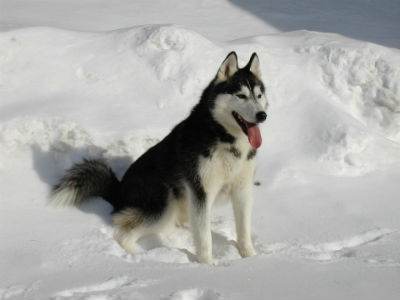
A breed of dog that has won everyone's hearts is, without a doubt, the Siberian Husky. With her captivating gaze, great talents and intelligence, she has appeared on magazine covers and appeared in film productions. Initially they were used as sled dogs in northern Asia, but their popularity increased little by little and is present throughout the world. Size: Big. Weight: Between 25 and 45kg. hair type: Long. Character: Balanced, faithful, shy, intelligent and affectionate. Health: Healthy. Life expectancy: Between 10 and 12 years. Despite the beauty of the Siberian Husky, it is not a breed for everyone. Because? Because he has complex character traits that you might not like at all. Keep reading to find out details about this strong, beautiful, independent dog and great family companion. History and origin of the Siberian Husky dog The origin of the Siberian Husky goes back to a tribe of nomads from the northwest of Siberia, call Chukchi. Although the exact beginning of this breed is not known, genetic research has shown that it is one of the oldest dog breeds. The nomads of the Asian part of the Russian Federation took advantage of the strength and speed of the Siberian Husky to use it in their means of transportation. Likewise, they began to domesticate them and adopted them as another member of the family, giving them appropriate care and affection. At the beginning of the 20th century, specifically in 1908, the Siberian Husky, after spreading through Asia and Europe, arrived in America. In Alaska, specifically, they served as a sled dog while the gold rush occurred and they also began to be included in sled races, where they continue to excel. This breed prospered thanks to its export from Siberia and is currently recognized as a dog breed by the main organizations in the area. They have also been created Specific associations of the Siberian Husky who are dedicated to different activities related to these canines. Physical characteristics of the Siberian Husky dog The Siberian Husky is a medium-sized dog, whose appearance surprises at first glance. On average, adult males are between 53.5 and 60 centimeters tall, while heFemales reach between 50.5 and 56 centimeters. The weight of the adult male is between 20.5 and 28 kilos.; for its part, females can weigh 15.5 to 23 kilos. You can see more about their standard here. Their coat can come in all colors, but some of the most famous ones have silver tones and other dark colors mixed with white. A Siberian Husky is characterized by its speed, lightness and elegant behavior with a smooth and effortless gait. It has a compact body full of hair, its medium-sized pointed ears remain erect and it has a brush tail. It shows a physical build and body shape that combine to give it power, resistance and speed with a life expectancy of approximately 12 years. Character and personality of the Siberian Husky dog The Siberian Husky dog is used to a leader telling him what to do. For this reason, training is not complicated. The breed is usually obedient and respectful, although sometimes it likes to take control of the situation.. In case your dog wants to go outside the rules, you should not allow it. You have to demonstrate your leadership with attitude, without beatings or abuse. He will understand. This canine sees its human as a guardian who provides it with food, treats, toys and other necessary elements. That's why he respects him. This breed likes to escape, so it is recommended to seal any space where it can sneak through. Otherwise he will go out for walks alone and that can cause serious accidents or prevent him from returning. The Siberian Husky is known as a high-energy dog ​​that can be destructive, especially if bored. For this reason, you should keep them exercising so that they do not destroy your house when you leave them alone. They also like to dig in the garden, but if you train them they won't damage your flowers. Its mischievous and playful nature makes the Siberian Husky fall in love with its owners. In addition, they have no problems socializing with other dogs and people, as they like to show their talents and make friends. Unlike most breeds, these dogs don't barkBut they love to howl, which can be annoying. A negative point about their character is that unfortunately they do not function as guard dogs because they do not usually suspect strangers and will not alert in case of intruders. Siberian Husky Puppies The Siberian Husky puppies They generally show a pleasant temperament; They are curious and playful and like to be with people. It is recommended to meet one of their parents to get an idea of ​​their character, as this way you will know what they will be like in their adult life and you will ensure that everything goes well. It is recommended that puppies of this breed come into contact with people, objects, sounds, images and training from a young age. These socialization tasks allow the Siberian Husky to grow up to have a well-formed personality with all its senses working as they should. If you have a puppy, take advantage of taking it for a walk to busy places so that it can improve its social skills. Otherwise, it will be an unruly dog ​​that you will want to get out of as soon as possible. Before buy a Siberian Husky puppy, dedicate yourself to knowing all the details of the breed so that you are not disappointed. Always opt for guaranteed breeders who will give you a healthy specimen that is free of genetic diseases and has good behavior. Choose puppies that have been raised in clean environments with well-cared for parents. It is also recommended to subject them to temperament tests, perform an analysis, deworm them and socialize them so that the beginning of life is healthy and safe. Look for a good breeder who will show you the parents' health certificates and this way you will avoid many future problems. Feeding and health of the Siberian Husky dog Regarding the feeding, the Siberian Hausky is easily maintained thanks to its genetics. Due to their origins as transport dogs at low temperatures, food intake was done less frequently during long journeys. For this reason, an adult Siberian Husky can easily be maintained on two cups of high-quality feed daily, divided into two portions, as long as it is of high quality. However, The amount of food needed depends on the characteristics of each animal, such as size, age, structure, metabolism and activity level. Not all require the same amount of food, since active dogs require more than sedentary ones. Remember to buy food that has the necessary nutrients for optimal development and consult with a veterinarian about appropriate foods that promote health. The Siberian Husky is characterized by being a very healthy breed.; However, like other dogs, they are exposed to some pathologies. Huskies are generally healthy, but like all breeds, they are prone to certain health conditions. Among the most common diseases in this species are some related to vision, which are: Falls: consists of a disease that affects vision because the lens of the eye becomes opaque. It is distinguished because the eye becomes cloudy. They generally appear in old age and are resolved with surgical intervention. corneal dystrophy: This pathology occurs in the cornea, which is the transparent external part of the eye, due to the accumulation of fats in the organ of vision. It tends to affect young women more and there is no cure, although it does not seem to cause any problems with vision. progressive retinal atrophy: a degenerative pathology of the eye that can lead to blindness because the light receptors in the back of the eye are lost. This condition is detected before it causes blindness and fortunately a dog can live a happy and fulfilled life even though it cannot see. hip dysplasia: This is a very common disease in canines, which is characterized because the hip joint does not develop normally. All of these health problems are well known to breeders, who carry out a periodic evaluation with ophthalmologists to avoid breeding a Siberian Husky that has such health conditions. Likewise, those specimens with hip disease are removed from breeding programs in order to prevent the diseases from continuing to be transmitted. It goes without saying that for maintain the general health of the Siberian Husky It is necessary to take him regularly for a consultation with the veterinarian, who will perform a detailed evaluation in order to detect any problem and correct it in time to avoid further problems. Siberian Husky dog care You will be guaranteed one thing with a Siberian Husky: there will be no time for boredom. An adult specimen of This breed requires a daily exercise routine between 30 and 60 minutes, which is something basic in its care. They are an excellent companion for running, as long as it is not in hot climates because they prefer the cold. Despite his size and physical activity, a small garden will be enough to drain his energy. Remember that if you leave him alone in your apartment, you will most likely get a bad surprise when you return. Take him with you on hiking and other outdoor sports to keep him healthy and happy. If you want the beauty of the Siberian Husky to always be present, you will have to carry out the basic cleaning routines of any breed: bathe it when necessary, brush it constantly to remove dead hair, clean the ears and brush the teeth. Without much effort, your pet will remain shiny all the time. Education and training of the Siberian Husky Education and training is not a problem in the Siberian Husky because it is very intelligent. On the contrary, it is necessary to train them to learn the basic rules of obedience that will help you keep it under control most of the time. In your own home you can teach him the necessary tasks to help you master it, but you also have the option of investing in specialized classes. It all depends on how much you want to exploit the talent of these canines. Something curious happens with these canines: While they are in class they behave perfectly, they follow instructions and follow orders, but at home they may not pay attention at all.. If this happens to you, you must be very patient and stay calm. Do not mistreat your dog because it will be counterproductive. Speak to him with love and he will listen to you. With dedication and the correct techniques, you will be able to establish a lasting relationship where there will be a lot of love. Within the main Siberian Husky training, breeders recommend crate training, which becomes a shelter and keeps them safe when they feel tired. On the other hand, leash training becomes an obligation, since these dogs should never be left loose in open spaces. When you go for a walk with your dog, always keep him on a leash because he loves to run and get lost. If you do not follow this recommendation, you will surely lose it and may not see it again. It has nothing to do with you, it's in his adventurous nature. Conclusion Before deciding on a Siberian Husky puppy as a new member of your family, it is best to evaluate whether it will meet your needs and adapt to your lifestyle. Although puppies are playful and fun, they require a lot of time and effort before they become the dog of your dreams because they require constant exercise. The Siberian Husky is independent, friendly, elusive, affectionate. Remember that it is more like a companion dog than a guard animal. If you think you meet the profile to have a Siberian Husky, go ahead. This beautiful dog will be easy to train, will not require very complex care, will stay healthy and will become the best friend of all family members for an average lifespan of 12 years. You will find more information about dogs here: Labrador Gordon Setter Doberman German Shepherd Bobtail Dalmatian  
¿Por qué aúllan los perros?

Our Blog

Why do dogs howl?

by Lobo Azul in Jan 04 2022
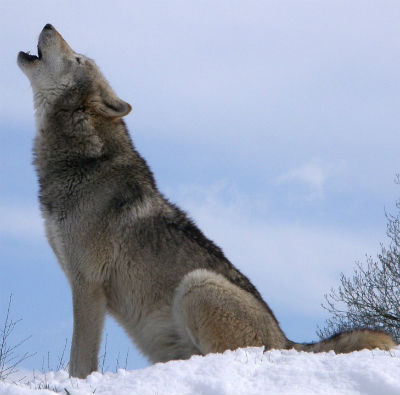
Dogs have their own quirks and those who have one at home will surely be able to highlight at least a single characteristic that can say “my dog ​​does this” and the other doesn't. However, there is something that all dogs do and that is howl. This is one of the most common behaviors of our four-legged friends, since Howling is a form of distance communication that dogs use. It is common to believe that if the dog howl It looks like crying, it is because he is suffering from something, although there is an exception which we will talk about later. Another theory is that the dog howls when it sees the full moon, harking back to its ancient relatives, the wolves. None of that is true, since the dog's howl has a function and here we will tell you what. dogs and wolves Dogs howl less frequently than wolves. Wolves use howling to communicate with other wolves that are far away, sometimes to locate or call them, before and after leaving home, when they are sad, or when a new litter has been born. The sharp and prolonged ringing of the wolf howl It spreads and ends up reaching a greater distance than barking, and can reach many kilometers. The wolf responds by howling or several do so at the same time. The wolf is a social animal that lives in small family groups that occupy the same territory, being able to recognize the howl of the other members of the group. But if it hears a different howl, it will know that it is in the presence of possible enemies and will prepare to defend itself from any attack. It should be noted that wolves and wild and domestic dogs are not the only ones animals that howl, since hyenas, jackals and coyotes also do it. In the case of dogs, howling serves to attract attention. Why do dogs howl? If there is a female in heat in the neighborhood, those howls will be a way to get her attention. Spaying and neutering is very important so that dogs and bitches do not become frustrated by their own basic instincts, in addition to the health benefits this has. Howling is a canine behavior that can be considered normal, but it should not be frequent. If this were the case, we are probably facing the separation anxiety disorder (SAD). Dogs that spend a lot of time alone at home can suffer from this syndrome. If the dog is going to be left alone at home for a long time or if you do not have enough time to care for it, a good option is to hire a pet sitting service. This can also occur with newly adopted dogs that are not puppies. Pain or poor nutrition Although it is not very common, some dogs howl when they are in pain or poorly fed. This is a way to alert their owners about their discomfort. If the dog has never had this type of behavior and there was no alteration in its routine, take it to the vet for a checkup. This way you will clear any type of pain you may have. Howling in response to sounds If you hear another dog howling or a siren, the dog will probably respond to that sound by howling. The piano, alarm clock, and electronic beeps may also annoy or sadden you. However, as soon as that sound stops, so will he. Don't forget that dogs have much sharper hearing than us, which means they can detect sounds that we can't. These howls are usually not excessive unless the triggers occur frequently. If it does, you can apply the desensitization and counterconditioning techniques to teach your pet new tasks that help him face those types of circumstances that make him afraid or cause him to have undesirable behavior. Excitement and success When a dog feels excited because he has achieved something, he will show it to get praise. But, if he cannot convince his owners, then he will begin to howl and scream to get their attention, because this is his natural way of communicating vocally. Have you observed that the hunting dogs They howl when they are successful in hunting or detect an object? They simply get excited and love to reveal their success by “screaming” to call their owners and thus gain recognition. Desensitization and counterconditioning Training should be carried out only by the adult who has the most authority over the pet. To begin training, present the dog with the situation that causes this reaction (howling) and, simultaneously, present a positive stimulus, such as food or toys. The result is that the pet builds a new association in which the previously negative trigger now becomes a predecessor of something positive. To carry out the desensitization and counterconditioning process it is important to consider three keys that coincidentally begin with the letter D. The first “D” is distraction, since in this process, the most important thing is to distract the dog. To do this, it will be necessary to have the presence of the “problem”, but maintaining the distance so that the positive stimulus is more interesting. As you may have read, I said distance and this is the second “D”. To continue moving forward, you have to keep your distance. Now, the third “D” is the duration of the sessions, which must increase as progress is made. If there is no progress, it is because something has failed and is probably due to the distance at which we work. These three “Ds” would be included in a fourth “D”: desensitization. As the dog associates positive stimuli with the objects or situations to which it previously reacted by howling, desensitization also occurs. For congratulate the dog on his achievements, set rewards (games, treats, or praise) for training sessions, and don't use the same ones at any other time. Do one session every day, 10 minutes each. Reward him for remaining calm and obedient during the session. As the training becomes successful, increase the intensity of the stimulus until it can be used at full intensity without causing that unwanted reaction. If the pet manifests fear, anxiety or any other behavior, it is because the stimulus is very intense. In this case, you will not have to scold or reward him, but rather reduce the intensity of the trigger until the pet calms down. There are many elements that can hinder progress, so you should avoid them, such as situations that cause the undesirable response, unless it is training. Keep in mind that the pet learns best when it is calm. If you want your dog to achieve his goal, end each session with a positive response. What are the breeds that howl the most? Some dog breeds do not bark, but they howl. They are the so-called primitives, like the Nordic races: Siberian Husky, Samoyed and malamute from Alaska. These can make many noises, but barking is not among them. Why do they howl at night? First of all, dogs do not howl only at night, but generally, they do so during the night. This is because during the day they hear traffic noises, music, voices, etc., so during the day they tend to rest, sleep and remain much less active. So, during the night, they feel more active and are more territorial and the only way to communicate this to other dogs is by howling. They rarely do so during the day, as their howl is lost among many other noises, but at night their voice is high-pitched and clearly audible. Dogs are night owls, so they cry and howl at night to attract your attention, even if it is not the most appropriate thing to do. You'll probably get up to shut them up, but for them, having caught your attention is already good. Is it true that they sense death? There are many reasons why dogs howl and these have been scientifically proven. However, the belief persists that dogs sense death and have a sixth sense. Since ancient times, thousands of people have reported connections between their animal's behavior and certain events such as earthquakes or the death of people. To this day, there is a great debate in the scientific world regarding this topic, because despite the many testimonies and stories of people throughout the world, there is still much to investigate. In the 70s and 90s, various studies were carried out on the relationship between animal behavior and earthquakes and the results were not very conclusive, so the stories of those who claim that their dogs behave differently when faced with an earthquake are only anecdotes. However, some scientists and psychologists specialized in dog behavior They believe that it could be more than just "anecdotes", since they consider that there are some factors that cause dogs to perceive death or a change in the vibrations of the earth, since when someone is sick, the family members of the person or the dog can be sad and the family dynamic changes. They perceive this change and, therefore, howl. Types of howls Sudden howl: indicates fright, fear or pain. This can happen when it escapes from a fight with a dog or when it suffers from human aggression. Howl that cuts short: It indicates excitement and what you probably want to communicate is something like “come on, come on”, “hurry up, I want to eat”. Intense howl: They express the need or desire for something and tend to do it insistently, one after the other. Prolonged howl: It is a way of noticing their presence and marking their territory. Short howl with a longer one at the end: sadness, loneliness, separation anxiety disorder. How to resolve this permanent howling situation? As we mentioned previously, dogs, in addition to barking, also howl, but if this situation becomes permanent, this behavior will have to be inhibited in some way. But first, it will be necessary to identify the cause of howling. If it were a situation in which the dog was howling because of a dog in heat, there would be nothing to do, just wait for the heat period to end or leave it in a more closed place, since the smell of the female in heat spreads through the wind. If the neighbors complain about the dog howling during the day when you are not there, it is most likely separation anxiety disorder (SAD). Some alternatives to help the dog so that it does not suffer in your absence are the following: The dog needs physical activity. Walk with your pet. This way you will not only be taking care of their physical health, but also keeping them company every day. Spend time. If your routine does not allow you to dedicate this time daily, a good alternative is to hire a pet sitting service or a walker who can take you for walks and spend time with them. Another good alternative is to buy or adopt a new canine companion to have fun with your dog. keep him entertained. So that the animal does not feel your absence so much, it will have to be kept busy. Buy him toys that are suitable for him and that amuse and entertain him. This is an excellent option for you to use up all the accumulated energy. Check if they have been fed and hydrated normally. See if there are any injuries and if when you touch any part of his body he howls in pain. If you have any doubts, take him to the vet for a checkup. As you will see, dogs communicate with us in various ways: panting, barking and howling. Each one is determined to communicate something to us and, depending on their mood, they use one or the other. If none of this achieves reduce excessive howling of your dog you will have to ask a dog behaviorist for help. Other curiosities that may interest you: 10 Guard Dog Breeds to Guard Your Home How long does a cat live? 5 tips to protect your dog from the heat The best family movies starring dogs Hachiko's stories  
Carlino | Todo lo que debes saber sobre la raza

Our Blog

Pug | Everything you need to know about the breed

by Lobo Azul in Jan 04 2022
The Pug, or Pug As it is known in different countries, it is a very popular dog breed around the world. These animals are characterized by being friendly and adapting quickly to the family environment. However, they need some special care. Are you interested in learning more about this breed? Keep reading the article that we bring you on this occasion. Size: Small. Weight: Between 6 and 8kg. hair type: Short hair. Character: Playful, friendly, mischievous and docile. Health: Prone to health problems Life expectancy: Between 13 and 15 years old. History of the Pug breed The origin of these canines is controversial and doubtful. Experts and historians say that this breed originated in China in 700 BC. where They were considered mascots of high society. or royalty. They were even given as wedding gifts to princes, emperors and distinguished guests. Its expansion throughout the world began, in principle, by Dutch traders who brought this breed to Europe, to France and England specifically. Then, as time went by, they spread throughout the continent, even reaching America. It is said that Pugs come from another dog recognized throughout the world: the Pekingese. Although many people claim that they descend from larger canines such as Bulldog. The truth is that, although its origin is very difficult to verify due to the longevity of the breed, Today they are still fine and very peculiar dogs.. Characteristics of Pugs These dogs have a imposing physical build despite being small in stature. They are generally strongly muscled and have a short or flat snout. They have very large eyes and a head covered with wrinkles. The ears are small, consistent with their size, but with a variant arrangement. They can be folded towards the back of the head and/or folded towards the front, pointing at the eyes. The coat is silky and shiny. The flat snout and other details of the animal's face are very characteristic due to its dark color. In the same way, the tail of Pugs is curled and has the same color as the hair on the body. The average weight of each specimen of this breed in adulthood is 8 kilograms and about 35 centimeters in height. being a small specimen but powerful in terms of strength. Intelligence and charm are one of the main characteristics that cannot be captured with the naked eye. Types of Pug Pug or Carlinos dogs can be differentiated by their colors or physical characteristics: Black. It is perhaps the rarest color among dogs of this breed. The origin is unknown but they are very common in European countries such as England or France. Some puppies are born with white paws but over time that color darkens or disappears. White. The white color is one of the most common and in most cases denotes the lack of purity in the breed. The main features are the light color on his ears and the details on the face are almost invisible. Albino. It is very similar to the color white, but in this case, the ears and eyes lack pigmentation. Fawn. Golden or beige hair with black ears, combined with a dark line that runs across the animal's back, are the main characteristics of this tone. It is the most common color among puppies or adults of this species.   Pug Character Pug dogs are docile and friendly by nature.. They have a fairly controlled temperament and rarely react violently to general stress situations. They are faithful and loyal to their owners or families. It should be mentioned that The barking of the Pugs is of a serious tone, contrary to what anyone could imagine when taking into account their size. How to care for a Pug Before bring home a Pug or Pug dog It is necessary that you know its basic characteristics. Likewise, it is important to know aspects of your personality, common diseases and what to do to keep you healthy. The Pugs They are very active, playful and at the same time dominant dogs.. That is why from the moment you arrive home you must show who is boss. Marking authority is necessary to prevent them from becoming disobedient and more naughty than they should. Knowing the character of these pets in depth is the first step to their good care. It should be noted that sometimes they can ignore orders from their masters at the moment and carry them out when they consider it convenient. Sometimes they can act as if they are not listening, however, they are very sensitive to sounds, which is why you should avoid shouting and not raise your voice when they are nearby. For train a pug Just use a firm "no." Vociferating could upset them, since they are very nervous animals. For this same reason, the most recommended for their well-being are relaxed and confident owners. On the other hand, food plays a fundamental role from the first months of a Pug's life. A diet that provides all the nutrients, proteins, carbohydrates and fats is essential, because due to its activity it burns a lot of energy. Likewise, in the first 10 months of birth you should receive three servings a day of food for small breed dogs. After this time, you should get used to only one dish a day. It is most recommended that this is always at the same time. Likewise, it is necessary that they exercise regularly to keep them in optimal condition. Health problems of a Pug and its care Like every living being, Pugs can suffer from diseases. When purchasing one of these dogs, we recommend doing in-depth research into the most common conditions they contract: Snoring. Being small animals, their morphology causes them to snore even when they are awake. In general, Pugs have strong, labored breathing. Colds. Pugs have sensitive skin and respiratory systems, which is why sudden changes in temperature or climate affect them greatly. At home they should have a suitable environment and sleep in a neutral place. Eye problems. Due to the shape and arrangement of their eyes, they produce abundant tears and are more prone to contracting diseases such as conjunctivitis, red eyes or ulcers. If you suffer from any, it is advisable to go to the veterinarian to receive the precise instructions for each case. Overweight. Despite being very active, Pugs can gain weight easily. That is why you should avoid giving him leftover food or extra treats. The diet must be balanced, otherwise your general health would be affected by being overweight, thus shortening your life. Allergies. Both the skin and the fur of the Pug must be cared for to avoid allergies. These dogs can easily get them if their wrinkles are not cleaned well. For this it is necessary to take care of your hygiene at least once a week. Tumors. These dogs can suffer from mast cell tumors, which appear mainly on the skin. These can be confused with warts. If you suspect these, visit a specialist. Complications in childbirth. In females, it is common for childbirth to be complicated, since the puppies' heads are very large in relation to the mother's body. Therefore, a cesarean section must often be performed. How to bathe a Pug or Pug The specimens of this breed do not have a strong odor, however, the habit of bathing must be created from an early age to avoid the stress of the moment. Due to its short, straight coat, the task of Grooming a Pug is easy, but requires attention. First of all, folds or wrinkles should be cleaned at least once a week, including those on the face. This will prevent skin infections and allergies due to dirt accumulation. You can use a damp cloth with dry dog ​​soap. First check that the product does not harm you. The bath should be done only when needed, remembering that this dog does not have the characteristic and strong smell that other breeds have, this way you will also be avoiding a possible cold. In addition, it should be dried well after bathing. Some veterinarians recommend complete cleaning every six months, due to the sensitivity of their skin and respiratory system. As for the care of the coat, a brush with stiff bristles is required. Daily brushing will be enough to keep it shiny. During the shedding season, greater frequency and firmness are required during the task. On the other hand, teeth must also be taken care of. As puppies they need to bite until they have all their teeth. Although they are cleaned naturally with a bone, it is also recommended to brush their teeth once a week to remove tartar. The Pug's nails also need attention. If they are too long they can hurt themselves or their owner, so it is ideal to file them down and keep them short. How and when to feed your Carlino dog for being a delicate dog The issue of food cannot be taken lightly. This breed does not have a good digestive system, so food must be supplied with great caution. Especially when they are puppies or in the growth stage, since they are more vulnerable. For feed your pug correctly you must follow these recommendations: balanced food. These dogs tend to gain excessive weight, which is why many experts and veterinarians recommend balanced food. This way they will be able to avoid problems related to canine obesity such as cardiac or respiratory complications, for example. Fruit. Fruits such as watermelon, apple, melon, banana or kiwi can be included in your Pug's menu. This will help recover the vitamins and minerals that you may lose during your growth. Likewise, they can be an ideal complement to the animal's carnivorous or dry diet, especially in summer or on hot days. Meal schedule. It is important to create a eating habit for your dog early on. It is advisable to provide small portions of food every 5 or 6 hours. This way you can control both the weight of the animal and the amount of food it consumes per day. Bones. It is advisable to give him large, hard bones that are difficult to break. This way you will prevent him from swallowing solid parts that could cause bigger problems. Likewise, it will serve to sharpen and strengthen your teeth. It is usually very strong. Meats. Lean meats should be a priority in a Pug's diet. These dogs need all the nutrients that beef or chicken provides. We do not recommend pork or other animal meat, since the bacteria they have can be harmful to the Pug. Your dog's hydration is very important to maintain energy balance. The water should always be at room temperature and close to the food container. We recommend having water in several places and easily accessible so you can stay hydrated at all times. Another question is the amount of food that should be given to the dog. It is always advisable to follow your veterinarian's instructions. They will always provide the information necessary to comply with the basic nutritional requirements that your pet needs. Life expectancy of a Pug or Pug The life expectancy of a Pug is thirteen to fifteen years, everything will depend on the diet and health of each animal. They generally remain strong for at least eight years, thanks to their bone structure, which gives them a lot of resistance over time. By being a small but muscular dog makes it one of the domestic animals with the highest life expectancy. This means that he will be part of a family or will be company for a long time. We hope that with this article you learn everything related to Pug dogs. And if you want to know other races, you can consult these articles: Pomeranian Maltese Bichon Andalusian winemaker Cavapoo Jack Russell Terrier poodle  
Síntomas de alergia alimentaria en los perros, cuidados y prevención

Our Blog

Food allergy symptoms in dogs, care and prevention

by Lobo Azul in Jan 03 2022
The food allergy It is a condition that can appear at any age in your canine friend. It is, in fact, one of the most frequent poisoning reactions suffered by these domestic animals, after insect bites. Generally, this type of adverse reaction to certain foods appears after continued consumption, so it is a process that takes time to both detect and improve. Warning signs There are certain messages that dogs emit when they are affected by allergic reactions resulting from the consumption of some foods. So you should pay attention to their body language and review it carefully. These are some of the food allergy symptoms in the dogs that occur most frequently. He looks discouraged and has no appetite Generally, their body language tends to be sedentary. He also does not rest properly and appears between sad and aggressive. His ears move back and his eyes appear glassy. You have inflamed skin It looks reddened, swollen. You may also develop a rash on your belly and legs. Another warning sign is that small bumps or pimples are appearing on your skin. These tend to be very itchy, so they will constantly scratch themselves, causing further damage to their skin.  He is losing a lot of hair Dogs lose hair constantly, just like humans, but shedding to the point of shedding clumps is a clear sign of a unfavorable reaction to what you are eating. His fur looks different If the hair weakens, loses its thickness, has a dull appearance and, furthermore, it does not look like the standard for its breed (or if it is a mixed breed, it does not look the same as usual) you have to evaluate what your dog consumes in its daily diet. Has abrasions around the snout This is another sign that the diet your dog is receiving is negatively affecting him. It is a clear indicator of a condition in the mucous membranes in your digestive tract. Redness of the paws This symptom is characterized not only by redness per se, but by show signs of inflammation, hairless areas, and when touching them, the increase in temperature in the epidermis can be perceived. If your dog licks his paws a lot, it is also a symptom of a food allergy. Swollen ears Also red. You may notice your skin is thicker than usual. In some breeds, like the Rottweiler, They look a little “bloated” when they have an allergic reaction to food. red eyes Both the red eyes and the very drooping eyelids, excess eye discharge or excessive blinking, are signs of an allergic reaction. His teeth are falling out Either they have lost their density or they have a lot of tartar. Dogs' food should not accumulate between their teeth in an exaggerated way, this is already a characteristic of being very soft, so digestive processing will not be correct. Stomach and digestive tract signs These are the immediate food allergy symptoms, a sudden poisoning, rather than being a reaction to a specific food to which it always reacts. Among them are: Bad breath, different from the common product of salivary secretion. Vomit. Diarrhea. Lots of flatulence. Nausea, that is, retching. Excess salivation. He is drinking a lot of water. He complains when doing his physiological needs. Foul smell of stools. Change in texture and color of stools. His belly looks swollen. Why does my dog ​​have a food allergy, if I have always given him the same food? There are several factors that affect the fact that your dog has an adverse reaction to the food that you have always given him. On the one hand, smaller breeds or those of very large size usually have a certain sensitivity to specific proteins or carbohydrates and starches. Part of the common diet or the contents of kibble meals are precisely rice and chicken, two of the foods that contain starches and fats that affect dogs. This does not mean that all dogs present the same type of reaction, since not all organisms function in exactly the same way. But how is a reaction possible if it's the same brand of food you've always used? Well, as in all industrialized processes, it is possible that traces of other foods have sneaked in, or that there is a new ingredient in the recipes, especially when the brand launches an improved product. Surely your dog has a greater sensitivity to the change in diet and therefore has these symptoms. How to help my dog get out of the allergic crisis Once this symptomatology occurs, It is vital to go to the vet to be placed on detoxification treatment and evaluated. He will give you guidelines to improve your dog's eating process, however, also follow these instructions that will help in the process: Don't drastically change their diet. Eliminate some of the processed food and combine it with homemade recipes that include vegetables and lean meats. Avoid giving your dog fatty foods, as well as carbohydrates or foods that produce high levels of starches, such as potatoes, corn, wheat, rice and pasta. Always keep fresh water in your dog's bowl. Don't forget to give him the anti-allergy prescribed by the vet. Avoid the midday sun and rather sun it in the morning, so your skin will be less irritated. Bathe him only with soaps specially designed for dogs in an extra mild formula, to reduce the effects of the reaction on the skin. Offer your dog more foods with fish. Don't give him excess food. Just like humans, dogs must maintain a weight commensurate with their size. See if the food you give your dog has coloring. Avoid those that contain it. Maintaining your dog's health is vital so that it can continue to accompany you for a long time, maintaining physical and mental balance. Remember that when presenting any type of symptomatology described, you should go to your veterinarian as soon as possible to receive precise instructions that will make it improve. You may also be interested in reading: Kennel cough. How to change our dog's feed. Foods your dog should never eat. 13 myths about your dog's nutrition. Tips to strengthen your dog's defenses.
Pastor Garafiano: origen, cualidades y cuidados

Our Blog

Pastor Garafiano: origin, qualities and care

by Lobo Azul in Jan 03 2022
The Pastor Garafiano, also known as Garafia Shepherd, is a dog that we have heard little about. However, it is well known and appreciated in its native region: the Canary Islands, as well as in Spain and nearby countries. The history of the Garafiano Shepherd also has an interesting history, knowing it allows you to appreciate this breed even more. Size: Medium - Large. Weight: Between 24 and 35kg. hair type: Long, abundant and alloyed. Character: Affable, protective and distrustful of strangers. Health: Healthy Life expectancy: Between 12 and 14 years old. Origin of the Garafiano Shepherd The Garafia Shepherd is a dog of Hispanic origin and, more accurately, he is a native of one of the Canary Islands, which is known as La Palma, specifically in the north of said island, in the municipality of Garafia. Hence its name. However, mentioning the region of origin is not enough. As its name indicates, it is a shepherd dog. In his early years he lived with humans, dedicating himself mainly to herding, taking care of the goats and sheep that made up the capital of the island's inhabitants. It was special for these tasks thanks to the fact that its physiognomy is ideal for moving through steep areas. This is how Pastor Garafiano lived for many years. As the island's inhabitants have abandoned herding and working the land, this It has stopped being a herding dog and is mainly a companion dog., a task that it also fulfills splendidly. It is relevant to mention that during the 60s, due to the indiscriminate and irresponsible crossing of this breed with other shepherd breeds, the Garafia Shepherd was on the verge of disappearing as a breed. Faced with this terrible situation, a timely working group emerged to defend it from the danger of becoming extinct. This became known as the Working Group for the Recovery of Pastor Garafiano, and later renamed Spanish Association of the Garafiano Shepherd Dog (AEPPG) and is currently active. Physical characteristics of the Garafiano Shepherd Regarding its appearance, The Garafiano Shepherd is relatively similar to a wolfHowever, its size is medium to large with a rather small head in relation to the size of its body. Their characteristic split ears can be located quite far apart on the back of the head. Their eyes, oblique, brown and close together, usually have a bright brown hue, with an always alert look. These, together with his hairy cheeks and not very prominent chin, give him a friendly and non-aggressive appearance. In addition, its teeth are pincer-type, a quality that was extremely useful since it does not mistreat livestock (goats and sheep). It is a strong, agile and muscular animal. The specimens of this breed are covered by a large amount of fur, especially on the chest, back and genital area, this allows them to protect themselves from the cold. They are light brown, similar to the color of a lion's coat, and the cubs are dark brown and as some specimens grow, they may develop white spots, mainly on the tail. In relation to the latter, it has a characteristic saber shape. Character and behavior of the Garafiano Shepherd Regarding its character, the Garafiano Shepherd is usually friendly, docile and self-confident. By being an animal of great intelligence and with a strong and agile physical build, Pastor Garafiano is active and lively. It is a dog that needs to enjoy, play and exercise regularly, since it has enough energy that needs to be released. After having lived for so many years, perhaps centuries, with man, the Garafiano Shepherd has become very healthy accustomed to him, being harmless and rather too calm with respect to the people who approach him. However, it presents the natural canine response to strangers: in such cases, it usually barks, sniffs, moves its tail or folds its ears in order to maintain a safe distance from those it does not know. After getting acquainted properly, he is totally friendly and playful. It is a breed that has gone from having a work function to being a companion dog precisely because of its affable personality and the indisputable trust it has earned from its owners over the years. Although for some years he was crossed with other shepherd specimens, it seems that the Garafiano Shepherd did not suffer in terms of his predominant personality. On the contrary, has remained constant over time as a docile and helpful dog. Behavior with other dogs As with humans, the Garafiano Shepherd is not usually aggressive towards other dog breeds. It can move its ears and tail in the presence of an animal it does not know, but it is rare for it to initiate any type of intimidation or attack. In general, they are polite and cautious dogs, not violent. This also relates to his high level of confidence. This is a dog extremely aware of its strengths and possibilities. Therefore, it is the ideal type of dog to live in a community, it does not usually cause fuss or problems to other humans or their respective pets. It is a completely sociable dog, even when it performs herding duties, the Garafiano Shepherd is not usually territorial, on the contrary, although it does keep a certain distance from strange animals and people, once it adapts to them they do not represent any inconvenience. Pastor Garafiano concentrates on his task with great confidence. Differences between males and females Regarding their behavior, females and males do not differ significantly. However, a greater temperance can be seen in the male because he does not present the behavioral changes typical of gestation and birth of puppies. Females, for their part, can be a little more temperamental when it comes to protecting their puppies. Female Garafiano Shepherds also tend to resolve their differences with other animals by distancing themselves or looking for a more intelligent solution; males, in the rare cases that present them, usually resolve them through mutual challenges. The Garafiano Shepherds of both sexes are not very prone to conflict and tend to move away from it in search of a restful place until they regain the lost tranquility. Care of the Garafiano Shepherd Food As we mentioned before, The Garafiano Shepherd is a muscular and strong animal, is an extremely energetic and active animal. These factors lead to the need for a nutritious diet that helps you recover proteins, minerals, fluids and vitamins after each daily action. They require a diet with a high energy value. It is recommended to determine this diet under the recommendation of a veterinarian, however, the basic recommendations are usually the following: Feed it with nutrient-rich dog kibbles (900 grams daily for adults) Vary your meal with soft foods (few times a week or month) Provide animal and vegetable protein (helps bones and teeth) Give treats infrequently and in small proportions When the Garafiano Shepherd reaches the adult stage, it is also recommended that it be fed twice a day on a constant schedule. The bowl should be placed at the height of the dog to avoid digestive problems and even discomfort at the neck level. As for puppies, they can also eat kibble suitable for their age and size. You must be very rigorous and not overdo it in feeding the little ones as this can trigger a process of overweight. Hygiene Since it is an energetic dog, it is normal to take it for a walk and let it run around outdoors. For this reason, it will be important that you make a considerable investment in hygiene products for your pet. It will also be necessary to attend to all the details: keeping their ears and eyes free of wax and lice is extremely important to maintain their good appearance and health. Due to its abundant coat, the Garafiano Shepherd requires brushing, preferably daily, at least for two or three days a week. This helps prevent annoying flea and tick problems. It is equally important to adhere to a strict bathing and drying routine in order to prevent infections or fungus on your skin. For this, it is important to consult with the veterinarian about the recommended frequency for bathing, although it should not be more than once a month. Health Your health will not only depend on your hygiene, physical activity will also be necessary to complement the diet-hygiene-exercise triad. If the Garafiano Shepherd is not exercised frequently, it can develop anxiety and increase the likelihood that it will destroy some objects at home. Otherwise, this is a fairly healthy breed that is not threatened by the development of relevant diseases, as long as it is given the necessary care, including the vaccines it deserves from the moment of birth. By fulfilling these factors it is very likely that you will be successful in the great responsibility of raise and care for a beautiful Garafiano Shepherd, a loyal, intelligent and affectionate companion pet par excellence. Maybe someone is waiting for you, Pastor Garafiano has won your heart, don't think about it anymore. Other articles that may also interest you: border collie Beagle Andalusian winemaker shar pei Xoloitzcuintle golden retriever Cocker Spaniel Kelpie late Spitz    
Lobero irlandés, un inmenso bonachón

Our Blog

Irish wolfhound, an immense good-natured

by Lobo Azul in Jan 02 2022
The whippet or irish wolfhound (Irish wolfhound) is considered the tallest dog among all known breeds. It is a friendly hard-furred giant, who loves running in open spaces and with a history that goes back to very ancient times. Size: Giant. Weight: Between 45kg and 100kg. hair type: Long, thick and hard. Character: Balanced, sociable, intelligent, affectionate and active. Health: Prone to health problems. Life expectancy: Between 8 and 10 years. This breed belongs to the group of hounds, canines that specialize in chasing other mammals. The Irish greyhound is the type of hound that uses sight and not smell when hunting. It perfectly complements its great vision with the speed and power it displays to gallop after its prey. It does not owe its name because it looks like a wolf, but because in the past it served humans in its native Ireland as a hunter of wolves and other large animals such as elk and wild boar. History of the Irish Wolfhound The history of the Irish Wolfhound goes back thousands of years. There is evidence that the breed existed as early as 273 BC, but even earlier, in 600 BC, when the Celtic tribes Tectosages and Tolistobogii sacked Delphi, fighting with huge dogs at their side, according to survivors of the attack. In the legends and stories of Celtic mythology he is mentioned as Cú Faoil, which has been translated as “hunting dog”, “wolf dog” or “war dog”. The Cú It is a prefix that was reserved to accompany the names of brave and loyal warriors. Julius Caesar referred to the Irish wolfhound in his book “The Gallic War” in 391 AD, while Quintus Aurelius Symmachus received seven dogs as a gift to use in fights against wolves and bears in the Roman forums. The wolves caused a great commotion. “All Rome saw them with amazement,” Symmachus wrote in his letter of gratitude for the gift. Saint Edmund Campion, in his “History of Ireland” (1571), related that The nobility used the Irish greyhound to hunt wolves in the Dublin and Wicklow mountains. For a time, only nobles were allowed have the irish wolfhounds. The number of copies they could possess was determined by the level of importance of the noble. Later, in Dublin, possession was restricted to only two copies per person. The popularity of the Irish Wolfhound almost caused the breed to become extinct. The dog was an object of covet, and already in the 17th century it was a common practice to give it as a gift to royal houses and celebrities throughout Europe, which contributed to the decline of its specimens. The massive export of these dogs caused Oliver Cromwell, Lord Protector of the Commonwealth of England, Scotland and Ireland, issued a decree to ensure that sufficient numbers of dogs were maintained to combat wolves. Even so, the population continued to decline, to the point that by the 19th century the Irish wolfhound was almost extinct. The decrease in the number of wolves contributed to this, so the breeding and use of the greyhound was no longer necessary, and the famine that hit Ireland in 1845. Captain George Augustus Graham is credited with saving the breed in 1869. He did so by crossing the few surviving specimens with the Scottish Deerhound, the Great Dane and the Mastiff to obtain the canid we know today. In 1870, the reborn dog was first exhibited in a competition, and in 1885 Graham and other breeders founded the Irish Wolfhound Club. Physical characteristics of the Irish wolfhound It is so tall that, if it stands on two legs, it exceeds the height of a person. But, despite its large size, the Irish wolfhound It is a slender animal. The male measures at least 80 centimeters at the withers, reaching up to 100 centimeters, while its minimum weight is 54 kilograms. The female has a minimum height at the withers of 75 centimeters, and a minimum weight of 47 kilograms. The coat of this animal is short to medium, hard and strong. There are specimens of black, gray, white, beige, brindle and reddish. This dog's ears are small and folded towards both sides of the head. It has a long, slightly pointed snout, and a long head and neck. The Irish Greyhound has small, dark eyes, mostly black, although there are also some with dark brown eyes. The legs are long and robust and the feet are large and round. The back is quite long with the back and tail slightly arched. Regarding the chest, this breed is characterized by having a deep and muscular thorax, while the belly is narrow. All these features make The Irish Wolfhound appears to be longer than it is tall, even being perceived as smaller than specimens of other large breeds. But it is just a matter of perception, due to the constitution of his body, because in reality he is a giant among giants. Irish Wolfhound Behavior The adjective that best describes it is good-natured. It is a happy, sweet, calm, silent, docile dog capable of showing a lot of affection to its owners. It is usually an independent dog, and this is due to its hunter instinct, still present in the breed today, which dictates that it does not need to wait for orders and that it must make quick decisions. He can socialize with other dogs, other pets and is tolerant with children. However, small dogs and cats can bring out the Irish wolfhound's ancestral hunting instinct, and this will cause it to chase them when they move, considering them as prey. That is why it is recommended that the wolfhound and small dogs and cats be socialized from a young age. Although He is patient and friendly with childrenIt is recommended to supervise it when playing, especially if children are very young, because an Irish Wolfhound could, unintentionally and due to its large size, be rough and cause harm. For his big heart, The Irish Greyhound is an ideal dog to accompany families who live in the countryside or in places where there are large spaces available. Hunting wolves is not their main occupation today. Their tasks are limited to herding, warning about the presence of a threatening predator and, of course, providing company and loving their family. It adapts very well to rural life, but also to urban life, as long as it has enough space at its disposal. This dog tends to create a very strong attachment bond with its owners, and is likely to cause damage if left alone for long periods of time. As long as it is accompanied, it is not a destructive dog. Guard dog duties are not entirely compatible with the Irish Wolfhound, even though Its appearance is imposing and intimidating. He doesn't shy away from strangers, but he doesn't confront them either, as he is too kind to do so. It is not a dog that shows too much interest in the tasks of defending spaces or properties. This means that guardian qualities are not among his strengths. Another thing is when his owners or himself are attacked, then his bravery and ferocity emerge. Irish wolfhound care The Irish Wolfhound is a calm dog, he is not overflowing with energy, he does not need to go running every day, but he does require a certain level of exercise, at least two hours a day, and above all he requires space. Long walks will be enough for him to burn off his energy and keep his physical condition in good condition and his hound skills honed. Among the games that the Irish Wolfhound most enjoys are sniffing, tracking and chasing. Fur The coat of the Irish greyhound is hard and rough, so it will be enough to brush the coat twice a week to remove dead hair and prevent knots from forming. Food Due to its large size He is a dog with a huge appetite, more expensive to maintain than smaller breed dogs. It is recommended to provide 900 grams of dry food per day, which is low in protein. Due to their tendency to develop stomach problems, food should be given in several servings throughout the day. Food and water bowls should never be placed on the ground, they should be at a suitable height, and if possible well secured, so that you can reach them without problem. The effort to reach objects at low height could cause stomach torsion, a condition to which it is prone, and which could endanger the animal's life. It is not advisable to include cereals (corn, wheat, rice) or flours derived from them in your diet, due to the risk of causing allergies. It also does not need nutritional supplements, and it is not a dog that tends to be overweight. Space The Irish Wolfhound requires space to develop. The lack of space could turn it into a destructive and even aggressive dog. You should have padded places at home for him to lie down on because, due to his thin build, he can develop calluses if he lies on hard surfaces for a long time. Training He is a very intelligent dog, that's why it is relatively easy to train. Positive reinforcement through congratulations or a cookie works well with him. Firmness and affection are key to showing him who is the leader of the pack. Irish Wolfhound Health The Irish Wolfhound is a dog prone to developing serious diseases such as gastric torsion - common in all deep-chested dogs -, bone cancer, elbow and hip dysplasia, progressive retinal atrophy and heart problems. The most common causes of death are heart conditions and bone cancer. Regular vet checkups are essential to prevent and detect in time any health problem that can be controlled with treatment. It is necessary to comply with the vaccination schedule and the deworming schedule recommended by the doctor. With good nutrition, physical activity and care, the life expectancy of the furry dog ​​can be extended, since like all large dogs, the Irish Wolfhound does not live that many years, just 6 to 8 years on average. Curiosities of the Irish Wolfhound A dog so old that it has a lot of history to tell. One of the most popular legends is the one that tells of the birth of the breed. Legend has it that an Irish princess was transformed into a dog by means of a spell. Her nephew Fionn mac Cumhaill managed to break the enchantment, but before that happened, the princess gave birth to two cubs: Bran and Sceolan, the first Irish wolfhounds, who even have a statue in the Irish town of Kildare. Another legend says that King John of England gave a dog to his son Llewellyn, Prince of Wales. He called him Gelert. One day, the prince went out hunting and commissioned the wolfhound to take care of his son. When he returned he found the dog covered in blood, feared the worst and killed it. Shortly after, he realized his mistake when he saw his son playing near the body of a wolf that Gelert had killed to protect the little boy. The Irish wolfhound reached the Rocky Mountains of the United States; it is said that a single specimen was able to eliminate forty wolves during one winter. Illustrations from the 17th century show that the Irish greyhound of that time was very similar in appearance to the one we know today. The Scottish novelist Walter Scott warned a friend that his dog, an Irish wolfhound, of course, would have no problem eating from his bowl without having to stand on his paws or climb onto a chair or table. Having one of these specimens is a wonderful experience, although this does not mean that it is easy. If you have decided have an Irish wolfhound at home Make sure you can cover all his needs and care for him as this breed deserves, the effort and affection will be highly rewarded. Also check out these breeds: Cane Corso bullmastiff Tibet Doge Saint Bernard Neapolitan Mastiff Tosa Inu Argentine Dogo  
SCHNAUZER | Origen, características y alimentación

Our Blog

SCHNAUZER | Origin, characteristics and feeding

by Lobo Azul in Jan 01 2022
Within so much canine variety that exists in the world, we have the schnauzer. Each breed is recognized by some characteristic and this breed is recognized by its particular beard and abundant eyebrows. If what you want is a medium-sized dog, the schnauzer is the one to be the ideal companion for families with children. It is an affectionate, friendly, protective and very active breed due to its hunting instinct. Furthermore, it is a very well known breed that has been crossing borders and is increasingly sought after as companions for both family groups and dog lovers. Size: Medium. Weight: Between 14 and 20kg. hair type: medium, hard and thick. Character: Friendly and affectionate. Health: Healthy and strong. Life expectancy: Between 10 and 16 years depending on the type. History and origin All dog breeds come from somewhere in the world, in the case of the adorable schnauzers They were born in Germany, in the current city called Wurtemberg. It is a breed that dates back to the 15th and 16th centuries. Previously they were often seen in the stables of houses, hunting rats and mice, for this reason they were classified as rat dogs. Schnauzers are a very energetic breed., that is why at that time it was very common to see the dog running around the grounds all day, chasing some of those rodents to hunt them, and in this way keep the houses free of those unpleasant pests. During the First World War it was very common to see schnauzers among German soldiers, since this breed that is characterized by being very intelligent. It was used among members of the Red Cross of the German army to perform the “mail” function, and in this way move medicines or messages from one place to another. For this reason, it is said that schnauzers discovered new lands outside of Germany, due to many soldiers who fell in love with the breed and took some specimens outside the country, for example to the United Kingdom. And in this way they were raised in new countries and cities around the world. So you can say that the schnauzer is a german dog which, currently, has reached many places in the world and whose breed is very recognized. Physical characteristics The schnauzer is a very active dog, he always wants to be burning energy. The most advisable thing, if you do not live in a house but in an apartment, is that you take him out daily so he can burn off energy by running in a free area where he can play, and in this way stay active, something very characteristic of these. His greatest characteristic to identify him is his abundant and pronounced beard, as well as his very bushy eyebrows. There are various sizes of schnauzers, from the miniature size to the giant, but the most common one to see out there is the standard size. His hair is medium, hard and thick. Its common measurements are: the miniature, which does not exceed 35 centimeters, the standard between 45 and 50 centimeters and the giant between 60 and 70 centimeters. Of course, depending on the measurements, there are the ideal weights for each dog. Miniature: its weight should be between 4 and 8 kilos, Standard: between 14 and 20 kilos, and finally the Giant: with a weight between 37 and 45 kilos. Mostly their fur is black and their characteristic goatee or mustache is lighter in color, as are their bushy eyebrows. There are also those with gray tones, one part is a stronger gray tone than the other, which gives the impression that they are gray hair and is the so-called “salt and pepper” His tail is short. The average lifespan of schnauzers is approximately 14 years, so it can be said that it is a dog of average longevity. Character and personality Regarding the characteristics of its character and personality, the schnauzer is particularly characterized by: Being a very friendly and affectionate breed, ideal for family groups and even more so if there are children, since they are very playful. Intelligent, they learn very quickly His character is very energetic and always awake. He is always aware of what is always happening in his environment. Very faithful and loyal to its owner. He relates easily to other dogs, so when you take him for a walk you won't have problems with other dogs. It is an ideal breed to feel accompanied, since it is always active and making itself felt throughout the house. If you want him to take care of the home, he is the right one, since he barks when he senses a different activity. If, for example, it senses someone outside the house, in the garden or near the other side of the door, it will bark to announce that a stranger is there. Sometimes you may encounter a moody schnauzer, but usually they are very naughty and friendly. Personality undoubtedly also depends on where you are raised and who educates you. If adults or children bother him, do not expect a very friendly reaction from these dogs, since his dignity does not allow him to forgive attacks. It is a watchdog, so it is always alert to what is happening around it. Because they are a guardian, with their forceful barking, they try to alert their owner of some stranger or irregular situation in their environment. schnauzer puppies Like all newborn babies, Schnauzers must be cared for so that they grow healthy, you must be aware of the food that your mother gives you through breastfeeding, see that the entire litter tries to eat the same amount each, since that first month is essential for their growth. If the mother does not give them enough milk, a nutritional plan duly recommended by a veterinarian can be used. Keep them protected in a place where they have an ideal temperature environment as well as the lighting of the place. You must understand that the puppy stage of all dogs is about discovering and getting to know each other. That is to say, although they are characterized by being a very intelligent breed, it is common for you to surprise them by tearing papers, shoes and many other things with their new teeth. It is your duty to guide them and scold them when necessary, this way you will educate them to be a very well-behaved dog in the future. Teach them where they are going to relieve themselves, allocate a place for that, or teach them that they should do it when it is their time to go out. Like any puppy, he will want to climb on furniture, beds, it is up to you whether you allow him or not. In the puppy stage is when they should be dewormed and vaccinated. The most important thing is vaccinations, to avoid serious illnesses, which is why it is recommended to visit the veterinarian so that he can assign the dates for his vaccinations. While he is a puppy, talk to him, so that he begins to recognize the voice of his owners. In the same way, pet him and allow him to smell each member of the family, so that his nose recognizes them. Food and health The schnauzer's diet during its first month of life is through breast milk, through which it will receive the vitamins and minerals necessary for the development of its first days. If the mother for some reason is not supplying enough milk, it is recommended that you consult a veterinarian how the milk can be prepared for the puppies, as there are special preparations for them. Powdered or pasteurized milk for human consumption is not recommended for puppies and can cause diarrhea or other discomfort. After reaching five months, it is recommended to feed them three times a day with an amount of 250 grams of food. And in this way increase the grams and reduce the number of times a day, until it is only twice a day. As we all know, the ideal for dogs are the foods that are available in stores specialized in dog food. Created especially for them. These special foods for dogs have varied presentations, designed for each stage of your pet's life. Like food, you should also be aware of water consumption. It is best to have a full bowl of water for the schnauzer to drink whenever it is thirsty. Because they are a very active and energetic breed, it is common for them to drink water quite frequently. It is also advisable, from time to time, make special meals mixing meat, vegetables or chicken and varying the diet. You should consult your veterinarian about which foods are harmful to these dogs, to avoid allergies and poisoning. Schnauzer dog care All dogs need special care. In the case of schnauzers, they also have their own: Comb it at least 3 times a week to remove the few hairs that fall out. Brush his characteristic mustache and check it daily, as he usually gets dirty when he eats, this way you will eliminate food remains. Use special shampoo for the schnauzer's hair type, which is hard hair. Take him regularly to your veterinarian to have his nails cut and shaved, this way he will renew his coat. Allow him to exercise daily, take him for a walk, there are special parks for dogs. Feed it with special foods for these dogs, this way you will avoid stomach upset or allergies on the animal's skin. Education and training of the schnauzer All races must be educated and trained to coexist with humans. The schnauzer, being a hunting breed, hyperactive and always energetic, It is necessary to educate and train them from the time they are puppies.The most advisable thing is at a dog school or with specialists on the subject. Basically, the aspects to take into account for your training are: Reinforce at home, scolding them when necessary, so that they understand that some attitudes are not appropriate. Educate them in the designated place to relieve themselves. Also the times of your meals. A very common way to train them is to give them an order and when they comply, reward them with a special dog biscuit, this way they will be motivated. Reprimand him when necessary, if he bites an object or furniture, this way he will learn that this should not be done and in the future you will avoid having a destructive dog in your home. Conclusion The schnauzer is a breed that has appeared in history at all times, such as in times of war, on hunts and in many happy family moments. If you want to share a few years of your life with a faithful companion, to accompany you at home, to enjoy long walks, don't think about it, adopt a schnauzer, since thanks to his always active personality you will not feel alone. If you have a family with children, this breed is the right one, since they are very friendly with children, so they will play together, run and each one will enjoy their company. If you live in an apartment, the best schnauzer for you It is the miniature size, ideal for small places, and you can carry it comfortably in the car. If you live in a house, you can comfortably have a standard size one, where it will run through the gardens and large spaces of the house. Also because of their hunting nature, you can be sure that your home will remain free of unpleasant pests, such as mice and rats. Because they are a very attentive breed, they will alert you to something new with their barking. If you are looking for a loving, friendly and intelligent breed, you don't have to look any further, the schnauzer is the one. And as they say: “Ehe home where there is a dog is a home with good people"So allow him to be a member of your family or be your life partner and in this way accompany each other. Other medium dog breeds: border collie english bulldog Boxer Pointer Samoyed  
¿Los perros pueden comer frutas?

Our Blog

Can dogs eat fruit?

by Lobo Azul in Dec 28 2021
    Many people like to share food with their pet, without knowing the consequences that this can bring. Although, sometimes it is not something serious, Yes, it can be counterproductive for the dog's health., especially if it is unknown which foods can seriously harm you. That is why today we dedicate this article to the fruits that dogs can eat, in detail. Different species of dogs must eat different foods, especially during their growth stage. But it is always good to get your pet used to eating fruits that can provide energy, vitamins or fiber. We recommend consulting a veterinarian to guide you through the entire canine feeding process. It is important to note that there are fruits and vegetables that can be harmful or toxic. That is why good information and research should be a priority. And even more so when something new is introduced to the diet of the animal, which is carnivorous by nature. Fruits that dogs can eat Including fruits in your dog's diet can be a good idea. Whether as a snack or reward, or as part of the daily meal, it can be a positive change in your dog's health. These are the fruits that you can add to your menu. Apples. Dogs can eat apples without any problem. You just have to be careful with the seeds since they contain a minimal amount of cyanide that can be dangerous in the long run. We recommend cutting them into small cubes and removing the seeds. Bananas or plantains. They are easy to digest and their smell is striking for dogs. A few pieces of banana daily can provide a number of important vitamins for the well-being of your puppy. Pear. Containing 80% water, it is the ideal fruit for your dog and even more so on hot days or in summer. It will refresh your puppy while providing it with the necessary nutrients and the dose of energy needed for everyday life. It is undoubtedly one of the best snacks you can share with your pet. Handle. Although it may seem a little strange, mango provides Vitamin A that helps hair and skin growth. It is necessary to note that, for dogs, mango has a very strong smell so not everyone may be attracted to that fruit. We recommend combining it with other fruits to camouflage its aroma. coconut. Coconut is perhaps the fruit that provides the most minerals and vitamins to dogs. It is a natural antioxidant and also helps digestion, as well as internal cleansing of toxins through urine. Watermelon. Watermelon is another example of fruits that dogs can eat. By containing a lot of liquid, it helps maintain freshness on days with high temperatures. Toxic fruits and vegetables for dogs Just as there are natural foods that are good for canines, there are also fruits or vegetables that can be harmful. Cherries. While the fruit itself is not dangerous for dogs, it is not recommended as the seeds contain amounts of cyanide that cannot be digested by the pup. These seeds can cause multiple respiratory problems or even death for your pet. Although this can be avoided by removing the seeds, we recommend not including this fruit in your daily diet. onion or garlic. These foods can affect your dog's health and even more so if they are fed in high quantities. They are dangerous as they can destroy red blood cells in canines and cause anemia. These vegetables can cause serious respiratory problems and tachycardia. Avocado. Indigestion is the main problem that avocado can cause in dogs' bodies. Contains a substance (Persina) which is even harmful to many domestic and wild animals. Grapes or raisins. These fruits cannot be digested easily and cause irreversible damage to the kidney system. This is perhaps the most dangerous fruit and should be kept away from dogs since its smell is striking. Gooseberries. The level of toxicity is similar or similar to that of grapes. They can cause irreparable kidney problems and damage the entire digestive system over time. Fungus. Problems caused by ingesting mushrooms can be fatal. 90% of mushrooms are harmful to your dog. We recommend going to the vet if you suspect that your dog has consumed any of the aforementioned fruits or vegetables. Remember that dogs, especially puppies, are very curious and are guided by instinct. Some recommendations The inclusion of fruits and some vegetables in the dog's diet can be relevant if you want to give a different touch to your pet's diet. As we already said, fruits can help raise your dog's defenses and add nutrients. It is important to note that fruits should not be included as the main food.. Remember that they are a complement that can be provided as part of an appetizer or some reward. Prudence in including new elements to the dogs' diet is vital. Your dog's diet should be based on a high quality feed that provides you with all the necessary nutrients. You must also be careful about your dog's behavior and likewise in the way your pet evacuates. If you consider that there is a significant change in routine or behavior, you can consult the veterinarian or simply suspend the inclusion of natural foods in your dog's diet. If the fruits you are going to feed your puppy have bones or seeds, you should be careful. Canines often swallow fruits in large pieces and end up having trouble digesting them. This without leaving aside the fact that they can be toxic. That is why we advise you to cut each fruit into small cubes to facilitate digestion and prevent bones or seeds from being ingested. The dogs NO They are herbivorous animals and that is a factor that can change the way you see things. Do you still have more questions about this topic? Don't worry, you can write to us, we are always attentive to your comments. https://www.youtube.com/watch?v=klcHIwMXL50 Other articles that may interest you: How to read dog food labels. Times a dog should eat. How to choose the best dog food. Tips to strengthen your dog's defenses.
Así es la alimentación del pastor alemán en todas las etapas de su vida

Our Blog

This is the diet of the German Shepherd at all stages of its life

by Lobo Azul in Dec 27 2021
The German Shepherd is one of the most beautiful and rewarding breeds in the canine universe. However, monitoring their diet can be a challenge for inexperienced owners. As with other dogs, food for a German Shepherd must be nutritious and adapted to its growth stage and specific needs. Originating in Germany at the end of the 19th century, the German Shepherd stands out for its intelligence, its obedience and its dedication to physical work, traditionally herding, although it has proven its worth in rescue and even police operations (this was reflected in television serials such as Kommissar Rex). However, the breeding and care of these noble animals do not always receive the attention they deserve. Are you considering adopting a puppy or adult male of this breed? In the following lines you will discover all the keys to feeding the German Shepherd. Will you join us? All information about the German Shepherd What is the diet of an adult German Shepherd? The diet of a German Shepherd is essentially carnivorous and is governed by the natural diet. The natural diet can be administered through feed or homemade preparations that provide balanced amounts of ingredients. There are a large number of feeds and cans on the market that meet the standards of the ACBA regime, being a more than recommended solution, as long as their ingredients are of quality and of animal origin. Remember that, during the dog's adulthood, it is important to increase the portions as its nutritional needs increase. And what about feeding a German Shepherd puppy? After weaning, it can be said that feeding the German Shepherd is the owner's responsibility. This is when the diet should be introduced progressively, distributing them into 3 or 4 portions adapted to your dietary needs. Naturally the dog food and the cans cannot be the same for an adult dog as for a puppy. The latter require greater amounts of nutrients. On the other hand, the diet for a German Shepherd puppy must be specific for this breed, and it is inadvisable to rely on generic products. Just as important as the frequency of feedings is the quantity, which we recommend adjusting to the proportions indicated by the manufacturer in relation to the age of the puppy. On the other hand, you should reduce the portions from 4 to 3 from the third month of life. From 6 months onwards we will reduce the frequency of feeding to 2 servings again (without reducing the quantity, which we will adapt to your needs). In addition, it is important to incorporate shatterproof bones, so that your teeth and gums begin to work and get stronger. It is worth remembering that food suitable for human consumption should not be included in the diet of the German Shepherd, or any other breed of dog. The presence of sugars, salt and other elements are harmful to canine health. [embed]https://www.youtube.com/watch?v=R3FvEjqekqU[/embed]
El Labrador Retriever: Muy inteligente, amable y noble

Our Blog

The Labrador Retriever: Very intelligent, kind and noble

by Lobo Azul in Dec 23 2021
When it comes to dog breeds, the labrador retriever He is one of those that occupies the first places in popularity since, due to his noble and intelligent character, he is the ideal candidate to be integrated as another member of the family. Size: Large. Weight: Between 25 and 37kg. Hair type: Short, thick and straight. Character: Intelligent, loyal and kind. Health: Healthy. Life expectancy: between 10 and 12 years. If you decide to carry out the adopting a labrador retriever puppy You must take into consideration its characteristics and qualities. This will allow you to have a clearer notion of the actions you should apply for their training and care. Luckily, in this article you will get the information you need to know everything about this breed. Origin and history of the Labrador retriever Its name refers to the Newfoundland and Labrador region belonging to Canada. However, it is alleged that this breed could come from Great Britain. Although a stronger link has been established in its origins with the city of Saint John, also located in Canada. This is because it is thought that the Saint John dog established there was probably related to the water dogs of Great Britain, from which the Labrador retriever breed was later derived. English fishermen would be responsible for introducing this type of water dog to the island of Newfoundland. In this territory, these dogs would be used as a complement in dragging fishing net lines, being a very useful assistant for this type of activities. In this sense, these water dogs had a physiognomy that gave them a lot of resistance and ability to swim. Favored by the abundance of their fur, they could withstand the low temperatures of the north, as well as a thick tail that helped them as a rudder. Among the variety of Saint John dogs that existed, the smaller one gave rise to other breeds of dogs called retrievers, from which the Labrador we know today emerged. 19th century In the middle of the 19th century, Saint John dogs were exported to England, where they would be placed in the care of expert breeders with the purpose of refining their behavior and thereby obtaining a perfect retriever dog. This premise would be maintained over the course of several generations. After different evaluation and selection processes, the dog breed that we know today was born. 20th century During the advance of the first two decades of the 20th century, the morphological bases were developed that served as the basis for generating the current identification with which the breed is known. It should be noted that in England, during that period, there were already some retrievers who were members of the prestigious Kennel Club. During the First World War, many farmers were brought to the United States. But it was with World War II when detrimental consequences were generated for the race (as well as other races). This was due to the importance that this breeding task lost as a result of the war. After the end of the Second World War, the popularity of the Labrador took on a new boom, allowing it to gradually demonstrate its capabilities as a hunting dog. His abilities were also reinforced by his good nature and a docile and approachable appearance. News Currently, there are numerous activities in which this breed performs successfully. One of them as part of the K-SAR search and rescue dog group. Here they make the most of their abilities, also serving as therapy for people who suffer from emotional problems, making this the most famous canine pet in the world. Physical Characteristics of the Labrador Retriever A medium-sized muscular body with a longer length compared to its height, made up of a strong and compact structure, are some of the characteristics that distinguish this retriever. Added to this, a wide and deep chest and a straight back, as well as a wide head complemented by an equally wide and elongated muzzle that generates a scissor bite reinforced with strong jaws. It should be noted that its sense of smell is one of the most developed among the different existing dog breeds. Ears The Labrador Retriever's ears are medium-sized, hanging on the sides, and its eyes are brown or brown, which reflect an expression of permanent joy. Queue One of the most notable features is its tail. It has a thick base ending in a point covered by dense fur that gives it a rounded appearance. It is often called an otter's tail. Fur The Labrado Retriever's coat is short, abundant and without curvature. It is arranged on its skin in a double layer in which the inner layer is made up of a soft and waterproof texture whose property is greater in the outer layer, where the fur is harder to the touch. Within the range of hair colors there are 3 shades: chocolate, black and yellow, this tone having variants that range from light cream to reddish. There are times when small white spots may appear on the chest of black dogs. Size As for the size, males can have a height at the withers of 56 and 57 centimeters while in females the height at the withers ranges between 54 and 56 centimeters. Weight In the weight, males are between 27 and 34 kilograms. Females can be between 25 and 32 kilograms. Character and temperament of the Labrador Their character is something that significantly distinguishes them from other races. The Labrador Retriever is characterized by being a dog with a friendly appearance, this being a quality that gives it the necessary ability to generate sociability with the people around it. Not for nothing have they remained one of the most appreciated breeds in the world for more than a decade. Along with this, it should be noted that the stable character of this breed It has allowed them to become great allies of humanity by lending their skills to the performance of different tasks. Fun, intelligence, loyalty and friendliness They are other qualities implicit in the personality of the breed. Furthermore, it is a dog whose training does not have any complexity since it is one of the most intelligent dogs in the world. However, it must be applied correctly when they are still in the puppy stage, so that they acquire habits that make them an excellent company in the home as they grow. How does your personality fit? Although the Labrador Retriever is a breed that can get used to living in an apartment, they tend to be very energetic, which means they require a lot of exercise to stay active. It is a good option to take them for long walks to the park or spaces where they can play with other dogs. For this dog, water is an element of pleasure, also presenting a predisposition to obtain rewards generated by bringing things, an action that will be very easy to teach them. Attention is something that will demand frequently. This need can be corrected by applying the correct measures in the puppy stage to reduce this behavior and avoid the anxiety developed by separation. The adolescence stage usually lasts for a long period of development. This is a characteristic that those people who prefer to lead a sedentary lifestyle should consider if they wish to keep this dog as a pet. On the contrary, it will be very advantageous for people who enjoy doing sports activities outdoors. In this sense, when being in open spaces surrounded by other dogs, you may feel the urge to approach them in an invasive way but without the intention of generating conflict. These dogs are generally peaceful and avoid fights, although their drive and energy can get them into trouble. Care With a sufficient dose of exercise and a long session of walks, the Labrador can adapt without any problem to living in small spaces. In this way, it is recommended take him for a walk 3 times a day. By complementing this action with an appropriate exercise routine, you can avoid obesity caused by the great appetite that this breed has when it comes to eating. Food, therefore, should be an important issue to discuss. These articles can be very useful in this regard: Doing this will also allow you to calm the active and restless temperament that you usually have, analyzing it appropriately. In this sense, toys are a fundamental part of achieving this purpose. These will provide the entertainment needed to keep you busy for a long time. Teethers represent the most used toy for this. And as a final part of the care standards, we also mention the bathroom. It should be done once every month or month and a half, combining it with a good brushing to keep its coat straight, shiny and untangled. It will also serve to prevent the appearance of parasites. This article can be of great help. Education Due to his tendency to receive gratification and displays of affection and of course, his great intelligence, The Labrador is a dog whose education and training does not involve much difficulty. But for these processes to be effective, it is necessary to apply them correctly from the puppy stage. From here it will be key to promote socialization in him, developing it gradually until reaching the stage of maturity. For this, it is advisable to introduce the puppy to dealing with people, other animals and objects. In this way you can avoid the appearance of phobias or irrational fears in adulthood. At the same time, it is also important to develop correct learning of basic obedience commands made up of actions such as sitting, staying still in one place, responding to calls, bringing things, among others. By carrying out these orders you will develop trust with us, as well as a bond that will strengthen the relationship and stimulate you mentally. This stimulation will be given by the creation of games and activities aimed at active participation that allow the dog to put his agility into practice, keeping him happy without tiring him. Labrador Retriever Health With regards to the Labrador retriever health, this is characterized by being healthy and long-lived thanks to the good physical condition achieved with constant exercises, which also favor the conservation of an optimal state of health. However, the excessive reproduction regime carried out in this breed has caused the appearance of genetic diseases that can manifest when they reach old age, such as hip dysplasia. It is during the puppy stage when the first vaccines should be applied to strengthen their immune system so that their antibodies can effectively combat the diseases that generally affect this breed, maintaining a vaccination schedule from that moment on to keep track. It is advisable to take the dog for a check-up with the veterinarian every 6 months to perform a basic check-up and ensure the correct functioning of its entire body. Yes, how to detect any anomaly, if there is one. Furthermore, as an owner, measures must be applied to prevent the appearance of diseases such as obesity. This breed is prone to this problem if the dog is not given enough exercise. The situation can worsen by affecting your muscles and joints. Curiosities A notable event that involves a Labrador retriever as the protagonist is represented by Endal, a dog from Great Britain whose act of heroism granted him the honor of receiving the Millennium Dog award. Thanks to his intelligence, Endal had the initiative to come to the rescue of a man who was unconscious. To save his life, she placed him on his side to keep him safe. Not enough with that, Endal also covered the person's body with a blanket to keep him warm while he went looking for help to the homes that were nearby. Finding no answer, he went to a hotel where he finally managed to catch the attention of the people there, who followed him to the place where the victim was. Notably, Endal also recovered the mobile phone of the person he helped rescue. Other large dog breeds that may interest you: Czechoslovakian wolfdog Bernese Mountain Dog Dogue de Bordeaux German Shepherd English Greyhound  
Crestado Chino - Descubre a este característico perro

Our Blog

Chinese Crested - Discover this characteristic dog

by Lobo Azul in Dec 20 2021
Adopting a pet for the first time always requires a big commitment. From the first moment the new companion will require attention, love and certain special care depending on his race that must be met to ensure his well-being. Therefore, we present to you the Chinese Crested: Size: Small. Weight: Maximum 5 and 7kg (There is no defined standard in this breed. hair type: Long and abundant hair. Character: Friendly. Health: Healthy Life expectancy: From 13 to 15 years old.   To a greater or lesser extent, some breeds require more demanding treatment than others, because they may have more sensitive physical or emotional characteristics, requiring greater attention. If it is the first time you adopt a puppy, it is advisable to lean towards a canine with a docile, happy and intelligent personality, as this will facilitate adaptation to a routine accompanied by this small canine companion. One of the most indicated is the Chinese crested dog. Characteristic for its appearance and personality, this is a ideal canine as a companion for any home. His intelligence and attention span make him easily adapt to any place and people. Although they require special care for their hair, especially one of the two varieties that can be found, it is a canine whose education and maintenance is easy. Do you want to know everything about this animal? In the following article we will develop all the information about its origin, education, health and the care that this small canine requires to stay in a home. History of the Chinese Crested The origin of the Chinese crested dog is little known. In fact, there are no complete records about its beginnings. However, some data have emerged over time to provide greater clarity to the history of this canine. It is about a very old breed of dog, since around the 13th century the existence of these dogs was already known in China, a country where they were used as rodent hunters on merchant ships. Their particular appearance and character allowed centuries later, the Chinese crested to be known outside what is presumed to be their country of origin. It arrived in Europe in the 19th century, making a favorable impression on Western society, which began the promotion of the breed throughout the continent. Currently, this dog is still little known in different parts of the world. However, it has been progressively and slowly climbing in levels of popularity, being recognized as an excellent companion canine thanks to its personality, intelligence and the basic care it deserves. Physical characteristics of the Chinese Crested If there is something that distinguishes the Chinese Crested from other dogs, it is its physical appearance. The first thing you should know is that this breed has two varieties that can appear in the same litter. The powderpuff, whose main characteristic is its veil-like fur that runs throughout its body. and the hairless (hairless), the latter, as its name indicates, has most of its body uncovered and only has a pronounced concentration of fur on the legs, head and the tip of the tail. The second of this variety is generally the most common, and it is believed that this transformation occurred in South America and Africa, where it is best known. In general, both canines have the same characteristics: small, with subtle and light proportions, with a body that is minimally longer than it is tall.   Let's look at some of the most notable characteristics of these canines: Weight and size The Chinese Crested is characterized by being small in size. According to the International Cynological Federation (FCI), the male standard should not exceed 33 centimeters, while females could reach up to 30 centimeters in height at the withers. In relation to weight, there is no indication within the FCI standard about the limit dimensions that these canines must reach with their weight. However, It is not recommended that this breed exceed between 5 to 7 kilograms in weight.. Let us remember that It is a small dog and being overweight could affect their physical development and, therefore, their health. head In both varieties the head is triangular in shape. Although the base of the skull is slightly round in shape. Although it is a small dog, its consistency is strong and formidable. The eyes of these canines are medium-sized, dark in color and oval in shape. The nose is one of the most outstanding aspects of its face, usually black in color, however, it can vary in each specimen. Although there are notable differences between the powderpuff and those without hair, one of the most notable are their ears. In the former, hanging, triangular and low-set ears may occur. While in the second species, erect ears are more common, although they are still triangular in shape and have the same insertion. Queue Unlike the ears, the tail of the Chinese Crested is completely set high. They are specimens that stand out with their thin, straight and long tail, characteristic for being wider at the base and reducing its thickness towards the tip. When engaged in activities such as running, walking or playing, the tail remains noticeably high, while when at rest it hangs naturally, without curling around its back or between its legs. In the canines powderpuff, the tail is completely covered by its fur, so it cannot be seen completely. While in hairless specimens, abundant strands of hair are only observed at the tip of the head.     Fur As we have already mentioned, there are two varieties in which the coat is the main distinction: In the case of the powderpuff, it is a abundant fur all over its body, which transforms into a double cloak. That is, these canines are able to withstand climatic changes of high and low temperatures, as they have two layers of hair that will protect them from strong sunlight or inclement cold. On the contrary, the hairless, whose name indicates that it is a canine with notable lack of coat, excepting specific places where pronounced tufts are visible. The head, similar to a crest, the tail, and the legs, giving an appearance as if it were wearing socks. In the latter, the skin is more exposed and highly sensitive, characterized by being delicate and slightly rough. In relation to color, within its varieties, all colors and even combinations between them are accepted. This makes it common to find white dogs with spots of different colors. Chinese Crested Behavior One of the favorable points of this breed is, without a doubt, its character. His personality is described as docile, happy and above all very pleasant.. His loyalty is undeniable, especially with a person nearby, whom he will consider his owner and friend, and from whom it will be very difficult to separate. These canines are from a very friendly behavior, although they can be shy at times. However, they tend to remain alert to events around them much of the time. Coexistence with other animals and people is generally not a problem, since its docility makes it easy for this dog to adapt to sharing space with others. However, when they have not received the correct education, these dogs can adopt an inappropriate attitude. Although they are not aggressive, they will stay away on the first occasions, fearful of integrating into coexistence. This will not be a problem if an adequate education is carried out where socialization is the fundamental basis. In general, Chinese Cresteds do not present behavioral problems of any kind, they adapt easily to new spaces and They are obedient and intelligent, so training will end up being a simple topic, ideal for those who do not have much experience in pets. They are energetic and dynamic dogs, they love being outdoors, so dedicating considerable time to walks and exercises outside the home will be an excellent option for the physical and emotional well-being of our pet. Ideal for families with young children, single people or a company of older adults. However, in homes where there are small children, it is not recommended as a pet, because they are fragile canines and can be injured by the treatment of the little ones in the house. Education of the small crested dog Training this dog is one of the simplest issues in the maintenance of this pet. For those who decide to adopt him, they should know that he is an intelligent, docile and obedient dog, so educating him will be very easy. This does not mean that education should be taken lightly; on the contrary, it is essential that this point be considered one of the main points in crested breeding if behavioral problems in the canine are to be avoided. It is worth mentioning that positive reinforcement will always be the best tool to carry out effective education in these dogs. Although They learn very easily and quickly, traditional training techniques do not yield the expected results, since the dog will not feel completely comfortable with it.  A weakness of these dogs is that they do not usually stand out in dog sports, mainly because they are not well known publicly. However, in aspects related to obedience, they stand out favorably when they are well educated. An issue that should not be overlooked is that these dogs require, among other things, constant company, exercises and education. These three aspects will significantly define the personality of our pet. All of this must be practiced from the first weeks of the puppy's life, in this way it is possible to ensure that it becomes a well-educated animal and does not present any type of alteration in behavior. Health Although it is thought that small breeds are more fragile to diseases, in the case of this specimen, it is quite the opposite. It is a generally healthy species. Unlike various breeds, genetic diseases are not usually present in them. However, there are pathologies that can affect some specimens of the breed: Calvé-Perthes-Legg disease The Calvé-Perthes disease.Legg It is a degenerative disease, also known as avascular necrosis. This condition usually affects young dogs mainly between 4 and 12 months. Its main characteristic is the rapid degeneration of the head of the femur. Patellar dislocation It happens when the dog's knee moves from its natural place. It is common to notice that the dog will keep the affected leg up, which will hinder its normal mobility. Early tooth loss In the case of this breed, it is common for some specimens to be affected by this phenomenon and suffer the loss of their teeth from an early age. skin lesions Sobre todo los sin pelo, se encuentran más propensos a sufrir lesiones en la piel, quemaduras o alergias, debido a que se encuentran más expuestos a agentes causantes de las mismas. It is important in the case of these canines to take into consideration the necessary care to avoid the appearance of any of these pathologies that may affect their health and well-being to a greater or lesser extent. Care If there is one aspect that should not be overlooked, it is the care it must receive. Only in this way will your health and well-being be guaranteed at all times. Bath and hygiene Although the varieties of this canine can remain in the same litter, the care required by the powderpuff or compared to the hairless varies considerably. In the case of bathing and hygiene, it is no exception. The Chinese Crested will need more attention in hair care, especially when it comes to brushing. Their coat requires at least daily brushing to keep it free of dirt and untangled. And a bath every two months or when it is really dirty. If we talk about the short-haired Chinese crested dog, brushing can be more intermittent; doing it weekly is a good alternative to keep the canine clean. If there are knots in the areas with fur, it is best to untangle it manually. Short-haired canines have skin that is more exposed to injuries, therefore, more sensitive, which is why its care is essential. In principle, the use of protector alone should be recommended, ideal for dogs. Additionally complemented with a bath every 15 days using moisturizing shampoo. It is also important to take care of your teeth frequently and keep them clean to avoid tooth loss.   Exercises Although not excessively, the Chinese crested dog is an energetic animal, so requires a considerable amount of exercise in your daily life to stay active and discharge all the dynamism accumulated in your body. Going for long walks daily will be a good way to keep him entertained and prevent him from having behavioral problems due to the accumulation of energy. Additionally, at home it is important to maintain a routine of games that are appropriate for your body. Company These canines need to be in company most of the time, otherwise they may be affected by anxiety or other ailments. It is important when adopting a canine of this breed to have enough time and availability to dedicate to them so that they feel the love that the entire family has to give them. Veterinary checks If something is essential for this and any pet, it is maintaining rigorous veterinary controls. Deworming, vaccination and general medical checks are essential to ensure the dog's health at all times. Conclusion Without a doubt, one of the most suitable pets for the whole family is the Chinese crested dog. Cheerful, obedient, friendly and docile, as well as energetic and intelligent, make this pet an ideal companion for every day. We must not forget that whatever the variety, these dogs will require attention, love and, above all, essential care to maintain an adequate physical and emotional balance. Consider whether you have the time and disposition necessary to properly care for these canines. If it is the first time you adopt a pet, this dog may be the best option to start in this world of love and friendship with your new four-legged best friend. Other small dog breeds that may interest you: Welsh Corgi yorkshire terrier Westy poodle Pomeranian Andalusian winemaker
Gordon Setter - Descubre su personalidad y apariencia distinguida

Our Blog

Gordon Setter - Discover his personality and distinguished appearance

by Lobo Azul in Dec 10 2021
Within the wide variety of dog breeds that exist, it can be difficult to choose a pet that suits our tastes and needs. That is why knowing our potential canine friend before adopting him is the best option so as not to believe that we made a mistake when choosing him. Therefore, we present to you the Gordon Setter Size: Big. Weight: Between 26 and 30kg. hair type: Abundant. Character: Docile, obedient and also very calm. Health: Prominent and adequate health Life expectancy: Between 10 and 12 years. There are multiple characteristics that can define the behavior and appearance of a pet. Generally, its qualities are the ones that stand out the most, in combination with its physical appearance, which is the first impression of the dog. In this case, the Gordon Setter It usually stands out for both aspects. A dog breed recognized for its innate abilities as a hunting dog, but also for its attractive black coat with tan spots, which give an image of distinction and elegance to these dogs. Surely, as you learn more about this animal, you will have no doubt that it is the pet you need to keep you company, go hunting or simply take walks in the park. That is why in this article we will talk about everything you need to know about this beautiful dog breed. History of the Gordon Setter The exact origin of the Scottish Setter has not yet been clearly determined. However, there are details about its beginnings that allow us to know the origin of this very special canine. Although there is evidence of the existence of these dogs at the beginning of the 17th century, it was not until the following century when the setter It is beginning to become known, although not under its current name. It was thanks to the influence that Duke Alexander Gordon had in the creation of the breed. The crossing between a Bloodhound and a Collie was what gave way to the first canines of this species being born. The breed name was designated around 1924, when the British Kennel Club independently granted recognition to the breed. Before that, they were only known as Setter, and there were only three classes. As time progressed, The Setter was gaining popularity in Scotland, its country of origin, given its notable hunting skills and, also, for becoming an excellent ally and companion animal.   On the other hand, his beauty did not go unnoticed, and he began his participation in various exhibitions in which his coat and other attributes of intelligence and obedience came to light with complete ease, making him even more recognized. In the United States, it began to become popular around 1842. While in places like Australia, it was not until 1865, where it is titled as the best setter. His abilities never ceased to surprise and make him a special canine. In 1889 the Canadian Kennel Club officially receives the Gordon. While in 91 the Gordon Setter Club of America was created and a year later the American Kennel Club received these prestigious dogs into its society. All these steps have caused this to be an animal of renown and recognition. It remains among one of the most distinguished and preferred breeds in different countries around the world, especially for hunting lovers. Physical Characteristics of the Gordon Setter Its appearance reveals a harmoniously formed creature. A athletic body but with a touch of elegance characteristic of the breed. He has formidable muscles. His height is between medium and large. Its legs and legs are thin but well formed. While her hips are characterized by being wide. Let's look at some of the most notable traits of the Gordon Setter: Height and weight The height of these canines does not usually exceed 66 centimeters at the withers in the case of males. Meanwhile, females reach up to 62 centimeters at the withers. In relation to weight, males can reach between 29 and 30 kilograms. For their part, females do not exceed 26 kilos in weight, according to the standard published by the International Cynological Federation (FCI). Face Its head is characteristic for being flat and well formed. Noticeably thickened and oval in shape. Their eyes are large, hazel-shaped, and usually dark in color. In relation to its nose, it is black and pronounced. Its snout is long, with a strong scissor-shaped jaw and bite. The ears of this canine are thin and medium-sized, set low, and also covered with abundant, smooth fur. Queue The Gordon Setter's tail, on the other hand, is medium in size, curled slightly towards the tip, where it looks thin, while at the base it is a little thicker. Fur Although there are other aspects, The coat is one of the most notable attributes of this dog breed. In principle, this particularity is due to the fact that in areas such as the ears, legs and head, it is short, thin and silky. While in the rest of his body you can see how abundant and long his hair is, a little coarser. The color is another characteristic aspect, as it comes in shiny black, or black with flame-colored flashes in some parts of its body such as the snout, legs and tail.   Character In addition to being a physically privileged pet, the Gordon's temperament is, without a doubt, another of its most notable attributes. We talk about a canine with docile behavior, obedient and also very calm. This breed is stands out in many cases for his intelligence, loyalty and independence that make it an excellent canine as a companion animal. It also has an innate ability to adapt to any environment, so staying in large or small spaces will not affect its behavior. His beauty has allowed him to stand out as a notable show dog. However, its levels of intelligence, obedience and docility have also made it a pet with great favoritism in society. As a good hunting or guard dog, the most common activities in which this dog performs stand out favorably, as it always remains attentive and ready to react if it sees any danger. The issue of coexistence is not a problem, however, it is important to accurately apply socialization to these dogs, as they tend to be reserved and stubborn in the presence of strangers. With other animals, for their part, these canines can fuel their hunting instinct, especially if they are smaller pets. It is important to consider these aspects to avoid attacking on occasions where it is not necessary and starting a chase incorrectly. Socialization will be essential if we want our dog to be a balanced and friendly pet with other animals. Gordon Setter Training Education is a simple topic, although it is equally important. for being an intelligent and obedient canine, it will be very easy to carry out your training. However, it must be a constant and appropriate process if you want to obtain favorable results in their behavior. The first thing to consider is that education must be carried out from the first weeks of life. From approximately the third week after its birth, the canine must receive the first training to strengthen its behavior. Once you are due for vaccinations and deworming, you can come into contact with the outside world. It is at that moment, after 3 months, when it is necessary to start with the basic orders for his upbringing and behavior.   Además de iniciar los primeros pasos dentro de la socialización, desde donde podrá aprender a interactuar con extraños, y otros animales de la forma adecuada. Positive reinforcement will always be the appropriate option to define the behavior of these canines. Let us remember that these are very independent animals and that they can be a little stubborn, so traditional training techniques may not have the appropriate effect. The best thing will be to establish a relationship of trust and comfort with our pet and in this way ensure that it will comply with the orders in a pleasant way and will memorize them easily. Gordon Setter Health Like most hunting breeds, the Gordon Setter is generally in good and adequate health. Their life expectancy can reach 12 to 14 years, so you could enjoy good company for a long time if proper care is provided. However, there are diseases that, although not hereditary, can affect the breed in a mild or severe way, depending in many cases on the care given to the canines. Among them we can find: hip dysplasia, hypothyroidism and elbow dysplasia. In some cases, there may be allergies that affect this canine, however they do not represent a major danger. Although with proper care, these allergies can be prevented in a timely manner and thus guarantee the dog's health. Care As mentioned previously, This is a healthy and strong dog.. However, the care that must be provided will contribute significantly to maintaining this health properly and to extending your life expectancy for as long as possible. Food Although it is not one of the most demanding aspects in the care of the Setter, it is really important to take care of the diet of this breed. Firstly, to prevent a process of weight gain from triggering and leading to obesity abruptly. And, secondly, it is important that this canine receives quality food, because this will help maintain its energy, prevent the appearance of food allergies and, in addition, help maintain the beauty and natural shine of its coat. Exercises Although it does not require exaggerated amounts of exercise, it does require at least two walks a day to stay in shape and release the energy accumulated in its body. Even more so if you live in small spaces like an apartment. It is necessary to consider carrying out activities such as dog sports or, in other cases, increasing walks to three a day. Let's remember that this is a hunting dog and loves to be in wide spaces and be able to run freely. Although you will have no problem living in apartments if you get the amount of exercise you need.   Bath and hygiene Their beautiful coat also requires important care, although nothing exaggerated. Weekly brushing will be appropriate to eliminate dull and lifeless hair from your body. It will also help the canine avoid knots in its hair. The bath will be necessary only when he receives an excessive amount of exercises and in which he has become sufficiently dirty. Otherwise, one bath a month will be enough to keep it well cared for. Excessive baths can cause the canine to lose the natural oils in its hair. Company Although it is a largely independent dog, it still needs the company and attention of its owners. It is necessary that the dog feels accompanied much of the time, otherwise it could develop inappropriate behaviors such as anxiety problems, among other disorders. Deworming and vaccination Medical check-ups, deworming and vaccination are really essential to guarantee the health of our canine. It is a healthy dog, but it will need these aspects to maintain its physical balance. Following medical guidelines and controls is the best way to ensure that the canine remains well cared for. Gordon Setter Conclusions The Gordon Setter is one of the most complete and recommended pets. Family coexistence and socialization with other animals will be an issue that needs to be worked on. However, it will not cause any major problems, since it is also an intelligent and docile dog. It is important to have the time to carry out adequate education and also to provide the necessary care that this breed deserves. Only in this way will it be possible to maintain your physical and emotional well-being. Enjoying the company of this beautiful canine will be fun and very pleasant, just make sure you have the time and dedication necessary for your canine to be happy and fill you with the best moments with him. Also meet these other races: English Greyhound Labrador Retriever Dalmatian Russian Black Terrier Alaskan Malamute    
Cazador de alces noruego o Elkhound - Descubre cada aspecto de esta raza

Our Blog

Norwegian Elkhound or Elkhound - Discover every aspect of this breed

by Lobo Azul in Dec 08 2021
Energy, loyalty and tenacity is what defines one of the best-known dogs in the canine world, the Norwegian Elkhound. The hunting skills and excellent athletic abilities have positioned this canine as one of the favorites of society, beyond its country of origin. Size: Medium. Weight: Up to 27kg. hair type: First layer soft and the second dense. Character: Loyal, loving and excellent companions Health: Healthy and strong. Life expectancy: Between 10 and 12 years. The history of these dogs has interesting aspects, one of which stands out the most is accompanying the Vikings on different boats. In addition to its growth as an increasingly sought-after hunting dog. But that's not all, the temperament and physical characteristics of the Norwegian elk hunter have been another notable attribute among other breeds. A loyal, energetic and fun dog, ideal as an excellent pet. Combined with its imposing and striking appearance. Do you want to know more about this canine? Be sure to read the article below. Discover why it is one of the most interesting breeds today. Origin of the Norwegian elk hunter Also known as Elkhound, these spitz type dogs They are originally from Norway, where it is presumed that they took their first steps in the practice of hunting. In fact, The name of these dogs refers to the country of origin and their specialty, big game, which in this country refers to elk. The mountains of Norway were home to the canines of this breed, whose history is believed to be much older than is known. Different archaeological discoveries have been made in which fossils of the body of specimens with characteristics identical to those of this dog were located in Viking vessels of the time. That is to say, there is a possibility that these canines were the ones who accompanied the Vikings on their long journeys. As time went by, the recognition of this animal became greater and greater. Firstly, because of their undeniable ability to hunt elk and other animals such as badgers, pumas, bears and lynxes, among others. And, secondly, their popularity grew because they are excellent companion dogs, which has been demonstrated by their wonderful character. Both aspects made him the owner of a privileged position in different homes in Norway. Later, the breed spread to other territories until it became one of the most recognized in the world. Although it is still a hunting dog, It is currently more used as a companion dog., especially in large families, where he receives everyone's attention. Elkhound Physical Characteristics Its physical characteristics make it seen as an imposing dog with great presence. It is no wonder, since it is a canine with a robust body structure. Its square build provides it with a solid but light body to move quickly in search of its prey. It has thick and formidable legs, which give it the appearance of a truly strong and very agile canine. Weight and size In relation to weight, these dogs are quite pronounced. Males can reach up to 27 kilograms, while females usually do not exceed 25 kg in weight. In stature, these animals are described as medium to large. Well, the height at the withers, in the case of females, is between 45 and 50 centimeters, while males average between 45 and 55 cm. In some cases, the body builds of dogs are so similar that their sex is not a way to distinguish them. Head The skull is robust and strong. Its head has a wedge shape that becomes smaller towards the nose, ending with a slightly tapered frontal appearance. His nose is black, medium in size. While his eyes are dark in color, almond-shaped. The ears are medium-sized, triangle-shaped, thin and not so pronounced. They are always in an upright position, which gives them an image of being permanently attentive. Queue Like the ears, its tail is set high, thin and noticeably long. It generally appears thicker than it really is due to the dense layer of hair that surrounds it. Fur These dogs belong to the types of breeds with two coats. The first is soft, similar to wool, and dense, which keeps it protected from cold and heat, as the case may be. While the outer layer is even thicker, longer, smooth and rough. Especially in its country of origin, these two layers are very useful, since low temperatures can be an important enemy for this breed. In relation to the color of its coat, the Elkhound is characterized by not having much variation. A scale of shades of gray is what distinguishes these canines. In areas such as the chest and legs, it may be mixed with the black color, presenting some spots. While on the muzzle and ears it can be even darker, without leaving the only color accepted by the standard (gray). Elkhound Character In addition to its beauty and simplicity in physical appearance that make it an attractive canine, its true strength is its unique character. These are very active dogs. His behavior is mainly endowed with incomparable energy, in addition to remarkable attention. He is always attentive to any situation, which gives him great value as a guard dog. At the same time it enhances their hunting skills. On the other hand, they are loyal, loving animals and excellent companions. Although they can be jealous and appear imposing if they feel that someone is invading their space. However, they are not aggressive dogs. The issue of coexistence with this breed is not a matter of concern. It is about very sociable dogs, both with people outside their close circle, and with other dogs. However, we must remember that we are talking about an animal intended for hunting. That is, the presence of smaller animals can enhance their hunting instinct and initiate a fast chase. That is why, although these are sociable dogs, it is necessary to adopt training rules aimed at avoiding this behavior. Now, dealing with children is ultimately what should be highlighted. It is an energetic dog, so it will be an excellent company for the little ones of the house, who will enjoy playing games next to these dogs. As if that were not enough, they are excellent protectors, so they will keep children away from danger. Although it is an independent dog, it will always need a space to rest, move and release accumulated energy; These specimens require attention from their owners. Especially in topics such as walking, otherwise you could feel trapped and adopt negative behavior. Elkhound Training As we have mentioned previously, these are attentive dogs, so Your education can be easy on the topic of comprehension and retention. However, we detail that it is a strong and independent animal, so the way in which it should be trained should be considered important. If the dog feels that commands are being given inappropriately, it will not feel comfortable and the process will not yield the expected results. That is, conventional training does not work favorably with these canines. It is important, mainly, to start training at a very early age. The first three weeks of the canine's life will be enough for it to begin practicing the aspects related to its education. On the other hand, consistency is essential. Because, if continuous training is not carried out, the dog will be rebellious to the sporadic practice of any teaching. Socialization is a key point in the training of these animals. It is necessary that this dog be trained to coexist with people and animals outside its circle. In this way, unnecessary persecutions can be avoided. A key aspect in the education of these canines is that they are sweet-toothed animals, they love snacks. This aspect can contribute to its training, because by basing it on positive reinforcement, the dog You will receive a treat for each order fulfilled, this way you will feel motivated and the process will be carried out favorably. Respect, motivation and continuous effort are key elements in your training. This will establish a relationship of trust with the canine, which will make it feel comfortable and perform the assigned tasks, as long as it is done appropriately. On the contrary, if they feel attacked, this dog can respond negatively and, although they are not usually aggressive, they will protect themselves if they feel that shouting or violence in training puts them in danger. It is important that the training of these canines does not exceed 15 to 20 minutes a day, as this can lead to fatigue on the part of the canine and performance would decrease considerably. Maintaining a slow but progressive pace will be the most appropriate way to educate the Norwegian Elkhound correctly. Health He is a fortunately healthy and remarkably strong dog. These are canines whose life expectancy usually exceeds 12 to 15 years, enjoying a perfect state of health. Hereditary diseases are not part of this dog breed, since the vast majority are healthy and robust specimens. This is one more reason why it is also a favorite breed. Although it is rare, skin diseases can appear in your life on some occasions. This is because due to its dense coat, it is likely that the coat will not be properly maintained and traces of dirt will remain. However, this can be avoided with proper care to maintain the favorable health and well-being of this dog breed. Care Although it is true that it is one of the healthiest dog breeds, care is not enough. Well, to a large extent, the well-being and strength of these dogs will depend on them. If we want our furry companion to remain healthy for a long time, it is important perform some simple care, but essential. Food If there is one aspect that must be taken care of, it is food. As mentioned in previous paragraphs, these are dogs that love treats. But this does not mean that the consumption of them should be exceeded, as it can cause obesity or other stomach diseases. It is important to moderate the intake of snacks and also promote a good diet by providing a balanced and quality feed. Exercises Exercise is as important as diet. This will not only help these canines stay healthy, but will also allow them to drain the large amount of energy that is building up in their body. It is essential to provide daily walks, at least three times a day for up to 1 hour. Also combining them with exercises and games will allow you to maintain your physical condition and also a healthy mental condition. If these processes are not carried out, the dog could adopt negative behavior. Hygiene To avoid skin infections, coat care, bathing and hygiene are of great importance. Brushing the coat of these dogs should be done at least 3 times a week thoroughly. This will help dispose of all the waste that is stored in its dense coat of hair. For its part, baths should be done only when strictly necessary, this is because it is not advisable to exceed the number of baths. It can be carried out up to once every two months if really necessary. Medical checks An aspect that should not be left aside is the strict medical control for these canines. Complying with vaccination and deworming schedules will help strengthen your immune system and also eliminate any possible disease from the body. Conclusion Without a doubt, one of the most complete and attractive breeds is this one. Both for their hunting skills and their exemplary behavior, they will make you enjoy unparalleled company at all times. This dog breed has different attributes that make it worthy of a place in any home. However, it is important that the person who decides to adopt it has enough space and time to dedicate to the walks that these dogs require. Consider each of the aspects indicated in this article to determine if it is the pet that you and your family want to have. Other breeds that may interest you: border collie Hungarian Shorthaired Pointer Australian Kelpie Shar Pei  
Saluki - Descubre esta apreciada raza canina

Our Blog

Saluki - Discover this appreciated dog breed

by Lobo Azul in Dec 08 2021
Each dog breed has special characteristics and abilities that make it different and allow them to adapt to the preferences of each person. Energetic, fast, elegant, attentive, and many more are the attributes with which the different species of dogs that exist can be classified. Some are well known, while others are not as popular. The saluki He is one of the members of this last group. Size: Big. Weight: Between 18 and 27kg. hair type: Long hair or Short hair. Character: Quiet, reserved and peaceful. Health: Tendency to develop different diseases. Life expectancy: From 12 to 14 years old. Although it is a dog with formidable qualities, of great physical and emotional appeal, this breed is one of the little known, especially in the West. Due to their notable beauty and elegance, these dogs, originally from the Middle East, have gained popularity in their native territory. Salukis are considered dogs of honor and a symbol of recognition within their country of origin. They are greyhounds of great speed, which has led them to be classified as excellent for hunting activities. However, like any other canine, they require care and attention from their owners. Do you want to adopt one of these sighthounds and you still don't know enough about the breed? In this article we will leave the most relevant information related to the breed to help you. History, physical aspects, behavior, health, education and the care required to ensure the well-being of your canine. Don't overlook any details and get ready to adopt your new best friend. History of the Saluki The breed of these dogs is one of the oldest that exists in the canine world. It is even suspected that they have been one of the first animals to be domesticated. Their origins date back to ancient Egypt, which is why they are also known as the royal dog of egypt. These greyhounds have stood out for being of great relevance in farming activities since their inception, as their abilities made them an excellent choice as a work animal.   On the other hand, hunting has also been one of the strengths of these sighthounds, in addition to being excellent companion animals, that is, people could find different attributes in a single pet, which made it a very attractive dog that easily gained popularity. Its extension was notable for the large number of skills that defined it, thus giving rise to other types of races and varieties. Other names that have become known are such as Persian Greyhound or Arabian Hound, among others. These dogs began to arrive in countries like England around 1840. However, their popularity was not as notable as in their country of origin. Finally, it would be in 1923 when it would be recognized as an official breed, publishing the first standard for these dogs. Since then its popularity has grown, although not exponentially. To this day it continues to retain its attributes as a hunter and as a companion animal. However, its use is becoming more and more frequent in dog shows, thanks to its beauty and elegance. Physical Characteristics of the Saluki Its figure gives the impression of a delicate dog, due to its elegance and beauty. However, it is a strong dog, with a slender and symmetrical body. It has a fine silhouette that gives it a certain aristocratic appearance, but at the same time, this same physical quality gives it great speed and ease of movement.   Its body is taller than it is long and has formidable proportions, athletic par excellence and a reserved character, making it a quite characteristic dog. Some of the most important details of your physical appearance with: Weight and size A characteristic aspect of the breed is its size and weight, since the standard itself does not establish specific measurements, highlighting that it can vary depending on the variant. However, estimates are established in relation to size, ranging between 58 and 70 centimeters in height at the withers. In some cases the females are usually smaller than the males. The same thing happens with weight, and it can be very varied, ranging from 18 to 27 kilos. This indicates that these are not robust dogs. However, they are strong, which is demonstrated in their athletic and well proportioned body. It is necessary to strictly maintain this dog breed at its ideal weight, because an exaggerated increase in weight can prevent it from developing normally in its activities and taking full advantage of its abilities. head The head is also attractive at first glance. A strong and hard skull, although thin and wedge-shaped forward. Its eyes are oval-shaped, brown, medium in size. Its ears are long, flat and thin, although covered by abundant and thick fur that can be curious. Set high but falling past the cheeks. His nose is large, pronounced and black. While its mouth is thin and small, although with strong and sharp teeth, whose pincer-shaped bite makes the process of hunting its prey easier.   Queue The tail of these canines is thin and elongated. Set low, and lightly covered by its fur. It also has a pronounced curve at the tip that can be easily seen. Fur This breed is characterized by having two variants: long-haired and short-haired. Both canines have the same physical characteristics mentioned above, differing only in the length and abundance of their fur. However, both are soft, silky and manageable, in addition to having the advantage that they lose very little hair. Salukis with long and abundant fur can be seen with a type of fringe in specific areas such as the tail and legs. While the one with a smooth and short canvas usually remains slightly uniform. Although in their puppy stage the coat of these canines is usually more prominent than in their adulthood. Hair colors are also widely varied: white, black, beige, cream, red, tan and gold. In some cases, tricolor combinations or a mixture of several of these colors are accepted. Saluki Behavior Just like her beauty, Its character is also usually an attractive aspect to consider as a pet.. It is a calm, reserved and peaceful dog, but above all intelligent. Loyalty is a virtue that this dog has developed remarkably. And although he appears to be an independent canine, he greatly appreciates family time and playing with the people closest to his environment, although he is not commonly given to displays of affection. He is friendly and calm. However, in the presence of strangers, they usually appear quiet and alert, without being aggressive. And although it is a pleasant canine, it is not known for being patient, that is, it is not recommended as a pet in homes with children because its reaction to the behavior of the little ones is unknown. The same thing happens with the presence of other pets, especially if they are smaller species. We must remember that it has a hunting instinct, which can make it difficult for the dog to adapt to its presence, without awakening in it the desire to chase to go after what it sees as prey. Within this context, socialization is a topic of great importance, as it is what will determine the character that these canines develop with other people and animals. Education As we have already mentioned, this is an intelligent dog, meaning training may not be so complicated. However, dedication to this aspect is transcendental. With adequate education and, above all, socialization, these canines will be able to shape their character in an appropriate and balanced way.   In addition, it must be remembered that this is an independent canine; sometimes it may consider itself to be in command and not obey the orders that its guardian gives it. If necessary, it is advisable to receive the guidance and help of a person with experience in dog training, to know the most appropriate ways to train a dog like this. Some important tips are not to forget positive reinforcement, most canines respond more favorably to aspects such as recognition, motivation and reward, than to traditional training based on shouting and other techniques. It is also important that the process of education and socialization They occur from an early age, so that the dog develops appropriate behavior from puppyhood to adulthood. Likewise, the sessions should be short, they should not exceed 20 minutes. In this way the canine will tolerate each of the training without feeling forced or obligated and will respond more effectively to each of them. Health Although they are resistant dogs due to their origins in deserts and other hostile environments, this breed has had a tendency to develop different diseases that have considerably affected their well-being. From eye disorders of different levels of severity, to being canines susceptible to cancer, these dogs can develop, especially in adulthood, this terrible disease. In addition, it has been discovered that they are one of the few dog breeds that can develop psychosomatic disorders, caused mainly by stress. And they are also prone to developing allergies to medications. However, with timely care and periodic visits to the veterinarian it is possible to prolong the health of these canines beyond 12 years of life, which is the average longevity best known so far among them.   Saluki Care Given the considerable list of diseases that can affect the health of the canine, it is important that it maintain a list of basic care by its owners, in this way its health and physical and emotional well-being will remain healthy and its life expectancy will be much longer. Some of the basic care that this canine requires They are based on food, hygiene and exercise. Below we will show each of them in more detail: Hygiene Although it is a breed with shiny and silky hair, which sheds little, it is important to regularly brush its coat. At least once every two days will be enough time to maintain the shine of your canvas. In relation to bathing, it is recommended to do it monthly or when the dog really deserves it. On the other hand, because they are not tolerant of low temperatures, especially those with short hair, it is important to consider this aspect and take the necessary precautions when bathing them during this temperature of the year. Food Feeding these canines is just as important as any other care. Due to their fine figure, they do not require a large amount of food per day, but they do need to be provided with quality feed that can provide them with the necessary nutrients to stay healthy and strong. Exercise A high level of energy requires a high level of exercise to maintain proper balance. For this reason, these dogs are not recommended to live in apartments with limited space, since by not having anywhere to release their energy, they will feel limited and may suffer from anxiety due to confinement, or stress, and adopt negative behaviors. It is important that, in addition to having a considerable space, they receive days of long walks, where they spend at least two hours a day. Days that, complemented with exercises and games, can promote their skills in a positive way.   Saluki vaccination and deworming The health of the Saluki must be strictly cared for. Therefore, compliance with vaccination and deworming schedules must be very necessary and strictly taken into account. In addition, visits to the veterinarian should be regular, at least every three to six months. It is important that these steps are considered essential if you want to keep the dog in good health. To summarize The Saluki is a pleasant dog for company or for activities such as hunting or long races, this is how this greyhound is defined. Although he is still little known in different countries, his beauty and impetuosity have allowed him to rise in popularity, especially in his country of origin, where he is considered a symbol of honor. This dog breed has a special character, calm and cautious, combined with a look that reveals elegance and gentleness. However, it is a very self-confident and energetic animal that can reach up to 50 kilometers per hour in a race. It is important not to get carried away only by the energy and strength of these canines, as they require considerable and important care if you want to prevent them from being affected by different pathologies associated with the breed. Finally, education is another aspect that should not be missed, since it largely depends on whether our greyhound is a canine with a balanced and calm character. If you liked this article, you will also like these others: German Shepherd Doberman Czechoslovakian Wolfdog Hachiko Tosa Inu    
Pastor Blanco Suizo - Conoce todos los detalles de este elegante perro

Our Blog

White Swiss Shepherd - Know all the details of this elegant dog

by Lobo Azul in Dec 05 2021
If it is about attractive dogs, the Swiss white shepherd It is one of the breeds with the greatest tendency to excel in this characteristic. Its elegant, distinguished and above all impeccable appearance, combined with an exemplary temperament, is what makes this dog so special and well-known. Size: Big. Weight: Between 25 and 45kg. hair type: White, abundant and dense. Character: Intelligent and obedient. Health: Has a tendency to be affected by some diseases of greater or lesser severity Life expectancy: Up to 12 years old. An excellent pet, loyal, intelligent and independent, these canines are known inside and outside their country of origin for being excellent companions if what you want is an obedient and calm dog. But that's not all, like many other sheepdogs, their ability to lead and perform outdoor work is another innate quality. However, despite all these characteristics, this canine still needs care, attention and, above all, good education to grow in a balanced way, both emotionally and physically. For this reason, in this article we will dedicate ourselves to talking about all the details that will allow you to get to know this beautiful animal. Discover the origin, characteristics, behavior, health and the care you must provide to this breed to maintain its beauty and peculiarity. Origin of the Swiss White Shepherd The origin of this shepherd has been entangled in some controversies, especially because of his color. Although its history dates back to the 80s, there were already some references to this breed before, although not recognized by its original name, but under the legacy of german shepherds. Properly, the German Shepherd was a breed that could be accepted in different shades, including white. Well, in Germany in the 1930s the theory began that white coat german shepherds They represented a denigration of the breed, classifying dogs with this coat as inferior, because they were mistakenly considered albinos. While it is true that albino dogs are white, not all shepherds with fur in this shade suffered from this condition, much less the health problems that it entailed. This serious confusion in German society resulted in white shepherds being almost definitively rejected in this country. However, in other parts of the world where the breed was known with great acceptance, the white german shepherd remained without problems.   It did not take long for the controversial situation of the German Shepherd to spread, and by the 1950s, the American Club of the breed would have excluded white specimens from its list. However, in the American Kennel Club, they were still accepted. This whole situation remained throughout that decade, until in the 60s, a North American breeder settled in Switzerland, taking with her her dog named Wolf: a beautiful white specimen whose beauty captured the attention of more than one resident of this country. Later, more Swiss breeders became interested in Wolf and other specimens from the United States and other places in Europe. As a result of this interest, the breed expanded, no longer as a white German Shepherd, but giving way to the White Swiss Shepherd. Recognition of this breed independently began in the Swiss Canine Society. Some time later, the officialization process was carried out by the International Cynological Federation (FCI), where it was recognized, in principle, provisionally. Currently, although it is a little known breed in some parts of the world, has become one of the most appreciated canines in its country of origin, the United States and other European countries. Its beauty, combined with the characteristic temperament of this breed, has caused it to progressively rise in favoritism independently of the German Shepherd. Physical characteristics Its appearance can be described by combining two aspects. Firstly, a robust appearance, accompanied by a moderately tall stature, with a strong appearance. Secondly, there is a mysterious, distinguished and elegant figure that provides him with his features and his neat and smooth white fur. However, the physical characteristics of this canine go much further.   Let's see, below, some of its most notable aspects. Size and weight According to the standard established for this breed, it has an average height between 60 and 65 centimeters high at the withers. Meanwhile, females manage to reach from 55 to 60 centimeters. Standing out for being both specimens slightly longer than tall. Its athletic build makes this breed's weight look well distributed, giving it a proportionate and muscular appearance. The average weight that a specimen of this breed can obtain is between 25 and 40 kilos. head and face Although it is characterized by having a thin and profiled head, its skull is hard and strong, well proportioned in harmony with its body. Its face, equally outlined, allows each physical feature of this canine to be slightly distinguished. The nose and nasofrontal area are slightly marked but well defined. Its nose is dark in color like its lips, or in some cases it can appear pink, especially in cold weather. For their part, the eyes of these canines are medium-sized, almond-shaped, whose color can vary between brown or dark. Meanwhile, its ears are set high, not very large but characterized by their triangular shape and standing erect, giving the dog a touch of always remaining alert. Queue The tail of this canine is long, thin and also covered by its peculiar fur. Low insertion. During its rest, the tail remains hanging. In action, it is possible to observe it upright, in a horizontal position, so it does not protrude above the back of these specimens. Fur The fur is undoubtedly a characteristic appearance of the breed, mainly due to its white color, which denotes the neatness of the canine. Another notable aspect is that it is a dog tempered, that is, its fur is divided into two layers. The first of them, the inner layer, is abundant and dense like a type of wool, which helps keep it warm during times of low temperatures. While its outer coat is rougher and smoother. It can be short or medium.   Behavior In addition to having a characteristic appearance due to its particular coat, its temperament also has details worth mentioning if you want to adopt a specimen of this breed. First of all, It is a dog of great intelligence, a flattering aspect, especially in the area of ​​education, which is undoubtedly essential to maintain appropriate behavior and have a good relationship with your pet. On the other hand, it is an obedient canine, which combined with intelligence, is a positive point when not only training it, but also carrying out processes such as socialization. The loyalty of this breed is something that cannot go unnoticed. Although it is a reserved and independent dog, it is one of the most loyal canines that exist. The company and protection of those he considers his family is essential for these canines. The issue of coexistence can be a bit slow in the case of these dogs. Although they are grazing animals, their personality is reserved and shy, especially in the presence of strangers. In principle, he is likely to remain distant, but attentive to any situation. He will not hesitate to respond in defense of his own if necessary. For this reason, socialization from an early age is essential. Now, with other animals it can be a little more complex due to their herding instinct. However, these canines do not have a tendency to destructive behavior and much less to be aggressive towards other animals. It is about very energetic dogs that love outdoor activities, although they are capable of adapting to any space. This means that they require a large amount of exercise, also complemented with games and various workouts that can be combined to keep the energy they have balanced. In homes with children they are excellent pets, as they are patient, playful and fun. Although it will always be important to educate the little ones about the treatment that the canine should receive and how to behave when being with it. Training Because we are talking about an attentive, intelligent and obedient dog, the education of this shepherd will not be a complicated issue. They also have the advantage of adapt easily to any type of training that we choose for him. However, until now the most recommended technique is positive reinforcement. This will not only allow the canine to feel comfortable and happy seeing that you recognize their learning, but it will establish a relationship of empathy and trust with you. Generally, this canine does not present behavioral problems. However, it is not advisable to leave him alone for a long time or do little exercise, as it can alter his energy levels and cause anxiety due to separation or confinement. It is important that socialization takes place from the first weeks of life, once the animal is prepared and properly vaccinated to come into contact with the outside world, in this way, it will establish a close relationship and will be less shy about it. Likewise, basic commands should not be left out of the training process, so the canine will have appropriate behavior and will be an excellent companion.   Health Compared to many other breeds, this one can be classified as a healthy specimen. However, it has a tendency to be affected by some diseases of greater or lesser severity. Among them, stomach disorders such as gastric torsion, heart disease, skin allergies, hip dysplasia and ophthalmological disorders such as cataracts stand out. For the most part, these diseases can be prevented if the care that the dog requires is taken into consideration. In addition to complying with medical controls where it is possible to promptly detect the appearance of any of these pathologies, adequate deworming and vaccination control must be carried out. Care Due to some special characteristics that distinguish this dog breed, it is necessary to rigorously comply with some care to ensure the physical and mental well-being of the White Swiss Shepherd. From medical check-ups, exercises, feeding and hygiene, both this dog and any other pet require the attention of their owners in each of these aspects to maintain a healthy stay and growth. Let's see below some of the most significant care you need: Swiss White Shepherd Feeding Although these canines are not prone to obesity, some of the allergies they suffer from may be related to diet. Therefore, it is important that the dog is provided with quality food that provides it with the necessary nutrients to stay healthy. In addition, it is important to control the portions and frequency in which you are fed, combining this with favorable exercise routines to maintain a balance in your physical well-being. Check out the 5 guidelines for healthy eating in dogs. Exercises Although it does not require much space inside the home, this dog needs a large amount of daily exercise. It is a fairly energetic pet, that is, it will need to spend a reasonable amount of time outside the house, for a walk or playing in order to discharge its energy levels. At least two daily walks will be necessary for this specimen to remain calm while hunting. Let's remember that this is a herding dog, so running around in the park is necessary to release all the tension it may accumulate.   Bath and hygiene It may seem curious, but the coat of this breed does not demand an excessive amount of care. Its beauty is natural, so it will only need two or three brushings a week to avoid knots and remove dirt accumulated on its skin. In relation to bathing, it is not necessary to do this act frequently. A bath every 6 or 8 weeks will be more than enough to keep our specimen cared for and clean. This may vary depending on the dirt and the activities the canine does outside the home. However, on average, with this amount of bathing and brushing, our pet will remain happy and radiant. Company It is a reserved and independent dog, but this does not mean that it does not need the company of its own. In fact, this canine loves to spend time with those close to him, and if he is not accompanied for a long time, he may suffer from separation anxiety. This could lead to destructive behaviors that are uncommon in these dogs. If we want to avoid these episodes, it is important to dedicate a few hours a day to walking, playing or simply resting with our dog.   Medical checks Without a doubt, this point is one of the most important. It is necessary that dates be established from the beginning to carry out veterinary checkups, comply with vaccination and deworming schedules, and maintain medical recommendations as a priority. The well-being of our pet will always be linked to the care we offer and, to achieve this, there is no better way than to follow the specialist's guidelines to the letter. Conclusion on the Swiss White Shepherd Although it is a little-known breed today, little by little it is increasing in popularity and gaining followers. Thanks to its character and beauty, it has not been difficult for this species, although it had tough beginnings, to make its way to being a highly sought-after pet. His energy, dynamism, loyalty and intelligence stand out, added to his mysterious but impeccable presence given by the neatness of his coat. However, like any pet, it will require care and attention from its owners. Therefore, it is important that before carrying out the white swiss shepherd adoption, and after having read this article, analyze if you have the time and inclination to properly care for this or any other pet.  The happiness and well-being of your future canine will depend on it. Also meet the curious Pachón Navarro.