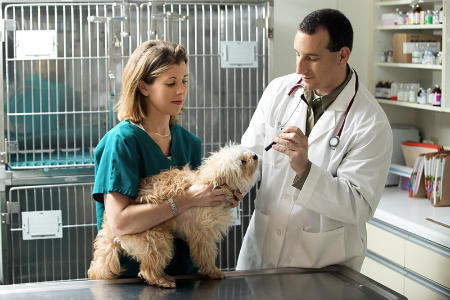
Like ours, our dogs' health is conditioned by different aspects. Food, exercises, attention and care are the main elements that pets require to remain in stable well-being. A good diet is essential, especially when our dog has low defenses. It is recommended to use quality feed to offer a good diet. At Piensos Lobo Azul we have a wide catalog of Super Premium quality feed, references such as the super premium Lamb food for adults and the super premium Puppy Sensitive food for puppies would be two good options to feed our pets.
However, there are diseases that affect dogs progressively and whose symptoms are not recognized with the naked eye. One of the most common is canine anemia. It is a disease caused by a lack of red blood cells, causing dogs to weaken and present different symptoms. But what is canine anemia? How do you know when a dog suffers from this condition? How can you treat it? These issues are unknown to many owners, causing the dog to be greatly affected. For this reason, we have prepared an informative article where we will provide all the details about anemia in dogs, its symptoms and the treatment that must be followed to reduce the disease. Be sure to read this important post and ensure good health for your dog.
What is it?
In the same way as happens with human beings, a large number of cells are found in the bodies of animals: from nutrients to red and white blood cells and platelets. These elements constitute a fundamental role for the health of the canine. Each one has a specific function and a certain presence in the blood that, if higher or lower than its standard, can cause alterations in the dog's health. In the specific case of red blood cells, their primary function is the transport of oxygen, not only to the blood itself, but to the entire body. Its presence in the blood of canines is usually no less than 39% and no more than 60%. A value lower than that indicated would mean the presence of anemia in the dog. Once the function of red blood cells in the blood is known, a decrease in these translates into a serious risk for the dog's health, since we would be talking about a oxygen deficiency in the canine's body. In simpler terms: canine anemia. But what is this disease due to? Let's find out below the main reasons for the appearance of anemia in a dog.
Causes
The causes of canine anemia They may vary according to the animal's organism. However, we will present the most common ones below: One of the main causes of anemia in a dog is that it does not produce the adequate amount of red blood cells. The body's deficient production of red blood cells is one of the problems that this disease generally causes.
On the other hand, the self-destruction of red blood cells by the dog's immune system may be another cause of this disease. An external injury that causes excessive blood loss or internal bleeding can be another cause of canine anemia. The presence of parasites in the dog's digestive system, or serious infections in its body, can produce a decrease in red blood cell count, which would give way to this disease. Some medications given to the dog to treat other conditions can cause the red blood cells in the blood to decrease, causing anemia. Depending on the type of anemia that occurs, the causes may vary. Let's see the types of anemia and their causes.
Types of canine anemia
According to the factor causing anemia, its type or characterization can be identified individually. In this case, Three types of anemia can be distinguished that can affect the dog's health:
Hemorrhagic anemia
This type of anemia is directly associated with blood loss, whether due to internal bleeding, an open wound, the presence of parasites in the digestive system, the appearance of ulcers or bleeding in feces or urine, which can be causes of this condition. It is necessary to alert yourself if the dog suffers from any of these characteristics.
hemolytic anemia
We talk about this type of anemia when it is the dog's own immune system that destroys red blood cells, which reduces their production and prevents them from acting favorably on the animal's health. It can be of two types:
Immune-mediated
The destruction of red blood cells is produced by antibodies produced by the body itself.
congenital
The destruction of red blood cells is caused by inherited conditions.
aplastic anemia
It is caused when the number of red blood cells produced by the body is not enough to compensate for those destroyed. This may be associated with the presence of tumors or infections. Surely you are wondering how to identify canine anemia? Well, below, we will see some symptoms that will help you detect this disease.
Symptoms of canine anemia
Weakness in the canine is one of the most visible ways to show anemia in our dog. The deficiency of red blood cells results in a lack of oxygen in the tissues, therefore, you will not have the necessary strength to carry out your daily activities. Lack of appetite, depression and even fainting are also aspects that are commonly seen in a dog suffering from canine anemia. Also accompanied by bleeding in the stool, tachycardia and paleness in specific areas such as gums and mucous membranes. If you observe any of these symptoms, it is necessary to go to a veterinarian to diagnose the cause.
Treatment
Talking about a specific treatment for dogs suffering from anemia is a bit complicated, because it depends largely on the cause of the disease. Once the cause is determined, the veterinarian will be able to establish a treatment based mainly on diet, supply of vitamins and other aspects that significantly improve the dog's health and the disease disappears.
Beyond talking about treatment, emphasizing the prevention of this disease is really important. Well, although not all causes are preventable, there are aspects that, when taken care of, can favorably improve the health of our dogs in this regard. In the first instance, take care of the diet, ensuring that it contains the vitamins and nutrients necessary for the dog to remain in good health. Likewise, periodic visits to the veterinarian and adequate care of the dog based on its quality of life will be enough to prevent this disease in some cases. Due to diet, there are some foods that can promote the health of a dog suffering from anemia: liver, yogurt or vitamin C are some of the most recommended foods. However, it will be the veterinarian who determines the diet and care that the dog should receive to improve its defenses. Other articles that may interest you: