Bobtail: everything you need to know about the Old English Shepherd
At Bobtail He is also known as the “Old English Shepherd”, recognized for his extraordinary ability to lead flocks, his ability to take good care of the human family and for his peculiar appearance similar to that of a giant-sized stuffed animal. There is a peculiarity that usually delights the owners of this breed and it is their funny habit of grouping children together when they are playing in the garden, an instinct derived from its origin as a shepherd dog. In the following text we will guide you through its history, customs and behavior, in addition to offering you a complete informative guide with all the relevant information about this interesting and physically beautiful canine species. Features:
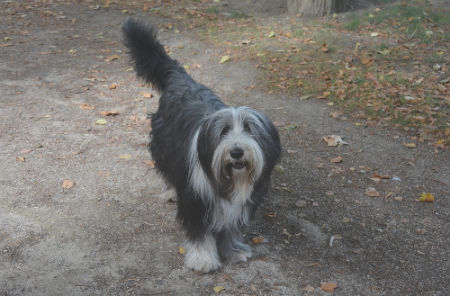
 It was then in the British Isles that he received the name "Old English Shepherd", where he was extremely appreciated by shepherds for his particular ability to direct livestock, a genetic quality collected from his crossing with livestock breeds from Great Britain. There is this historical reference, but there is really no certainty as to which races were used for such a particular mixture, but given their physical characteristics, it is possible to determine that among their ancestors are the Bearded Collies or bearded collies. Learn more about another Collie breed on our blog. Likewise, characteristics of the breed Ovtcharka, of Russian origin, are found in the Bobtail.
  What is completely certain is its geographical origin. The Bobtail was born from the shepherds' need to obtain dogs suitable for work tasks and that were agile and resistant. That happened in the west of England and it was in 1880 that The Bobtail breed was officially presented during a dog show. Since then, the Bobtail breed began to be recognized by the Kennel Club association, the organization that is responsible for the classification of dog breeds worldwide, having since then and for posterity, a clear record of the standards necessary to consider a Bobtail specimen as a pedigree breed. Currently, Bobtail lines genetically devoid of tails are already used, a peculiarity that was adopted as a standard for this breed because their tails were originally cut off.
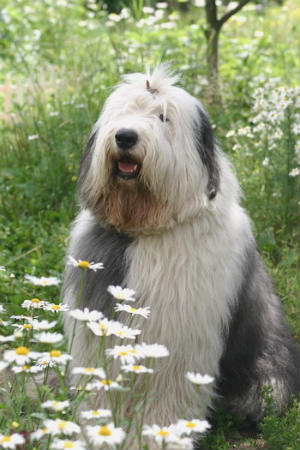 They have a muscular chest and a strong neck, although it is not appreciated much due to the thick and abundant fur. A Bobtail dog gives the impression of being short and chubby, but that is only due to their coat, since underneath they have a muscular body, long and slender legs that coordinate perfectly with the size of their head. The tail of a Bobtail is usually amputated, although there are currently specimens genetically devoid of it. In fact, the meaning of his name would be “docked tail”, a physical characteristic associated with sheepdogs. The bark of the Bobtail breed is very characteristic, since its voice is penetrating and very deep, an interesting and very useful quality in a dog created for herding livestock on European farms, as the Bobtail was at the time.
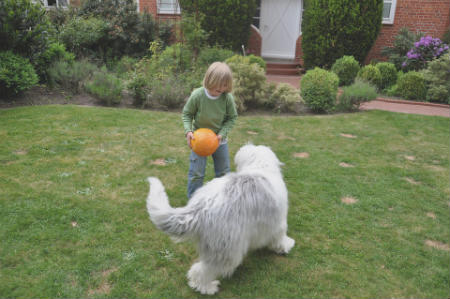 Bobtail breed dogs They are very loving and patient.In addition, they know how to adapt to new environments easily. Their intelligence and patience helps their owners when training and educating them, as they learn lessons quite quickly. They are perfect dogs for the home, but it is necessary to provide them with space to carry out physical activities outdoors. We must remember that it is a working dog and therefore, we cannot deny it exercise. He needs a dose of frequent stimulation, otherwise we would have a lazy and depressed Bobtail who won't even have the courage to play with the children. With good training, the Bobtail is so docile that it doesn't even require a leash to go for a walk. It is almost moving to observe the scene of a Bobtail dog with his family on their walks to the park, or walking with the children down the streets until they get to school. He is calm, playful, kind, expressive and very tender..
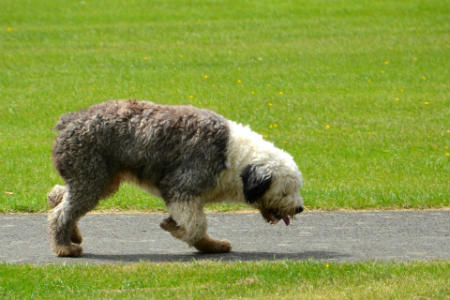 First of all, the Bobtail They need a constant physical exercise routine: jogging, taking a long walk or playing ball or any other sport is essential. So if you are a sedentary person, you should avoid committing yourself to breeding a Bobtail dog. On the other hand, if you are a person who likes outdoor activities, perhaps you are the right owner for an Old English Shepherd. The ideal thing for raising a Bobtail is that its adoptive family has a house with space available for its recreation, since it tends to get very bored in small spaces. Of course, he can adapt to living in an apartment, as long as the owner understands that he must have time to take him out for a walk at least twice during the day. Lack of exercise leads to episodes of depression, anxiety and stress in the Bobtail breed, since they prefer the freedom of life in the countryside, running outdoors. It is necessary that they exercise to avoid muscle atrophy.
  Other essential care for this very striking and particular breed are the following:
 They are tolerant of their environment and They learn from a very young age to adapt. As they are trained, they even learn to recognize the general moods of the home and understand routines, so that they will not disturb the family when they sleep. Now, all of this is learned, you cannot make the mistake of believing that just because they are a Bobtail breed they do not need to learn obedience and discipline. The Bobtail is an intelligent dog and, therefore, it is your responsibility to reinforce those behaviors that you consider correct and teach the behavioral patterns you want from your pet. The way he acts and behaves during visits to the house, the way he will act in front of children and how he will interact with others of his kind are matters that are under your complete control if you decide apply strategies to train it properly. A daily routine is something that is highly appreciated by the Bobtail breed because order is something that makes their lives much simpler and happier. You must teach him to relieve himself in a single point in the house, how he should eat and the speed at which he should do it, when to exercise and what type of activity and be attentive and available during grooming moments, which are necessary for the maintenance of his coat.
 There are three key points that need to be covered to care for the health of a bobtail, and they are as follows:
 Bobtails have a certain genetic predisposition to these diseases, but they can all be avoided by providing a daily canine routine that includes all the basic breeding criteria for this breed, which is what can guarantee them a full and satisfying life with their adoptive family. Prevent non-hereditary diseases such as barking cough and leishmaniasis is just as important to ensure the health of your pet.
 There are also two sub-breeds of cats that have the same name, Bobtail, but with different variations: American Bobtail and the Japanese Bobtail. This is a dog that, due to its good education, is very easy to train to be used in the world of entertainment, which is why since 1960 it has made constant appearances in film and television in Australia and the United Kingdom, also starring in many advertisements, including spots for a wide variety of dog food. Finally, the fur and the eyes are its most curious features, since heterochromia is common in this breed, therefore many puppies are born with one eye brown and the other blue. Their fur does not vary much either, only having a color palette that only includes white, black and gray, abundant and very long. Throughout this guide we have taught you a series of valuable information for raising Bobtail puppies, which will allow you to know if this breed is the one you need for your life or if you already have it, get valuable advice for its care. Information designed to help adoptive families of this beautiful and intelligent dog breed. Find out about the care of other breeds such as:
- Size: Large
- Weight: Between 27 and 35kg.
- hair type: Abundant and long
- Character: Sociable, affectionate, intelligent.
- Health: Little susceptible to hereditary diseases
Origin
In the mid-19th century, this breed was created to perform the function of helping to control livestock in the rural area of western England. It is generally believed that the Bobtail that we all know descends from dogs of Roman origin that were transferred to central Europe and that were later mixed with other English mastiff breeds. allowing the development of the Bobtail breed. It was then in the British Isles that he received the name "Old English Shepherd", where he was extremely appreciated by shepherds for his particular ability to direct livestock, a genetic quality collected from his crossing with livestock breeds from Great Britain. There is this historical reference, but there is really no certainty as to which races were used for such a particular mixture, but given their physical characteristics, it is possible to determine that among their ancestors are the Bearded Collies or bearded collies. Learn more about another Collie breed on our blog. Likewise, characteristics of the breed Ovtcharka, of Russian origin, are found in the Bobtail. What is completely certain is its geographical origin. The Bobtail was born from the shepherds' need to obtain dogs suitable for work tasks and that were agile and resistant. That happened in the west of England and it was in 1880 that The Bobtail breed was officially presented during a dog show. Since then, the Bobtail breed began to be recognized by the Kennel Club association, the organization that is responsible for the classification of dog breeds worldwide, having since then and for posterity, a clear record of the standards necessary to consider a Bobtail specimen as a pedigree breed. Currently, Bobtail lines genetically devoid of tails are already used, a peculiarity that was adopted as a standard for this breed because their tails were originally cut off.
Physical characteristics of this breed
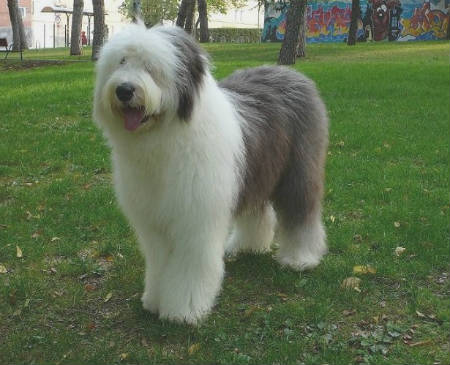
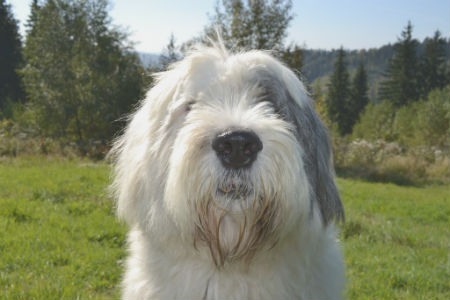
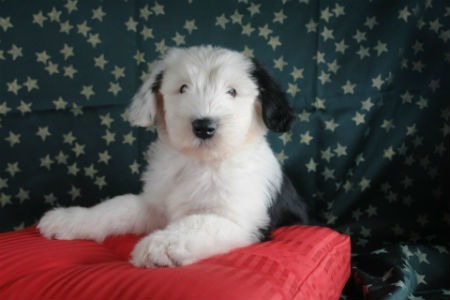
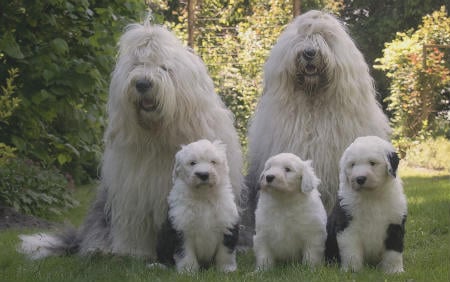
The large size of Bobtail is perhaps one of the main physical characteristics of this shepherd breed. It has a height that ranges between 50 and 70 centimeters and a weight of up to 35 kg. It is very hairy, in fact it is essentially a woolly dog, therefore, its coat is generally two colors, long and wavy. Another characteristic of a Bobtail's hair is that it is usually opaque, unlike that of other breeds, which have a higher level of shine. Their fur is abundant and very thick, generally of a standard white color, in combination with large black or gray spots. A Bobtail has a large, square-shaped head with floppy ears. The expression on his face is very sweet, very similar to that of a yorkshire. The hair usually covers their eyes almost completely, and their eyes have the particularity of being blue or brown, and it is possible that some specimens have one eye of each color, heterochromia being a common trait in this breed. They have a muscular chest and a strong neck, although it is not appreciated much due to the thick and abundant fur. A Bobtail dog gives the impression of being short and chubby, but that is only due to their coat, since underneath they have a muscular body, long and slender legs that coordinate perfectly with the size of their head. The tail of a Bobtail is usually amputated, although there are currently specimens genetically devoid of it. In fact, the meaning of his name would be “docked tail”, a physical characteristic associated with sheepdogs. The bark of the Bobtail breed is very characteristic, since its voice is penetrating and very deep, an interesting and very useful quality in a dog created for herding livestock on European farms, as the Bobtail was at the time.
Character of a Bobtail
Very intelligent and with great vitality, this is how we can describe the character of the Bobtail. It is a dog who loves to feel part of the family and do their job in the field. He always seems very willing to participate in the activities that take place in his home, sometimes even behaving in a manner similar to that of small lap dogs. The Bobtail is, without a doubt, a very sweet dog with a personality that anyone can fall in love with. He becomes very familiar with the members of the family and, therefore, many owners of this breed say they feel this dog is “very human.” He easily becomes friends with children and knows how to behave around them, which is why he is known in England as “Nanny-dog” because his quality of being especially sensitive with the little ones from the house and keep them under surveillance. Bobtail breed dogs They are very loving and patient.In addition, they know how to adapt to new environments easily. Their intelligence and patience helps their owners when training and educating them, as they learn lessons quite quickly. They are perfect dogs for the home, but it is necessary to provide them with space to carry out physical activities outdoors. We must remember that it is a working dog and therefore, we cannot deny it exercise. He needs a dose of frequent stimulation, otherwise we would have a lazy and depressed Bobtail who won't even have the courage to play with the children. With good training, the Bobtail is so docile that it doesn't even require a leash to go for a walk. It is almost moving to observe the scene of a Bobtail dog with his family on their walks to the park, or walking with the children down the streets until they get to school. He is calm, playful, kind, expressive and very tender..
Recommended care for this breed
Taking care of a Bobtail is not a difficult task, since it is not a breed that requires excessive special care, although it certainly has some particular requirements that must be met to ensure that it enjoys a happy life. First of all, the Bobtail They need a constant physical exercise routine: jogging, taking a long walk or playing ball or any other sport is essential. So if you are a sedentary person, you should avoid committing yourself to breeding a Bobtail dog. On the other hand, if you are a person who likes outdoor activities, perhaps you are the right owner for an Old English Shepherd. The ideal thing for raising a Bobtail is that its adoptive family has a house with space available for its recreation, since it tends to get very bored in small spaces. Of course, he can adapt to living in an apartment, as long as the owner understands that he must have time to take him out for a walk at least twice during the day. Lack of exercise leads to episodes of depression, anxiety and stress in the Bobtail breed, since they prefer the freedom of life in the countryside, running outdoors. It is necessary that they exercise to avoid muscle atrophy. Other essential care for this very striking and particular breed are the following:
- Food. The diet of this dog should be based on feed that is formulated for the requirements of this breed in terms of protein value, vitamins and minerals suitable for the maintenance of its coat, etc. The daily calorie consumption of this animal is 1400 Cal, otherwise it will lose its muscles.
- Bathroom. A dry bath routine is enough for them, and eventually a wet bath with a special shampoo for their coat type, always with the appropriate products.
- Daily brushing. Bobtails need their coat brushed and groomed as a daily routine, so you should avoid this breed if you do not have the time or patience to meet this need.
- Training. This is a care and a necessity in this species, since it allows them to develop a full life, learn to adapt to the family routine and obey the orders of their masters.
How to train a Bobtail puppy
Training a Bobtail dog is not as complex as it may seem, in fact, it is much simpler than with other breeds, since it has a genetic predisposition to work and follow orders instinctively, which comes from its past as a sheepdog. Of course it requires a little patience, because this dog has its own sense of humor and can get playful and disobedient when you try to get your Bobtail to learn something. However, it is easy to train and he will show his patience every time you try to make him learn a lesson. Everything will depend on your attitude and the training technique you decide to apply. The docility of the Bobtail is great to learn, because they can even get used to staying dressed in the most peculiar outfits, which families with children usually love. They are tolerant of their environment and They learn from a very young age to adapt. As they are trained, they even learn to recognize the general moods of the home and understand routines, so that they will not disturb the family when they sleep. Now, all of this is learned, you cannot make the mistake of believing that just because they are a Bobtail breed they do not need to learn obedience and discipline. The Bobtail is an intelligent dog and, therefore, it is your responsibility to reinforce those behaviors that you consider correct and teach the behavioral patterns you want from your pet. The way he acts and behaves during visits to the house, the way he will act in front of children and how he will interact with others of his kind are matters that are under your complete control if you decide apply strategies to train it properly. A daily routine is something that is highly appreciated by the Bobtail breed because order is something that makes their lives much simpler and happier. You must teach him to relieve himself in a single point in the house, how he should eat and the speed at which he should do it, when to exercise and what type of activity and be attentive and available during grooming moments, which are necessary for the maintenance of his coat.
Health care
Bobtail dogs usually enjoy good health and a life expectancy of more than 10 years, but their owners must provide the conditions and the necessary care to ensure that they grow up happy and their health lasts. The Bobtail is not prone to developing hereditary diseases, being a fairly resistant breed. Of course, like any other canine, it has some common ailments that should be tried to prevent. There are three key points that need to be covered to care for the health of a bobtail, and they are as follows:
- Dental hygiene. A tooth in good condition needs cleaning, in this way the development of periodontal disease that can cause the loss of teeth is avoided, which affects the quality of life and diet of the Bobtail.
- Coat care. The daily brushing routine should be complemented with a monthly haircut that removes the hair from your eyes, so as to avoid the accumulation of waste in the area and the occurrence of infections.
- Vaccines and deworming. Once you adopt a Bobtail you assume responsibility for its vaccination schedule and deworming schedule, so that it can deal with the diseases and infections to which all dogs are prone. Bobtails are quite prone to external parasites such as ticks and fleas, which is due to their abundant and thick coat type.
- hip dysplasia
- Wobbler syndrome
- Diabetes
- Deafness
- Falls
- Stomach torsion
Bobtails have a certain genetic predisposition to these diseases, but they can all be avoided by providing a daily canine routine that includes all the basic breeding criteria for this breed, which is what can guarantee them a full and satisfying life with their adoptive family. Prevent non-hereditary diseases such as barking cough and leishmaniasis is just as important to ensure the health of your pet.
Curiosities of the Bobtail breed
There are some curious facts that you probably didn't know about this dog breed that is friendly and ideal for family life. Its original name is “Old English Sheepdog”, which translates as “Old English Sheepdog”, but it became known throughout the world as Bobtail, a word that means “Short Tail”, because it was a norm to dock the tail of sheepdogs. During World War I (1914-1918) Bobtails were used to drag sleds with supplies to the battle front, while by World War II (1939-1945) the breed almost became extinct. It has a high caloric intake, needing a diet that provides 1,400 Cal per day to ensure the quality of its muscles and that its weight remains within the appropriate weight standards as corresponds to the Bobtail breed. There are also two sub-breeds of cats that have the same name, Bobtail, but with different variations: American Bobtail and the Japanese Bobtail. This is a dog that, due to its good education, is very easy to train to be used in the world of entertainment, which is why since 1960 it has made constant appearances in film and television in Australia and the United Kingdom, also starring in many advertisements, including spots for a wide variety of dog food. Finally, the fur and the eyes are its most curious features, since heterochromia is common in this breed, therefore many puppies are born with one eye brown and the other blue. Their fur does not vary much either, only having a color palette that only includes white, black and gray, abundant and very long. Throughout this guide we have taught you a series of valuable information for raising Bobtail puppies, which will allow you to know if this breed is the one you need for your life or if you already have it, get valuable advice for its care. Information designed to help adoptive families of this beautiful and intelligent dog breed. Find out about the care of other breeds such as:
- Czechoslovakian wolfdog.
- German Shepherd
- Akita inu
- chow chow
- Cane Corso
- Argentine Dogo
- Great Dane
- Saint Bernard
- Neapolitan Mastiff
- Rottweiler
- Doberman
- Labrador Retriever
Share