Weimaraner, the gray ghost
The Weimaraner, or Weimaraner, is known as the Gray Ghost or Silver Ghost. It is a breed with an elegant appearance, with unmistakable beauty and a friendly personality. They are hunters of origin linked to hounds, but it is said that they come from the variation of the German pointer.
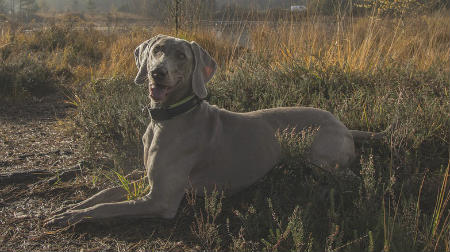
- It belongs to the large dog breed.
- The color of the Weimaraner is various shades of gray, such as silver grey, mouse gray or deer grey.
- The height of the male ranges from 62 to 67 cm, and its weight between 30 and 40 kilograms. The height of the female is 59 to 63 cm, and its weight is 25 to 35 kg.
- Their life expectancy is 10 to 12 years.
- As puppies their eye color is blue and in adulthood, they change to amber, from light to dark.
- As for the coat, the most common to see are those with short hair, but there are also those with long hair.
- Short-haired: Their fur is dense and smooth.
- Long-haired: Soft, slightly wavy hair.
- Its neck has a noble bearing and appearance.
- They have an extraordinary sense of smell and, thanks to this, They are excellent hunters.
- Their ears are drooping, medium long and wide.
- It has a long and elegant snout, its nose is flesh-colored with grayish ends.
- His tail is strong, when he is alert he places it straight or slightly raised and when at rest, calm, he keeps it hanging.
Origin of the Weimaraner
Its origin is found in Weimar region, Germany, where they were raised in the first third of the 19th century at the Weimar Court. The Weimar Court was one of the intellectual and literary centers of Germany, which later in the 20th century became a place of great political importance. It is named after Grand Duke Karl August of Saxe-Weimar-Eisenach, a fan of big game hunting and known for the intellectual wealth of his court. It is said that in the early years of the Weimaraner its name was “Weimar Pointer”, Weimar for its region of origin and Pointer for the German Pointer breed, which was used to improve the Weimaraner breed among other German hunting breeds, until reaching this balanced breed that is the Weimaraner. The Weimansky Pointer was decreed as a breed especially by the Grand Duke for hunting, and they had to be bred only by the nobility at that time. The Weimaraner is classified by the FCI, Group 7 (Pointing Dogs), Section 1 (Continental Pointing Dogs Type “Pointer”), with a working test. The International Cynological Federation (FCI) is responsible for governing and promoting dog breeding worldwide, as well as dog breeding standards. Howard Knight, a fan of the breed and a member of the German Weimaraner Club, was responsible for make the race known in other borders at the end of the 20th century, managing to move some specimens from their native region to the United States.

How to recognize a Weimaraner
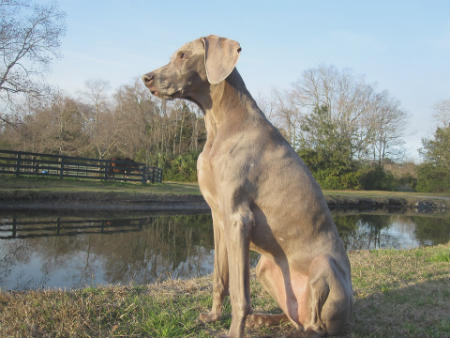
The Weimaraner, or Weimaraner, is recognized by its particular color, carriage and gait. It is an elegant looking breed, robust, athletic and beautiful, with an expressive look.
Weimaraner Puppies
Weimaraner puppies should remain with their mother for at least two months of age. Being with her will teach him how to socialize. Take care of your diet once you are not with your mother It will help him trust and you will create a strong bond between the two of you. Protect it from toxic foods such as: onion, salt, grapes, chocolate, alcohol, raisins, tea, condiments, garlic and fruit seeds. If your pet ingests any of these foods, you should immediately consult a veterinarian. Fresh, clean water will keep you hydrated. Remember to change it and not leave it in the bowl all day. Prepare your home for the arrival of the new family member. Your puppy will need special care and attention due to his young age. Choose the space that will be occupied by your partner, it must be safe, clean and dry. The warmth will keep you comfortable. During his growth and development, be patient and teach him to comply with the main rules of the home. Teach him not to relieve himself outside of newspaper or inside the house, not to ask for food when family members are eating, and not to bite. They are curious and playful at all times, dedicate time to them with games and signs of affection. They go through moments of hyperactivity due to their natural instinct of wanting to hunt. For that reason, you must keep him exercised and active so that it does not cause damage inside the home. Get him used to using the collar from a young age to go for a walk in areas where you can't let it go to run. With time, dedication and love, you will raise a healthy and happy puppy. Don't forget regular visits to the vet to check their vaccinations and maintain their good health.

Possible health problems
The Weimaraner is one of the healthiest breeds, hereditary diseases are not their biggest problem but, in the same way, they cannot be ruled out. Among the possible diseases that this breed may present are:- Ear Infections: Due to their drooping ears, ear infections are a possible condition. Checking their ears and keeping them clean will help prevent infections.
- Distichiasis: Eye problem that Weimaraners have due to carelessness in the breeding of the breed. It is the extra formation of eyelashes, outside the eyelid and touching the cornea.
- In most cases, it does not cause problems for the animal because its eyelashes are soft.
- When the condition causes constant tearing, ulcers and inflammation due to the rigidity of the eyelashes, it must be corrected through surgery or electrolysis.
- Progressive retinal atrophy (PRA): A disease that attacks the retina, causing night blindness and difficulty seeing during the day until reaching total blindness.
- Entropion: This is when the eyelid turns inward causing pain.
- Nictitating early eversion or Third eyelid: Spontaneous in Weimaraners, Saint Bernards and Newfoundlands. It is a transparent membrane that forms in the inner corner of the eye. Generally it does not cause discomfort but it does cause inflammation in some cases, which can be eliminated with surgery.
- Gastric torsion: It affects many dog breeds and this one is not exempt from suffering from it. It is when the animal's stomach twists and becomes blocked, causing gas to accumulate and putting its life at risk.
- Spinal dysraphism: This is the general term used for disorders that develop in the dog's spinal cord. The symptoms are:
- Neck or head pain.
- Lack of coordination when the dog is standing.
- Imbalance and weakness in the extremities.
- Alterations in posture.
- Hip dysplasia: If the parents suffer from this condition, the puppies usually suffer from it over time.
- Hemophilia A: Pathology of a hereditary nature and manifests itself at the young age of two months of life. It is a blood disease, when the animal does not have a normal coagulation process. Von Willebrand Disease (VWD): It is a serious bleeding problem, hereditary bleeding disorder, similar to hemophilia in humans.
Additionally, to protect him, you can follow these tips to increase your dog's defenses.

Caring for your pet
Every six months you should take it for a check-up with your veterinarian, he will tell you what is best for your pet in terms of health, nutrition and general care. Brushing their coat should be regular, whether it is short or long hair, it prevents dead hair from remaining on its body and causing unnecessary tangles. Your teeth need care like humans, your oral health is important. As for bathing, the most recommended is once a month, keep in mind that the frequent use of chemical products damages your skin. Find out about the background of your puppy's parents so that you can thoroughly evaluate their health, and prevent some diseases or treat them in time. The Weimaraner is a domestic dog, ideally it should live with the family and not be isolated in a patio or garden. He is a sensitive dog, treat him with a lot of love and respect. The bad character of humans can irritate him.How to feed a Weimaraner
The proteins and nutrients will help your pet grow healthy and strong. The ideal is a quality food for dogs, they cannot be fed human food. Calcium is essential for its growth and development. Your teeth and bones will stay healthy with a good diet. The specialist will tell you what food you can provide and in what quantities. Everything corresponds to the measure of your age, weight, physical activity, metabolism and especially your health. Normally the meal portions are twice a day, once in the morning and the other early in the evening. They usually have problems with digestion, Your diet should be established with foods that are easy to digest.. Visiting the veterinarian from birth will help you with the feeding process of your Weimaraner. Their recommendations are of great help to avoid causing damage to the digestive system.
Weimaraner Education
It is important to know that when the Weimaraner loses confidence, there is no way to regain it. Treat your pet in the best way, be firm and constant when giving your instructions. Learn to say no seriously, or he will play with you by ignoring your instructions. Because it has a dominant character, you have to transmit security at all times, and even more so when you are training it. It is an intelligent dog, it is ranked No. 21 among Working Dogs, in a survey conducted by the Working Judges of the American Kennel Club (AKC) on different dog breeds and their intelligence. With simple instructions and few repetitions you will make your pet easily remember the orders. Practice and consistency will make the difference. Toys with sounds and balls or objects to fetch will keep his hunter instinct afloat. Socialization is vitally important. Interacting with other dogs or various animals, children and the family in general, will help their correct development. Rewarding our Weimaraner every time he assertively follows commands will create a positive bond. With petting, special dog biscuits or hugs, he will feel happy and grateful. Because it is a race with great energy, exercise from a puppy should be part of their education. Requires two long walks a day. Accustoming him to a specific schedule to go out for a walk, run and play will maintain his balance within the home. Do not leave him alone for long periods of time, as It is a dog that needs company and affection, or it could cause destruction due to anxiety.
Curiosities
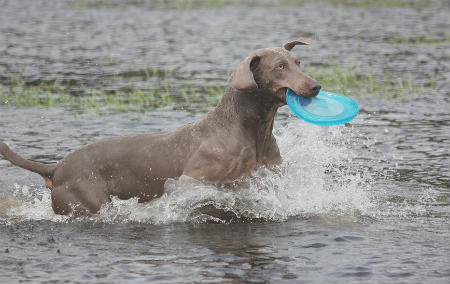
- The long-haired Weimaraner maintains its relevance especially in Germany. It was considered the best dog for aquatic hunting due to its adaptation to water.
- The most dominant gene in the Weimaraner variety is short hair.
- He is known as the Gray Ghost or the Silver Ghost because of the nickname given to him by the American soldiers who saw them passing through the German fields at night.
- William Wegman, American photographer and fine artist, is known for daring to take photographs of the Weimaraner in various outfits and poses.
To learn more about other dog breeds, see:
Share