Instinct and smell are two of the main qualities of dogs that humans take advantage of. In this way, it is not only your best friend, but also the most efficient and qualified for endless tasks. Dogs are at the top of the ranking of the best pet for their unquestionable loyalty, nobility, intelligence, aptitudes and many talents that bring them closer to people to give them company and serve both in their home and in other environments where they operate. The list is long trades, jobs and professions that a dog can perform. There are therapy dogs, service dogs, herding dogs, companion dogs, emotional assistance dogs and even disease detection dogs, all incredible functions that require training and dedication, both from the owner and the animal.
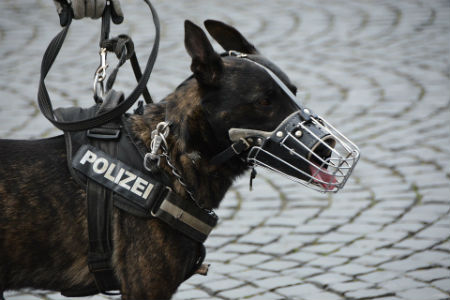
But in this article we are going to refer to the police dogs, that noble profession that is associated with risks, adrenaline and, especially, a lot of intuition and training to be able to achieve the objectives of the police force and achieve the tasks assigned to the dog. Police dogs are trained to carry out various tasks, specifically in the area of public security, police investigation and citizen protection, and where the subdivision of tasks is so extensive that we can practically speak of expert dogs and specialists in one or several trades related to police work.
What are the best police dog breeds?
In this aspect of the topic, there are many opinions that have been generated around the dog breeds that work best for police forces, especially because there are many jobs that police dogs can do, the classification of which has been carried out by veterinary experts, trainers and experts on the behavior and characteristics of each breed. Although the key is in the character of the animal.
If they are to be trained as tracking dogs, any of the aforementioned breeds are efficient for this task, and if it is about assigning them the detection of illicit substances, explosives or counterfeit bills, the most used breeds are Cocker Spaniell, Foxhound, Weimaraner, English Springer Spaniel, Schnauzer, golden retriever, Belgian Shepherd, German Shepherd, etc.
Really, The usefulness that a police dog can have can be classified into specific groups:
The detector dogs, who can identify the existence of explosives, chemical or narcotic substances, mines, strange animals, etc. by smell.
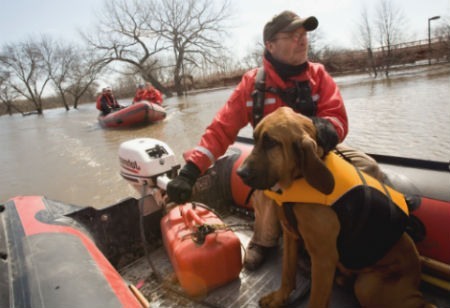
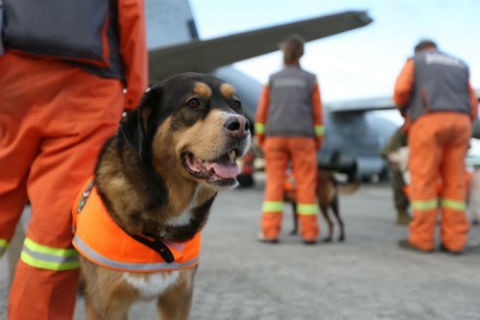
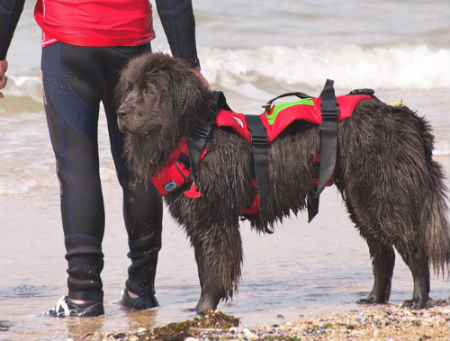
The rescue dogs They also have a special function in security forces, especially when there are natural disasters such as landslides, building collapses, landslides, avalanches, earthquakes, tsunamis, etc.
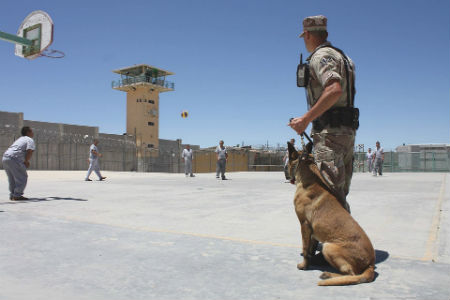
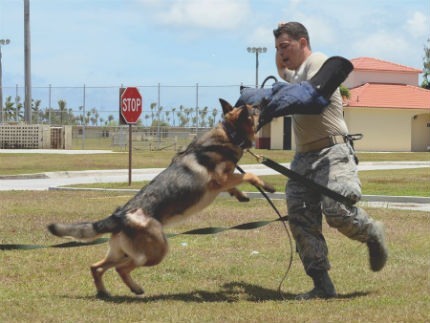
They are also dogs called intervention, who can participate in citizen protection, riots, search and persecution of antisocials and hostage rescue.
The best police dogs are playful, strong and active
We already mentioned that the key to a good police dogis the character, because depending on this, your training and performance will be more or less effective. But there is another essential characteristic, such as a taste for the game, since this is the main basis of his training, and physically he must be strong and active. Likewise, it is important that they have their hunting instinct developed, since several of the functions they will perform will be following trails, chasing and attacking.
How to train a police dog?
The training and training of police dogs is hard and it begins when they are puppies of about eight or nine months, and extends for approximately one continuous year with the idea that they manage to assimilate the fundamental tasks for the police and security forces of the State. This training is carried out by professionals and requires several stages that include from the basic obedience training even the most specific ones with which they can achieve true feats.
Police dogs are medium-sized, agile, with adaptation and learning skills so that they can assimilate skills such as defense and attack, since any dog trained for these tasks must have the capacity to serve from surveillance to attacking an aggressor and immobilizing him. The exercises to train police dogs in these two tasks focus on teach them where and how to bite a person without causing fatal harm. Another task that a police dog must fulfill is socialization, so that as it becomes familiar with the environment it obeys the most basic commands. In this training the dog already shows its ability to belong or not to a police force. After a year of obedience and socialization training, comes the stage of individual training with your instructor, who will ensure your physical and psychological conditioning. The physical training of a police dog is highly demanding, for which appropriate spaces are required where the animal can run at high speed, jump, overcome or avoid obstacles, crawl through tunnels, climb slopes, cross hoops, climb steps and another series of exercises that will make it competent to move on terrain with extreme conditions (slippery, with holes, stones, debris, etc.), among crowds or at great heights.
Police dogs are trained to be obedient to the slightest signal from their partner.. The instruction begins with the most basic things, such as throwing a ball for them to bring to the coach, and progressing through the basic commands so that they do their job, even under conditions of stress or danger. Obedience is the essential factor so that the dog's work is efficient. Other specific training is related to the characteristics of the dog, and in the case of training a police dog, depending on the field in which it will operate, the training will be related to the development of intuition or smell, in case it is assigned the task of detecting explosives, toxic substances, following traces of missing people, chasing criminals, detecting corpses, detecting people in rubble, mud, snow, etc.
Other curiosities about dogs that may interest you: