
Our Blog
Our Blog
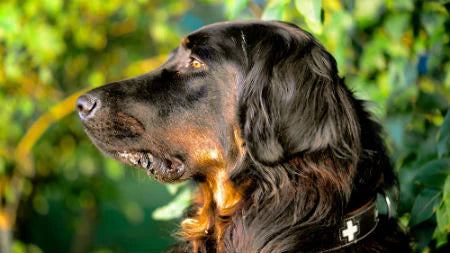
Gordon Setter - Discover his personality and distinguished appearance
by Lobo Azul in Dec 10 2021
Within the wide variety of dog breeds that exist, it can be difficult to choose a pet that suits our tastes and needs. That is why knowing our potential canine friend before adopting him is the best option so as not to believe that we made a mistake when choosing him. Therefore, we present to you the Gordon Setter
Size: Big.
Weight: Between 26 and 30kg.
hair type: Abundant.
Character: Docile, obedient and also very calm.
Health: Prominent and adequate health
Life expectancy: Between 10 and 12 years.
There are multiple characteristics that can define the behavior and appearance of a pet. Generally, its qualities are the ones that stand out the most, in combination with its physical appearance, which is the first impression of the dog. In this case, the Gordon Setter It usually stands out for both aspects.
A dog breed recognized for its innate abilities as a hunting dog, but also for its attractive black coat with tan spots, which give an image of distinction and elegance to these dogs.
Surely, as you learn more about this animal, you will have no doubt that it is the pet you need to keep you company, go hunting or simply take walks in the park. That is why in this article we will talk about everything you need to know about this beautiful dog breed.
History of the Gordon Setter
The exact origin of the Scottish Setter has not yet been clearly determined. However, there are details about its beginnings that allow us to know the origin of this very special canine.
Although there is evidence of the existence of these dogs at the beginning of the 17th century, it was not until the following century when the setter It is beginning to become known, although not under its current name. It was thanks to the influence that Duke Alexander Gordon had in the creation of the breed.
The crossing between a Bloodhound and a Collie was what gave way to the first canines of this species being born. The breed name was designated around 1924, when the British Kennel Club independently granted recognition to the breed. Before that, they were only known as Setter, and there were only three classes.
As time progressed, The Setter was gaining popularity in Scotland, its country of origin, given its notable hunting skills and, also, for becoming an excellent ally and companion animal.
On the other hand, his beauty did not go unnoticed, and he began his participation in various exhibitions in which his coat and other attributes of intelligence and obedience came to light with complete ease, making him even more recognized.
In the United States, it began to become popular around 1842. While in places like Australia, it was not until 1865, where it is titled as the best setter. His abilities never ceased to surprise and make him a special canine.
In 1889 the Canadian Kennel Club officially receives the Gordon. While in 91 the Gordon Setter Club of America was created and a year later the American Kennel Club received these prestigious dogs into its society.
All these steps have caused this to be an animal of renown and recognition. It remains among one of the most distinguished and preferred breeds in different countries around the world, especially for hunting lovers.
Physical Characteristics of the Gordon Setter
Its appearance reveals a harmoniously formed creature. A athletic body but with a touch of elegance characteristic of the breed. He has formidable muscles. His height is between medium and large.
Its legs and legs are thin but well formed. While her hips are characterized by being wide.
Let's look at some of the most notable traits of the Gordon Setter:
Height and weight
The height of these canines does not usually exceed 66 centimeters at the withers in the case of males. Meanwhile, females reach up to 62 centimeters at the withers.
In relation to weight, males can reach between 29 and 30 kilograms. For their part, females do not exceed 26 kilos in weight, according to the standard published by the International Cynological Federation (FCI).
Face
Its head is characteristic for being flat and well formed. Noticeably thickened and oval in shape. Their eyes are large, hazel-shaped, and usually dark in color.
In relation to its nose, it is black and pronounced. Its snout is long, with a strong scissor-shaped jaw and bite. The ears of this canine are thin and medium-sized, set low, and also covered with abundant, smooth fur.
Queue
The Gordon Setter's tail, on the other hand, is medium in size, curled slightly towards the tip, where it looks thin, while at the base it is a little thicker.
Fur
Although there are other aspects, The coat is one of the most notable attributes of this dog breed. In principle, this particularity is due to the fact that in areas such as the ears, legs and head, it is short, thin and silky. While in the rest of his body you can see how abundant and long his hair is, a little coarser.
The color is another characteristic aspect, as it comes in shiny black, or black with flame-colored flashes in some parts of its body such as the snout, legs and tail.
Character
In addition to being a physically privileged pet, the Gordon's temperament is, without a doubt, another of its most notable attributes. We talk about a canine with docile behavior, obedient and also very calm.
This breed is stands out in many cases for his intelligence, loyalty and independence that make it an excellent canine as a companion animal. It also has an innate ability to adapt to any environment, so staying in large or small spaces will not affect its behavior.
His beauty has allowed him to stand out as a notable show dog. However, its levels of intelligence, obedience and docility have also made it a pet with great favoritism in society.
As a good hunting or guard dog, the most common activities in which this dog performs stand out favorably, as it always remains attentive and ready to react if it sees any danger.
The issue of coexistence is not a problem, however, it is important to accurately apply socialization to these dogs, as they tend to be reserved and stubborn in the presence of strangers. With other animals, for their part, these canines can fuel their hunting instinct, especially if they are smaller pets.
It is important to consider these aspects to avoid attacking on occasions where it is not necessary and starting a chase incorrectly. Socialization will be essential if we want our dog to be a balanced and friendly pet with other animals.
Gordon Setter Training
Education is a simple topic, although it is equally important. for being an intelligent and obedient canine, it will be very easy to carry out your training. However, it must be a constant and appropriate process if you want to obtain favorable results in their behavior.
The first thing to consider is that education must be carried out from the first weeks of life. From approximately the third week after its birth, the canine must receive the first training to strengthen its behavior.
Once you are due for vaccinations and deworming, you can come into contact with the outside world. It is at that moment, after 3 months, when it is necessary to start with the basic orders for his upbringing and behavior.
Además de iniciar los primeros pasos dentro de la socialización, desde donde podrá aprender a interactuar con extraños, y otros animales de la forma adecuada.
Positive reinforcement will always be the appropriate option to define the behavior of these canines. Let us remember that these are very independent animals and that they can be a little stubborn, so traditional training techniques may not have the appropriate effect.
The best thing will be to establish a relationship of trust and comfort with our pet and in this way ensure that it will comply with the orders in a pleasant way and will memorize them easily.
Gordon Setter Health
Like most hunting breeds, the Gordon Setter is generally in good and adequate health. Their life expectancy can reach 12 to 14 years, so you could enjoy good company for a long time if proper care is provided.
However, there are diseases that, although not hereditary, can affect the breed in a mild or severe way, depending in many cases on the care given to the canines. Among them we can find: hip dysplasia, hypothyroidism and elbow dysplasia.
In some cases, there may be allergies that affect this canine, however they do not represent a major danger. Although with proper care, these allergies can be prevented in a timely manner and thus guarantee the dog's health.
Care
As mentioned previously, This is a healthy and strong dog.. However, the care that must be provided will contribute significantly to maintaining this health properly and to extending your life expectancy for as long as possible.
Food
Although it is not one of the most demanding aspects in the care of the Setter, it is really important to take care of the diet of this breed. Firstly, to prevent a process of weight gain from triggering and leading to obesity abruptly.
And, secondly, it is important that this canine receives quality food, because this will help maintain its energy, prevent the appearance of food allergies and, in addition, help maintain the beauty and natural shine of its coat.
Exercises
Although it does not require exaggerated amounts of exercise, it does require at least two walks a day to stay in shape and release the energy accumulated in its body. Even more so if you live in small spaces like an apartment.
It is necessary to consider carrying out activities such as dog sports or, in other cases, increasing walks to three a day. Let's remember that this is a hunting dog and loves to be in wide spaces and be able to run freely. Although you will have no problem living in apartments if you get the amount of exercise you need.
Bath and hygiene
Their beautiful coat also requires important care, although nothing exaggerated. Weekly brushing will be appropriate to eliminate dull and lifeless hair from your body. It will also help the canine avoid knots in its hair.
The bath will be necessary only when he receives an excessive amount of exercises and in which he has become sufficiently dirty. Otherwise, one bath a month will be enough to keep it well cared for. Excessive baths can cause the canine to lose the natural oils in its hair.
Company
Although it is a largely independent dog, it still needs the company and attention of its owners. It is necessary that the dog feels accompanied much of the time, otherwise it could develop inappropriate behaviors such as anxiety problems, among other disorders.
Deworming and vaccination
Medical check-ups, deworming and vaccination are really essential to guarantee the health of our canine. It is a healthy dog, but it will need these aspects to maintain its physical balance.
Following medical guidelines and controls is the best way to ensure that the canine remains well cared for.
Gordon Setter Conclusions
The Gordon Setter is one of the most complete and recommended pets. Family coexistence and socialization with other animals will be an issue that needs to be worked on. However, it will not cause any major problems, since it is also an intelligent and docile dog.
It is important to have the time to carry out adequate education and also to provide the necessary care that this breed deserves. Only in this way will it be possible to maintain your physical and emotional well-being.
Enjoying the company of this beautiful canine will be fun and very pleasant, just make sure you have the time and dedication necessary for your canine to be happy and fill you with the best moments with him.
Also meet these other races:
English Greyhound
Labrador Retriever
Dalmatian
Russian Black Terrier
Alaskan Malamute

Our Blog
by Lobo Azul in Nov 18 2021
The beagle is he bloodhound par excellence, full of energy, extroverted and independent, giving an impression of robustness and plenty of elegance; These characteristics have ensured this canine species a privileged place throughout history.
This is a long-standing breed that fought for its survival during the world wars. Several centuries ago, Beagles had been part of English royalty, when figures such as Henry VIII, Elizabeth I and Elizabeth II adopted them as companion dogs., especially for their hunting skills.
His temperament, his Playful and tender behavior, its size, as well as the lack of congenital health problems, make the beagle an ideal pet.. They are very active and impulsive dogs, who need families who give them enough attention and who are passionate about sports or excursions.
Size: Small - medium.
Weight: Between 10 and 20kg.
hair type: Smooth, short, dense.
Character: Stable and balanced.
Health: Healthy but with a tendency to gain weight
Life expectancy: Between 10 and 15 years.
We are then faced with a dog that, with proper training, can become a great hunting companion and a great friend in the home. It is advisable to acquire it as a puppy to adapt its behavior. It is important to remember deep knowledge about dogs and especially each breed, ensuring a healthy and happy coexistence of the dog with its human family. Therefore, We will provide you with as much information as possible so that you can develop a great bond with your pet., and in turn, you can maintain the physical and mental stability of your beagle.
Origin of the beagle
Beagle means “the smallest of hunters”, possibly from French becguele "noisy person" or literally "open throat". The origin of this breed dates back to more than 2,400 years. Although there are no exact dates in this regard, as is the case with most dog breeds, its first reference is made by the philosopher Xenophon in Ancient Greece, around 400 BC, when describing a hare-tracking dog.
Some beagle-type hounds arrived in Italy from Greece and are believed to have been introduced to the British Isles during the Roman occupation. It would be there where the breed developed.
From the century XVI Beagles were already a popular species. The English aristocracy adopted a variety known as "pocket beagles" (a genetic line that is now extinct), that measured between 20 – 25 cm and were functional for horseback hunting, because they could be carried in a pocket to the starting point of the hunt and then released to do their job. In addition, it is known about large packs raised by kings for such purposes. Beagles were developed primarily to hunt hares and rabbits.
They were ideal hunting companions for elderly people, who followed them on horseback without much effort. Modern specimens date from 1830 for the breeding of dozens of beagles in the United Kingdom, which in 1840 were already imported from the United States (where today they are one of the most popular breeds).
Later, in 1890, the Beagle Club of England was founded with the first exhibition of this breed six years later. The world wars, the first between 1914-1918 and the second between 1939-1945, stopped these social activities whose protagonist was the beagle, but interest in the breed managed to endure for the next decades.
Physical characteristics
The beagle is characterized by its elegant bearing, has a muscular body and a pronounced chest. The head is elongated, generally more stylized in females. Their ears are large, rounded and droop naturally.. Large, brown eyes, which usually give the impression of sadness and that is not necessarily the case. The jaw is slightly square and the nose is wide. The back is straight and long, as is its tail. The coat is quite short and smooth.
Average Height (Adult):
Males: 38 cm
Females: 33cm
Average Weight (Adult):
Males: 10 – 20 kg
Females: 10 – 20 kg
As for the colors of this breed, they are divided into tricolor or bicolor, with white tones essentially on the chest and lower part of the body; in addition to brown and black on the back, ears and tail:
Tricolor – Classic tri: White base, where black predominates over the entire spine and some brown spots.
Tricolor – Dark tri: In this combination the light brown spots are mixed with black marks, again on a white base.
Tricolor – Faded tri: Few black marks mixed with dark brown spots on a white base.
Tricolor – Pied: Mostly white base, with yellowish and brown spots without standing out, the black almost imperceptible.
Bicolor: Almost the entire body is white with some brown spots of various shades.
Health and Care for the Beagle
The beagle is a healthy and resistant dog, it is not usually subject to congenital diseases, although like all breeds it can have some conditions but only in exceptional cases:
Life expectancy is between 10 and 15 years, a typical longevity for dogs of its size.
Among all dog breeds, has one of the most developed senses of smell.
The shape of their ears obstructs the passage of air, it is an area that remains moist, which makes it a potential source of infections if it is not cleaned regularly.
Glaucoma and corneal dystrophy are the most common eye conditions in beagles.
Being overweight as a result of a dog's sedentary lifestyle can lead to heart and joint problems.
Characteristic of the beagle is the condition known as “funny puppy”, in which the puppy develops slowly, with weak legs and a slightly twisted back.
Occasionally they may suffer from epilepsy or hypothyroidism., both controllable with medication.
Over the years, beagles are also prone to damage to their intervertebral discs, as a result of the constant rocking they do when they walk on their short legs.
Beagles are not demanding regarding care. For example, their short hair is easy to care for and It does not require extraordinary grooming. Brushing 2 or 3 times a week and bathing once a month will keep it neat and smelling good., always taking into consideration the occasions in which it is exposed to dirt.
Caloric intake must be strictly controlled, since the beagle does not get satiated easily and will eat whenever they have food within reach. Uncontrolled eating leads to obesity, a common problem of this breed, especially in the adult stage.
Physical activity is essential and has to do with what was described above. A sedentary lifestyle in their breed quickly ends in obesity. It is also about the dog's mental health, confinement and inactivity will cause anxiety. If you live in a small house or apartment, daily walks are a necessity.
Constant play works as a sporting activity, hiding objects in the ground and making him dig is one of his favorite activities, as for any bloodhound.
Beagle Behavior
Beagles are dogs with a stable and balanced temperament.They are rarely seen irritated, although they do have a high tendency to bark in any situation. They tend to be very guttural, this means that they constantly express their emotions by making noises with their throat. Undoubtedly, they are intelligent, noble, faithful and extremely affectionate dogs.
The affection that these dogs give is expected to be reciprocated, so they demand a lot of attention from their human family and if they are not given security, they will howl every time their owner leaves the house.
The beagles They need a loving and tolerant family, but at the same time set limits and not allow yourself to be manipulated by the capricious and measured actions of the beagle. They are very determined and clear about what they want, so they tend to want to “impose themselves.”
Given their adventurous and curious spirit, it is advisable not to leave them locked up at home, as this generates anxiety and they can cause great damage. For the same reason, the walk and Beagle recreation should be a routine, daily if possible.. Their hunting instinct and the need to track everything within reach usually distracts them during the walk, so they are prone to accidents.
If it is a walk in places with car traffic, it is best to take them on a leash. The dynamic in these cases is that, as soon as it smells something interesting, it will pull you until it finds it. Furthermore, lWeak attention in public spaces could also hinder a training process. Likewise, although they are obedient dogs, toilet training can be a long task.
It is a quite sociable dog, in fact it prefers to be in packs. However, its relationship with other species has to be careful; Once again, their hunting instinct is an influential factor, although if they get used to coexistence from puppies, there is no major problem.
As an adult, the beagle should go through a period of adaptation to cohabit with other species. Either way, it never hurts to supervise your relationship with cats, rabbits, birds or crawling animals. In families with children it is the ideal pet, his behavior is zero aggressive and it will be more of a playmate for infants.
Curiosities
Beagles can be considered a “famous” breed. In past centuries, great poets and playwrights such as William Shakespeare, John Webster or William Cowper, made mention of these dogs in their works. They even appear in the famous Greek epic “The Iliad” attributed to Homer. With modernization, they appeared in comics, movies and television. The “most famous beagle in the world” is known as Snoopy, one of the main characters of the Peanuts comic strip, developed by Charles Schulz.
From stardom, beagles have moved on to field work. Their great olfactory abilities and tracking instinct, sharpest on land, put them on the list of candidates as detection dogs. To put you in context, beagles have about 220 million scent receptors in their noses, compared to about 5 million that humans have. Beagles are used by New Zealand Ministry of Agriculture and Forestry, as well as by the Australian Quarantine and Inspection Service, for the detection of prohibited agricultural imports and quarantined food products.
They are also used by the United States Customs and Border Protection to locate illicit substances. The docility of these animals also makes them functional for activities such as search and rescue or animal therapy.
On the other hand, when we talk about scientific experiments on animals, we usually think of monkeys and mice, but medical research has also made use of dogs, and The beagle breed is one of their “favorites” because they do not suffer from congenital diseases, they are docile and reliable..
The experimental industry claims that they adapt well to living in a cage and that feeding them is economical. Therefore, They are used for animal experimentation to test cosmetics, pharmaceutical products, household products and other scientific curiosities.
Likewise, they are subjected to multiple toxicity tests, which are synonymous with poisoning; mutagenicity, which causes genetic damage; teratogenic, which causes birth defects; toxicokinetics, to study the absorption, metabolization, distribution and excretion of chemical substances; and carcinogenicity, a physical carcinogenic agent, is applied to them. According to the organization Beagle Freedom Project, In the United States more than 60,000 dogs are being subjected to these types of studies and almost 96% of these dogs are beagles..
Standard industry practice is to euthanize animals once the experiments are over, so that Dogs do not escape from the great global pharmaceutical emporium, nor from the cruelty of some humans. If you have the opportunity to make a beagle part of your family, it is not a decision you should think twice about. Remember that the only essential thing to have a pet is love and patience.
https://www.youtube.com/watch?v=BGYGkjNzEhc
Other dog breeds that may interest you:
Pomeranian
Schbauzer
Boxer
Shar Pei
Pug